It’s energy, stupid. And that means all forms – oil, gas, coal, nuclear and the broad range of renewables. Energy rules everything from the economy and standards of living to border security and defence. It is the power of energy that fuels a nation’s strength; its absence signals national vulnerability. This is evident right now as the plentiful and cheap fossil fuels that powered a prosperous Australia have suffered from decades of ideology-led governmental assault, to leave us vulnerable to a serious deficit of available energy. But stupid is as stupid does; for years, and currently highlighted by the Hormuz fiasco, the Chinese have been giving us an unacknowledged and unappreciated lesson on energy’s primacy.
While Trump’s ‘drill, baby, drill and dig, baby, dig’ indicates the US has listened and belatedly learned from China’s strategic energy play, Albanese’s leftist-led emissions commitments (particularly the unachievable farce of net zero by 2050) have left Australia along with a climate-obsessed Europe persisting with what is demonstrably a self-impoverishing, intellectually incoherent, anti-fossil fuels agenda.
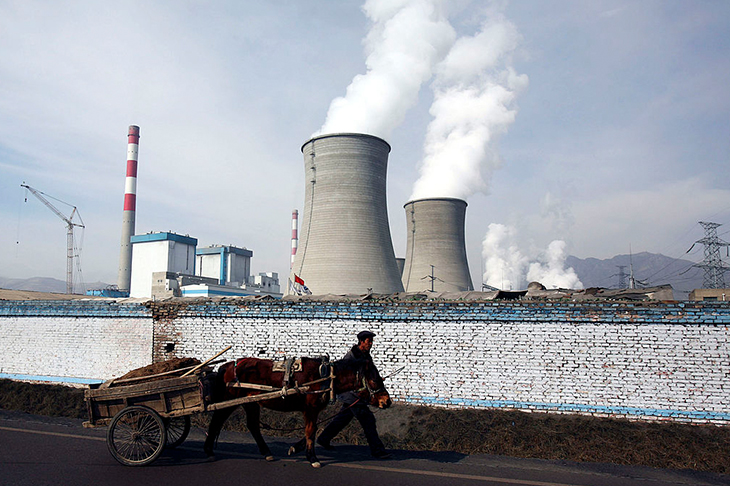
The Chinese lesson is not just that coal is there to stay with increased local mine production, supplemented by (Australian?) imports, and coal-fired power generation capacity rapidly rising, but that there is to be an enduring reliance on them. This is concurrent with the massive progress in lower- carbon technologies, particularly solar, wind and nuclear, where China leads the world. Unlike the narrow vision of the Albanese/Greens, economically disruptive, fossil-fuel transition to meet a net zero deadline, China plans to guarantee its energy security by living with a broad range of complementary energy sources, including fossil fuels. In this context, coal is increasingly being repositioned from a traditional baseload power source to a flexible, but still major, dispatchable resource that can balance fluctuations in renewable generation. China’s worrying energy vulnerability is oil; its over-reliance on Russia is a factor in its determined focus on alternative energy sources.
So this year, while Australia’s only contribution towards the cheapest power source is to further delay more closures of its few remaining coal-fired power stations, China will be opening 85 (of the world’s total of 104) new coal-fired electricity generating units to provide 55GW with another four times as much still under construction. China is responsible for global coal generation records as the rest of the world’s output continues to fall. But China’s coal-fired record is more than matched by the boom in renewables where investment has doubled over the last decade with China installing 360GW of wind and solar capacity last year alone – more than the rest of the world combined. At six times as much as coal, this pushed China’s renewables to surpass coal in installed capacity (and providing one third of the world’s total) and will rise further to account for half of China’s energy capacity by 2030.
But electricity demand is rising just as rapidly, with China’s total power consumption exceeding 10.4 trillion kWh in 2025 – more than twice that of the US and greater than the combined demand of the EU, Russia, India and Japan. Demand is expected to continue growing by at least five per cent a year.
Against this backdrop of demand growth and supply-line geopolitical threats, this month’s Diplomat journal rates coal as ‘a critical stabilising force in China’s power system’, explaining that while the current Five Year Plan reiterates long-term decarbonisation commitments – including reducing carbon intensity by 17 per cent and raising the share of non-fossil energy to 25 per cent by 2030 – it still stops short of setting explicit timelines for coal or oil consumption to peak, let alone to be transitioned out. So what appear to be China’s incompatible climate/energy objectives in fact reflect what the Diplomat describes as a deeper structural reality: ‘China is not moving from coal to renewables in a linear transition. Instead, it is attempting to expand both simultaneously, balancing decarbonisation goals with rising electricity demand and system reliability constraints.’
No matter what the China experience demonstrates, Australia’s banks, as shown in their latest annual reports, retain their self-righteous status as environmentally pure economic saboteurs by refusing to fund most fossil-fuel developments. While climate activists like Market Forces complain that the banks have nevertheless remained major lenders to fossil fuels, the evident need for overseas funding in recent years for so many projects at relatively high rates, indicates otherwise.
The current Hormuz energy crisis,, following on the war in Ukraine, has helped turn the funding tide, with the Australian newspaper suggesting that the financing freeze on coal appears to be thawing as lenders and investors are warming once again to the sector (with hypocritical anti-fossil-fuel campaigner Australian Super recently becoming Whitehaven Coal’s biggest shareholder). Energy security concerns are trumping climate activism.
This change for the better reportedly comes amid a global reassessment of the activist-prompted environmental, social and governance (ESG) investing frameworks, with several major international banks having exited the UN-backed Net-Zero Banking Alliance, citing legal risks and political pressure, particularly from President Trump’s reversal of the US’s ESG constraints.
Another benefit of the Hormuz-induced focussing of minds on energy is that at last the Liberal party, under new leader Angus Taylor, is showing signs of a reversal of the lack of courage, during its recent years of decline, to risk its political future by campaigning against the global-warming doomsday dogma that is destroying our economic well-being. In calling (in his recent TV national address response to Prime Minister Albanese’s) for the fast-tracking of mining exploration and gas construction, (echoing Trump’s fossil-fuel rhetoric with ‘we must dig and we must drill’), Taylor’s significant inclusion of coal in his call to shore up fuel supplies was curiously ignored by the mainstream Australian media. An exception was the dedicated climate catastrophist Guardian newspaper whose agenda was met by revealing Taylor as a dreaded supporter of evil coal. It went on to quote Taylor (as an advocate of yet another fossil fuel) asserting that we need more Australian oil for Australians as, ‘We have the resources beneath our feet to secure our future; it is time for the full potential of Australia’s natural resources to be unlocked’ – and that includes fossil fuels in ‘a plan that must include expanding domestic energy production’.
For Coalition partner Matt Canavan’s Nationals, the message is stronger still. ‘We need to scrap net zero and invest in all forms of energy, including coal, gas and oil, and unleash our resource abundance, so families and businesses can enjoy lower prices and real fuel security’.
At least the Angus Taylor-Matt Canavan Coalition appear to have heard the Chinese message, even if they have not yet totally embraced it. Given China’s lead, Australia’s ill-considered total rejection of the construction of new economically viable low-emission coal-fired generators must be reversed as part of a desperately needed energy rescue package. With both coal and nuclear power, China leads the way; failure to follow will be at our cost.
So both directly and indirectly through its impact on the economy, energy will be the issue that will determine whether the Liberals and Nationals will live or die politically at the 2028 federal election.
Got something to add? Join the discussion and comment below.
You might disagree with half of it, but you’ll enjoy reading all of it. Try your first month for free, then just $2 a week for the remainder of your first year.