We keep being told that the coming budget will be the most significant for many a year. That may be so, but the softening-up process we are being subjected to by the government on a daily basis is certainly not new. Nor are the obvious plans that the government has for new taxes and the expansion of nonsensically named ‘initiatives’. The old playbook of political clichés is also being given a vigorous workout; my favourite is that the budget will be based on ‘intergenerational fairness and horizontal equity’, which will guarantee that nobody knows what they are talking about.
The budget will therefore consist of the usual expansion of pointless and wasteful government schemes, more disincentives to investing and more of the continuous sapping of personal incentive and responsibility.
Just take the National Disability Insurance Scheme (NDIS), now costing up to $50 billion a year, or $60 billion if you go by the forward estimates, which is the government’s hopeless attempt at fortune-telling. The inspired leaks about the NDIS are as good an illustration as any of how government spending is completely out of control and how no serious effort will be made to reduce it.
You would have noticed the comforting and tokenistic way the government has articulated what it proposes to do about the burgeoning cost of this scheme. First, just to get us into the right frame of mind, we are told how miraculous the program is and how vital it is that it should continue. Next, to show that the government is seen to be doing something, even if it is not, we are told that the scheme will be subject to that old chestnut ‘reform’, which means there will be a few changes here and there but no real improvement. Finally, to show that the government is serious about exercising restraint in spending, we are naively told that there will definitely be a reduction in the overall cost of the scheme. And how, you ask, will this be done? Well, the rate of expansion of the NDIS will be reduced! It is presently on track to expand by ten per cent a year but that might be reduced, we are told, to five per cent a year. In other words, the scheme will not be reduced in size by a single supplicant or reduced in cost by a single cent. But instead of costing an extra $55 billion next year it will only cost an extra $52.5 billion. Only in the playbook of political doublespeak could this sleight of hand be described as a saving. But that is how government does its sums. And it goes without saying that there is not a hint of a suggestion that the gargantuan appetite of the NDIS or its avalanche of highly dubious services will be curtailed.
The hints of so-called tax reform to be announced in the budget tell just as depressing a story. The almost certain abolition of or reduction in the capital gains tax discount when assets are sold will simply impose yet another disincentive on investment and discourage people from acquiring property. Abolishing or limiting negative gearing on housing investment, which is also mooted, will be another punishment on investors, as if there were not enough of them already. Exploration for gas will be another target, with the proposal for a new tax on exports coming at the worst possible time, a national and international energy crisis. And, of course, there is no proposal that the burden of the labyrinthine regime of regulations that inhibit exploration and development will be reduced.
Indeed, as the government is so keen on what it misleadingly calls reform, it is time for real reform in the way that all government social services are structured and administered, namely that there should be, as there used to be, a first and primary responsibility on people to look after themselves and their dependants. This principle is not to deny that government support should be provided, in whole or in part, for genuine need and hardship, but so many areas of social welfare have degenerated into looking for a government handout as a first resort that it is time for real reform to arrest this dependency. If this principle were applied, taxpayers’ money would be more wisely spent and the whole economy would be stimulated by the injection of personal initiative.
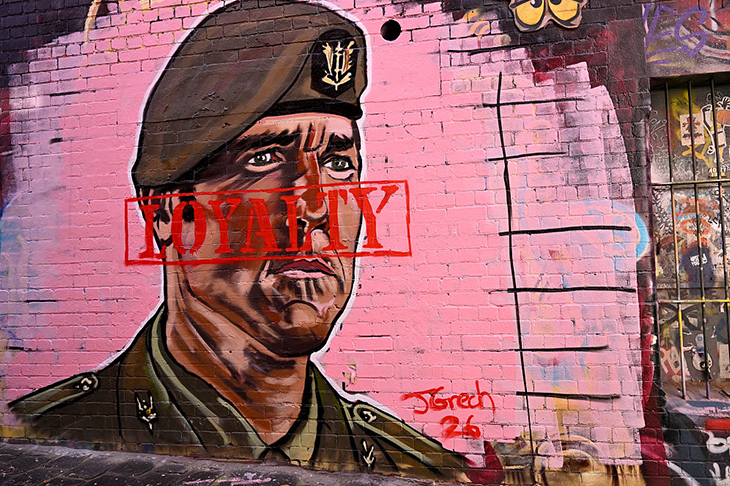
And, on the other side of the ledger, there is a host of wasteful items of expenditure which should be abolished immediately. The first cab off the rank should be to stop the spending of potentially millions of dollars on the outrageous prosecution of Ben Roberts-Smith for alleged war crimes. There is simply no justification for this pursuit of a war hero. He and his comrades were induced to fight in Afghanistan because the Western world was under attack. We asked them to risk their lives in Afghanistan with no hint of a suggestion that their every move would be subject to minute dissection and examination, with the benefit of hindsight, to see if they could somehow be squeezed under the heading of some alleged war crime.
Worse still, the politicians who urged them on are not subject to the same scrutiny, despite being primarily responsible for sending our troops to war. The trial will last five years and at enormous cost, whether the prosecution wins or loses. And after the trial and the inevitable appeals, after all the cost and anguish, we will have given the implied warning to potential recruits that if they join up, they run the risk of being prosecuted, simply for doing their job. There is simply nothing to justify this unprincipled prosecution and there is everything to justify its immediate termination.
So there it is; we will have more of the same profligacy until we get back to reducing the tax burden, encouraging self-reliance and cease wasting the taxpayers’ money. We can only hope that when the opposition draws up its proposed budget, it will have regard to these basic principles. But will they?
Got something to add? Join the discussion and comment below.
You might disagree with half of it, but you’ll enjoy reading all of it. Try your first month for free, then just $2 a week for the remainder of your first year.