Ruqia was a 21-year-old Afghan woman building a new life in Australia. She and her family fled Afghanistan after the Taleban killed her father, eventually settling in Shepparton, Victoria. As the youngest of five children, she was raised by her mother in a Shia Islamic Hazara family. Outwardly, Ruqia seemed happy and, like many young women living out normal lives in Australia, dreamed of finding love.
Behind closed doors, Ruqia’s life was far from ordinary. She was forced into an unofficial religious marriage at fifteen, as her sisters had been in their youth, which ended in divorce when she turned twenty. She wanted to delay marriage until her late twenties after completing her studies. However, in Shepparton’s Hazari community, divorce brought shame to the family, and Ruqia was labelled ‘bewa’ – a term that implied she had lost her value. To protect her family’s reputation, her mother coerced Ruqia into a second marriage with a 25-year-old man from Perth. This loveless marriage, described as violent and abusive, lasted less than two months. On 18 January 2020, the husband killed Ruqia by stabbing her in the neck with a kitchen knife, severing two arteries.
In 2021, the husband was sentenced to life imprisonment. And the mother was sentenced to three years in prison for orchestrating a forced marriage. The verdict set a precedent: the mother became the first person in Australia convicted of arranging a forced marriage since it was criminalised in 2013.
Ruqia’s death is not an isolated tragedy, but a stark reminder of the failures of integration. In February, the Sunday Telegraph revealed that fourteen children in New South Wales were identified as victims of forced marriage in 2025. Authorities found that many of these unofficial ceremonies were conducted in backyards by Islamic clerics.
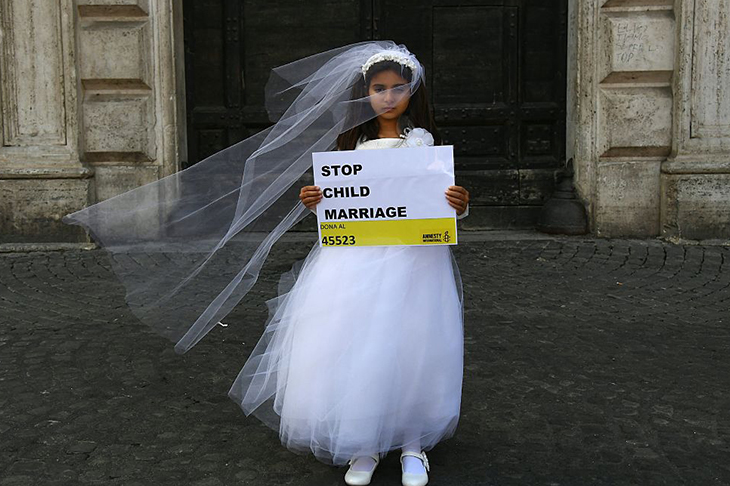
This is not limited to the western suburbs of Sydney. In 2025, the Australian Federal Police recorded 118 reports of forced marriage, a thirty-per-cent increase on the previous year, with most brides under the age of 18. The data is likely to be an underestimate; as with domestic violence and honour killings, victims and families may be unlikely to come forward for fear of reprisal and social stigma within their community.
In Iraq, years of lobbying by Shia political parties led to the introduction of Ja’fari law, an 8th-century religious code that allows Shia Muslims to opt out of civil law and marry girls as young as nine. This retrograde step is mirrored in Pakistan, where nearly a quarter of girls are married before turning eighteen. When the Islamabad Capital Territory Child Marriage Restraint Act was passed in 2025, it set the minimum marriage age. It triggered fierce political backlash and nationwide protests. The JUI-F, a Conservative party allied with the Council of Islamic Ideology, argues that it violates Sharia norms, which base marriage eligibility on puberty, rather than age. Under Islamic jurisprudence, this interpretation would allow girls as young as nine to be married.
The humane response is to mourn Ruqia. However, if you ask difficult questions or voice criticism, you may be accused of victim shaming – even though, in my view, the only victim was a young woman who wanted the freedom to choose her own future. Progressives and identitarians with increasing righteousness insist that we must not judge other cultures or impose our ethical standards upon them. Still, despite what cultural relativists claim, not all cultures are equal or harmonious. The arrival of people from the third world who hold archaic customs and beliefs has led to the creation of ethnic enclaves, where loyalty is owed to family and tribe rather than to the state. Afghanistan is a tribal country with one of the highest rates of child marriage in the world – its national anthem references fourteen ethnic groups, including the Hazaras, Ruqia’s people. This tribal system has existed for millennia. When ethnic and kinship loyalties dominate, democracy, integration, and social cohesion become impossible.
Yet while cases like Ruqia’s expose the harsh realities of modern slavery and forced marriage, public discourse in Western societies remains fixated on litigating the ghosts of the 18th century rather than saving the children of the 21st. According to the International Labor Organization, over fifty million people are estimated to be living in modern slavery worldwide – trapped in forced labour, debt bondage, and forced marriage. This is not an abstract historical grievance; it is a living crisis. Yet the moral energy of politicians, NGOs and activists is too often spent on symbolic reparations for injustices centuries old, rather than confronting the brutal exploitation happening in their own suburbs.
The recent UN General Assembly resolution declaring the transatlantic slave trade ‘the gravest crime against humanity’ has only intensified this dynamic, elevating historical slavery to a unique status in the Western moral imagination. For the sake of brevity, I’ll politely gloss over the inconvenient fact that Africans enslaved other Africans, and that Omani Arabs operated one of the largest slave plantations in modern history. Anyway, its prominence among elites serves as a convenient distraction from the systemic abuses – like forced marriage – occurring here and now.
The reparations debate has taken on the character of a ritualised spectacle: endless commissions, public apologies, and calls for compensation, all while sidestepping uncomfortable questions about the cultural practices imported by immigration. This obsession with the past serves as a distraction from the present. It allows the commentariat to signal virtue and moral superiority, all while refusing to challenge the regressive customs prevalent in immigrant communities. The result is a wilful blindness that prioritises moral grandstanding over genuine reform.
Trying to right centuries-old injustice by redistributing wealth from people who never enslaved anyone to people who have never been slaves is both economically and ethically indefensible. Reparations is the equivalent of throwing gold in a grave: an extravagant gesture for the dead that does nothing for the living. While wealth is extracted and collective guilt absolved, modern slavery flourishes in plain sight. Moral energy that could save real people is wasted on an incalculable historical debt and performative outrage. Until we stop idolising reparative justice and confront the cultural practices that sustain exploitation, tragedies like Ruqia’s will be treated as a mere statistic.
Got something to add? Join the discussion and comment below.
You might disagree with half of it, but you’ll enjoy reading all of it. Try your first month for free, then just $2 a week for the remainder of your first year.