Never let it be said that The Spectator fails to follow up an arts story. Long-term readers will recall that in the edition of 6 March 1711 Joseph Addison investigated the supply of live sparrows for the first production of Handel’s Rinaldo. ‘What, are they to be roasted?’ he asked, reasonably enough. No, they were ‘to enter towards the end of the first Act and to fly about the Stage’. Still, you need to keep an eye on these theatrical types and although there was certainly birdsong in the latest revival of Rinaldo – the end-of-term opera at the Royal Academy of Music – I can report it was recorded. No sparrows were cooked in the making of this opera.
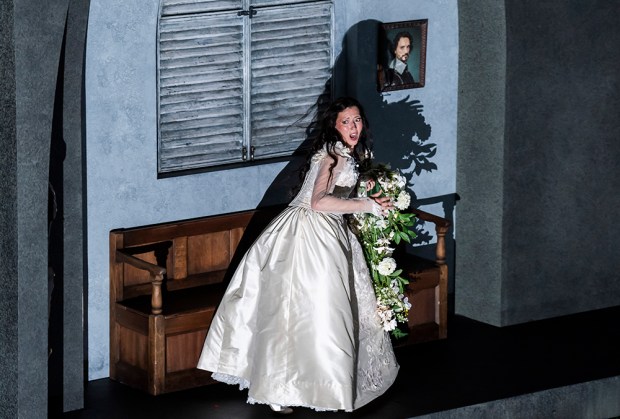
Mind you, Handel purists took a bit of a battering. Trimmed to a lively two hours, Julia Burbach’s staging was full of playful effects. Those birds, for starters; plus rolls of the thunder-sheet and rattling batteries of percussion that I’m willing to bet you won’t find in any Urtext. The student orchestra under David Bates played mostly on modern instruments, with beefy, swaggering fanfares, whirling violins and some spectacular virtuoso peacocking from the woodwinds. Handel allegedly said that the English like something that hits them on the drum of the ear, and for once, that’s exactly what we got.
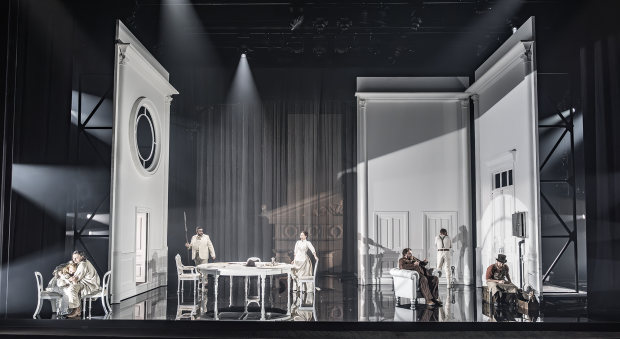
The staging was just as enjoyable, with ingenious abstract sets (by Bettina John) but period-inspired costumes, so when warriors drew their swords they actually had swords. Amazing how these small things help to tell the story. We were definitely in the realm of fantasy, though, and the character of Eustazio (Pavel Basov) became Cupid, sauntering around and unleashing sexy mischief in a pink Pringle V-neck.
Agustin Pennino (Rinaldo) is a fluid, mellow-voiced counter-tenor but as usual in Rinaldo, his rival lovers walked off with the show – Caroline Blair sounding tender with a hint of tartness as a prim-but-peppery Almirena, and Ellie Donald whooping it up, rich and passionate as the sorceress Armida. This was a cracking show, and in all regards apart from the singing (which, whatever anyone might tell you, is not the only thing that matters in opera) it was as satisfying as many professional efforts.
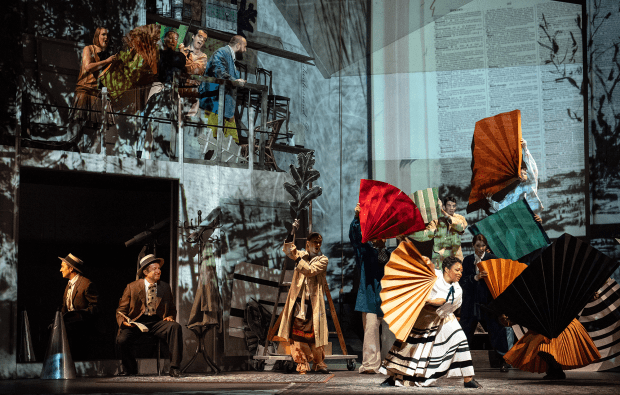
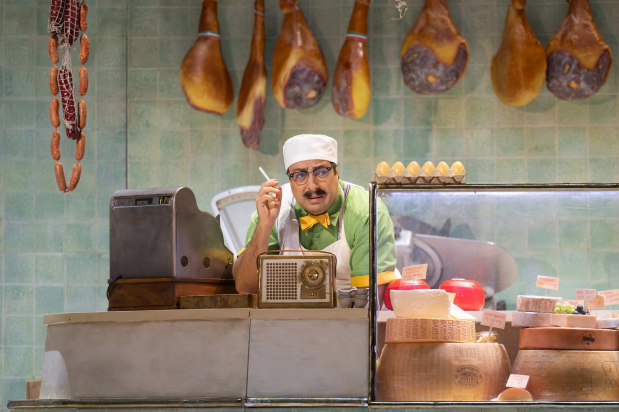
English Touring Opera, meanwhile, is back on the road with Pagliacci and The Gondoliers – only the company’s second ever staging of a Gilbert and Sullivan opera. On one level, G&S seems like an easy win: Sullivan wrote for a small orchestra, and audiences demonstrably love the Savoy operas. They work as written. In ENO’s most recent revival of HMS Pinafore the shoehorned topical gags for a guest comedian (Mel Giedroyc, for some reason) fell horribly flat while Gilbert’s 19th-century originals landed laugh after laugh. Again, funny that. Anyhow, the precondition for success in this repertoire is simple but formidable. Basically, it’s perfection. You have to play G&S as though it’s Le nozze di Figaro.
I desperately wanted to enjoy this Gondoliers, but there’s no denying that the first act of Liam Steel’s staging felt baggy and looked cluttered, though the (mostly youthful) cast goes at it with energy and as Don Alhambra, Matthew Siveter brings his dastardly, eye-swivelling A-game from the off. He’s terrific. And then, after the interval everything snapped up a notch. Act Two looked colourful, the orchestra seemed to have found its groove and the comedy pinged. The tenor Robin Bailey, as Marco, aimed ‘Take a Pair of Sparkling Eyes’ straight at the heavens and all was well in Topsy-Turvydom. This performance was only the second of the tour, so it’s very possible that the whole show will be fizzing by now.
You have to play G&S as though it’s Le nozze di Figaro
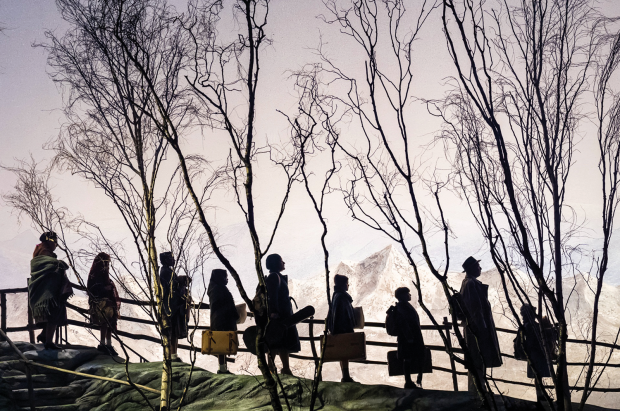
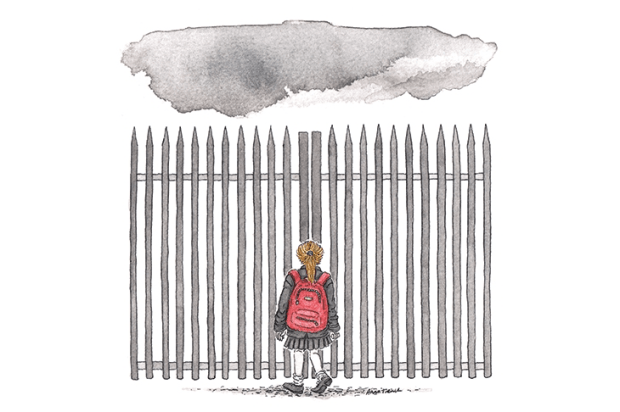
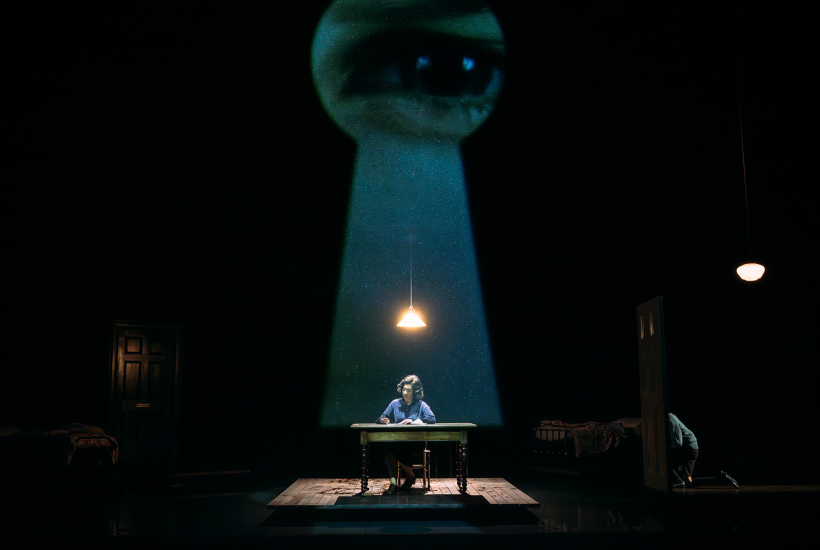
As for The Turn of the Screw – directed by Natalie Abrahami at the Royal Opera’s Linbury Theatre – well, this is going to sound hyperbolic but even in an era of superb Britten productions (looking at you, Welsh National Opera’s Death in Venice), it was outstanding. Abrahami and the designer Michael Levine use darkness as their canvas, which in the subterranean Linbury means absolute pitch-black. Video projections and a stage flooded with water generate a dreamscape of rippling, eerie beauty – simultaneously evocative of the drama’s East Anglian setting and 1970s British horror.
Within this world, Isabelle Peters’s Governess is at once vulnerable and courageous, her voice bright and vibrant with anxiety. Peter Quint (Egan Llyr Thomas) emerges from the darkness in the glow of a cigarette (a neat old-school symbol for schoolroom innocence tempted and corrupted), and later in the wiry, predatory form of a silent double. (Miss Jessel, played by Kate Royal, has an equally panther-like doppelganger). And yet Bassem Akiki finds both shimmering rapture and lean, muscular menace in Britten’s score, while no two children have any business performing as subtly as Fleur Maxion and Glenn Tong did as Flora and Miles. I haven’t seen (or heard) better.
Got something to add? Join the discussion and comment below.
You might disagree with half of it, but you’ll enjoy reading all of it. Try your first month for free, then just $2 a week for the remainder of your first year.