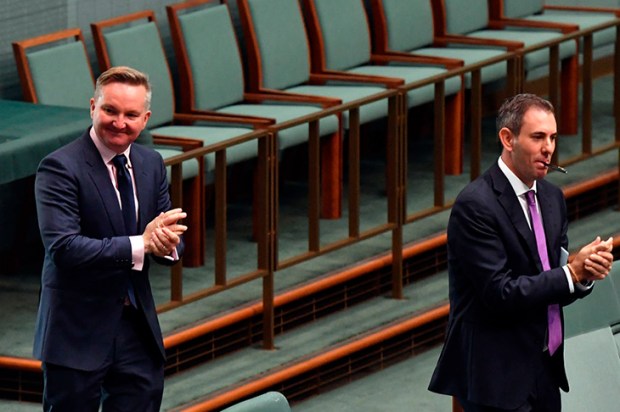
On February 25, in a speech to the McKell Institute titled, Proudly Embracing Modern Australia, Assistant Minister for Citizenship and Multicultural Affairs Julian Hill warned that the growth of private religious schools and homeschooling could threaten Australia’s social cohesion.
Too many children, he argued, may grow up inside educational ‘silos’, interacting mainly with those from similar cultural or religious backgrounds. If that trend continues, governments may need to intervene. Students educated outside the public system might be required to participate in shared activities designed to ensure that children mix across social and cultural lines.
The concern is revealing.
For most of modern history, the purpose of education was assumed to be relatively straightforward: the transmission of knowledge. Schools existed to teach language, mathematics, history, and science. Their task was not to shape the nation’s conscience but to equip individuals with the intellectual tools to think for themselves.
Increasingly, that assumption is being replaced by something else.
Education is now asked to perform a far more ambitious role. It is expected to cultivate social cohesion, correct prejudice, and produce citizens with the appropriate civic attitudes. The classroom becomes not merely a place of learning but an instrument of social management.
The distinction may seem small, but it fundamentally changes the nature of education.
The transmission of knowledge and the management of attitudes are not the same task.
The difference becomes clearer when one asks a simple question. What happens when a student challenges the moral framework the institution is trying to promote?
In a system dedicated to knowledge, disagreement is not a problem. It is evidence that learning is taking place. A student who questions a historical interpretation, disputes a political idea, or resists the prevailing opinion in a classroom demonstrates intellectual independence. The role of the teacher is to sharpen the argument, not extinguish it.
In a system dedicated to moral formation, disagreement appears differently. If education is tasked with producing particular social attitudes, dissent begins to look less like curiosity and more like failure. The student is not merely mistaken but insufficiently enlightened.
The shift is subtle but profound.
The language surrounding education reveals the change. Schools are no longer described primarily as places where knowledge is transmitted. They are described as environments where values are nurtured, attitudes shaped, and social outcomes improved. The classroom becomes not merely a place of learning but a laboratory for the cultivation of civic virtue.
The ambition is understandable. Every society hopes that its citizens will be tolerant, thoughtful, and cooperative. Yet the attempt to manufacture those qualities through institutional design has a long and complicated history.
The 20th Century offers several cautionary examples.
The great ideological revolutions of the modern era were not driven solely by peasants or labourers. They were imagined, rationalised, and organised by educated classes convinced that they were correcting the moral errors of their time. The Bolshevik Revolution was led largely by intellectuals and administrators rather than workers. The Iranian revolution drew heavily on students, professionals, and urban activists who believed they were overthrowing corruption and restoring moral order.
Both movements imagined themselves as emancipatory. Both produced systems far more coercive than the regimes they replaced.
The pattern is familiar. A society is declared morally defective. A new class of reformers promises renewal. Institutions are reorganised to produce the correct consciousness. What begins as a moral project gradually becomes an apparatus of control.
Education is often the first institution enlisted in that effort.
This transformation rarely begins with overt repression. It unfolds through something quieter. Certain questions become discouraged. Certain assumptions become mandatory. The curriculum expands to include not only the history of ideas, but the moral conclusions students are expected to draw from them.
At that point, education ceases to be the transmission of knowledge and becomes the administration of virtue.
In increasingly diverse societies, the political logic behind this shift is becoming more explicit. If a nation contains communities shaped by different religious traditions, historical memories and moral assumptions, disagreement is no longer simply an intellectual matter. It becomes a potential source of social conflict.
Governments therefore face a dilemma. A multicultural society promises the coexistence of many cultures within a single political order. Yet the stability of that order depends on a minimum level of shared civic attitudes. If those attitudes cannot be assumed, institutions are asked to cultivate them.
Education becomes one of the principal instruments through which that alignment is produced.
From this perspective, Hill’s concern about educational ‘silos’ is not simply an administrative question about schooling. It reflects a deeper political anxiety. If children grow up inside communities that reinforce distinct moral frameworks, the state risks inheriting a society whose citizens no longer share the same civic vocabulary.
The classroom therefore acquires a new responsibility. It must not only teach knowledge but help ensure that the next generation develops the attitudes required for social cohesion.
Once education assumes that role, its character inevitably changes.
A system devoted to knowledge welcomes disagreement and treats intellectual conflict as a normal part of learning. A system tasked with maintaining social harmony must be more cautious. Ideas that disrupt consensus begin to appear less valuable than those that reinforce it. The purpose of learning shifts subtly from discovery to reassurance.
The result is not intellectual confidence but intellectual fragility.
The Western intellectual tradition has long rested on a different assumption. Knowledge advances through contestation. Scientific theories are revised. Historical interpretations are debated. Philosophical systems collide across centuries. Students are not shielded from these arguments. They are invited into them.
Freedom of knowledge rests on a simple premise: truth emerges from inquiry rather than instruction.
Once education becomes responsible for producing social harmony, that premise begins to weaken. Institutions increasingly guide students toward the conclusions society believes it requires.
At that point, education no longer merely transmits knowledge. It begins to manage belief.
The distinction matters because education determines how societies reproduce themselves. A culture that teaches its children what to think may achieve short-term conformity, but it risks producing citizens unable to navigate a world of competing ideas. A culture that teaches its children how to think accepts greater uncertainty, yet it preserves the conditions under which knowledge and freedom can endure.
The classroom has always shaped the conscience of civilisation. What is changing is the role it is now asked to perform.
A system devoted to knowledge invites disagreement and trusts citizens to think for themselves. A system devoted to social cohesion must guide opinion more carefully.
The difference between those two paths is the difference between education and indoctrination, and a free society cannot afford to forget the distinction.