Last week, Dr Andrew Amos, a leading Queensland psychiatrist and academic, was silenced by the national regulator. The Australian Health Practitioner Regulation Agency (Ahpra) and the Medical Board of Australia imposed strict conditions on his registration: he is banned from discussing gender medicine, gender identity or transgender issues on social media, and barred from any direct clinical contact with patients.
Proponents argue the ban is needed to fight ‘misinformation’, but this case reveals worrying regulatory overreach threatening medical inquiry and free speech. Muzzling a senior clinician for raising concerns puts ideological conformity above patient safety.
Dr Amos’s ‘crime’ was publicly questioning the evidence base for the gender-affirming care model – the 21st-century identitarian shibboleth – which prioritises social and medical transition for minors experiencing gender dysphoria. He argues this approach often overlooks underlying mental health conditions, such as depression or autism, that may contribute to gender distress.
His views are not fringe. Internationally, the tide is turning toward the caution he advocates. The landmark Cass Review in the United Kingdom found the evidence for puberty blockers and cross-sex hormones in minors is ‘remarkably weak’, leading the NHS to ban their routine use for children outside of clinical trials.
In Australia, Professor Ruth Vine, former deputy chief medical officer for mental health, also found the evidence base limited. Her review contributed to Queensland’s decision to pause these treatments until 2031. When a regulator silences a doctor for raising concerns top medical advisors have highlighted, it creates a logical and ethical paradox. If the evidence is limited, debate should be a professional responsibility, not a disciplinary offence.
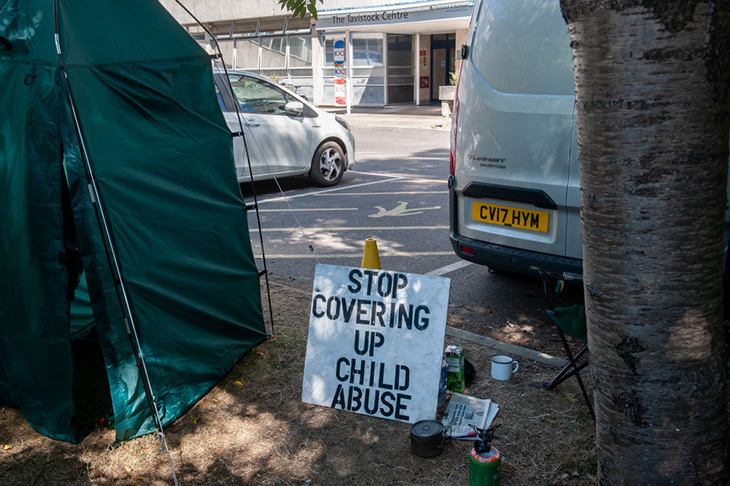
A critical factor in Dr Amos’s defence is the rise of detransition lawsuits, most notably the Keira Bell case in the UK. Bell, who was prescribed puberty blockers at 16 and underwent a double mastectomy at 20, brought a judicial review against the Tavistock clinic, arguing she was too young to give informed consent to such life-altering treatments.
Although her challenge was unsuccessful, Bell’s case served as a global wake-up call. It highlighted the catastrophic risks of medical negligence when clinicians fail to exercise due diligence or explore therapeutic alternatives. By advocating a more cautious, evidence-based approach, Dr Amos is seeking to prevent a similar wave of landmark compensation claims from hitting the Australian healthcare system.
At the core is the validity of consent. Thomas Szasz, the late anti-psychiatry rebel, argued that ethics must protect both a patient’s right to refuse treatment and a doctor’s right to refuse to agree to irrational or pseudoscientific demands. As Szasz wrote, patient consent is not ‘the sole ethical consideration’. Professional integrity depends on rejecting state-sanctioned cures that lack a clear biological or evidentiary basis. When doctors are banned from discussing risks, true consent fails – patients lack information, and doctors are forced into silence.
The severity of the sanctions against Dr. Amos – denying him both his digital voice and his clinical practice – sends a chilling message to the medical profession: dissent from the prevailing orthodoxy risks career-ending consequences. This enforcement is also fundamentally anti-scientific. As the philosopher Karl Popper famously argued, science is not a collection of static truths but a process that proceeds through rigorous testing of hypotheses and constant attempts to falsify existing theories. If a theory cannot be challenged or tested, it ceases to be science and becomes dogma. By silencing critics, Ahpra is effectively manufacturing a false consensus. Similar concerns were raised by Dr Jillian Spencer, herself suspended from Queensland Children’s Hospital. This environment leads to preference falsification – clinicians maintain private reservations but fear speaking publicly.
Groups like the Australian Christian Lobby and Women’s Forum Australia have identified this as an attack on free speech and patient safety. If doctors fear suggesting that a child’s gender distress might stem from broader psychological issues, patients are the ones who ultimately suffer from diagnostic overshadowing – misattributing symptoms to an already diagnosed condition.
Ahpra says practitioners must not engage in abuse, discrimination, or pose a risk to public safety, but the line between discrimination and scientific disagreement has become dangerously blurred. Dr Amos’s view – that gender diversity can sometimes involve psychopathology – reflects his medical expertise and a call for better, more robust diagnostic standards. Labelling such professional opinions as lies or hate speech ignores these nuances. If a doctor’s social media posts are deemed offensive by activists, the appropriate response in a liberal democracy is counterargument and debate, not a state-mandated gag order. As John Stuart Mill wrote in On Liberty: ‘If all mankind minus one, were of one opinion, and only one person were of the contrary opinion, mankind would be no more justified in silencing that one person, than he, if he had the power, would be justified in silencing mankind.’
A doctor’s primary duty is to their patient’s long-term health, not the fashionable political sensibilities of the day. Dr Amos warns that we are running a vast, uncontrolled experiment on children. Staying silent in the face of such a heinous experiment would breach the Hippocratic Oath. One day, we will look back on the sterilisation and mutilation of children much as we now view lobotomies for schizophrenia or the use of leeches for epilepsy.
By penalising him, the Medical Board is suggesting that compliance is more important than conscience. This sets a dangerous precedent. If the regulator can silence a doctor for discussing the problems of gender medicine today, will other controversial medical topics be deemed off limits tomorrow? The integrity of the profession relies on its members’ ability to tell the truth – even when that truth is uncomfortable.
The ban on Dr Andrew Amos represents a pivotal moment for Australian healthcare. It is not merely about one man’s right to post on social media; it is about whether the medical regulator should have the power to dictate which scientific debates are allowed.
By silencing a doctor who champions objectivity – and who seeks to protect the system from the litigation crisis seen in cases like Keira Bell’s – Ahpra risks undermining public trust. If the goal of medicine is to do no harm, then we must protect practitioners’ right to speak with conscience and professional integrity. To do otherwise is to prioritise ideology over the very patients the system is designed to protect.
Got something to add? Join the discussion and comment below.
You might disagree with half of it, but you’ll enjoy reading all of it. Try your first month for free, then just $2 a week for the remainder of your first year.