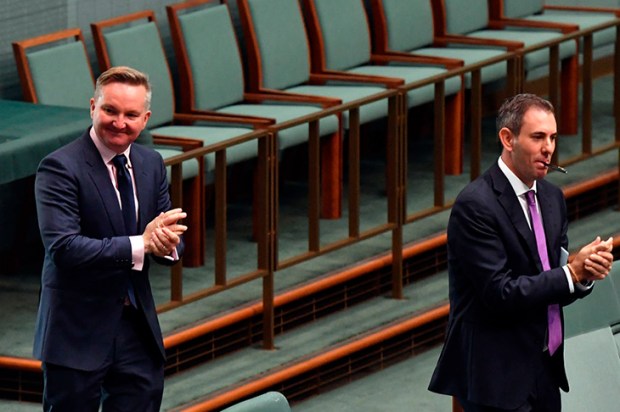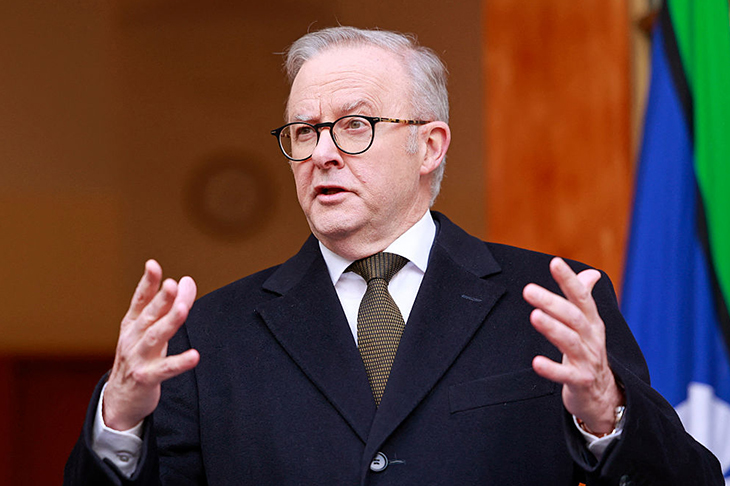
On the last day of February, Anthony Albanese discovered that reality still exists. His statement supporting Operation Epic Fury – the joint US-Israeli strikes on Iran – reads like something drafted by someone who had spent the past decade opposing every premise it contains. Iran is a ‘destabilising force’. Its nuclear programme threatens ‘global peace and security’. The regime ‘relies on repression and murder of its own people’. All true. All welcome. And all strikingly inconsistent with the instincts of the man who signed it.
Albanese’s support matters – strategically and symbolically. It tells us that even the contemporary Australian left can be forced by events into clarity. But necessity is not conviction. This is the same Prime Minister who spent months avoiding direct language about Islamic extremism after 7 October, who tolerated factional figures whose flirtations with antisemitic rhetoric would have embarrassed the Hawke generation, and who required sustained pressure before expelling Iran’s ambassador after regime-linked intimidation targeted Australia’s Jewish community. His statement reads like a man startled by his own lucidity. The glass became too dark to pretend it was transparent.
Set that beside the 45 million women of Iran. Forty-five million human beings living under compulsory veiling, male guardianship laws, travel restrictions, morality police and imprisonment for dancing. In January, Iranian security forces killed thousands of their own citizens during protests that briefly flickered across Australian headlines before dissolving into background noise. The regime’s own admission ran to 3,117 dead; the Human Rights Activists News Agency documented at least 7,000. Even the floor of that range – the figure the killers themselves concede – constitutes one of the major acts of state violence in recent memory. Yet the progressive commentariat that treats every Israeli military operation as a referendum on Western civilisation produced little more than procedural regret. Forty-five million women did not fit the narrative. Therefore they did not command the outrage.
The ABC had a prior engagement.
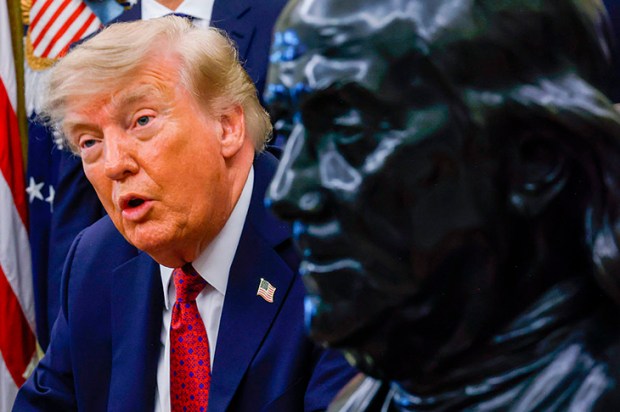
On the night of the strikes, ABC correspondent John Lyons’ principal impression was not that Iran possesses ballistic missiles aimed at American allies, nor that it has spent a decade arming proxy militias, nor that it had recently slaughtered its own citizens. His principal impression was that Trump sounded like Netanyahu. ‘That speech could have been written and delivered by Benjamin Netanyahu,’ Lyons told viewers. The implication required no elaboration: American agency had been outsourced. Washington was a branch office.
The Australian Jewish Association said on X that Lyons had gone on ‘an anti-Israel rant’ invoking what it described as language ‘very similar to classic antisemitic tropes’. Lyons’ intent is not the point. The effect is. The rhetorical architecture of ‘Israel drives American policy’ does not need to be stated outright to do its work. It needs only to be implied, repeatedly, in respectable tones. Two democratic governments with independent intelligence apparatuses arrive at similar threat assessments, and the conclusion drawn is not shared analysis but borrowed language. Alignment becomes ventriloquism. The missiles become a footnote. In Lyons’ telling, the speechwriter becomes the story.
States converge when interests converge. If Washington and Jerusalem describe ballistic missiles, nuclear enrichment and proxy networks in similar terms, it may be because those things present similar risks to governments tasked with preventing them. To treat rhetorical overlap as evidence of hidden authorship is to reduce geopolitics to literary criticism.
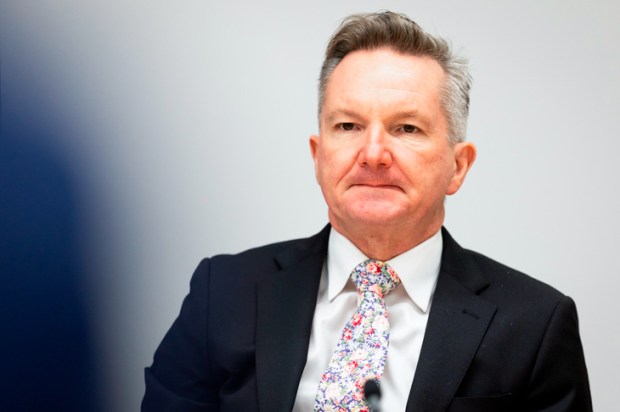
These events coincided with the belated circulation of a speech by Major General Chris Smith, Deputy Chief of Army, delivered in Canberra last year. Smith argued that the Australian Army has allowed managerial abstraction to erode its understanding of war’s nature. Armies do not ‘deliver effects’. They fight. They kill. They destroy. ‘Without violence, there is no war,’ he told his profession – not as a boast but as a corrective. When language abstracts violence into corporate euphemism, institutions lose contact with the instrument they wield.
Smith’s examples are devastating in what they describe: doctrine no one can parse, soldiers lounging in a Taleban stronghold without perceiving that anything was wrong, a Rwanda order of the day declaring ‘there is nothing here worth dying for’. These are not aberrations. They are what cultural drift looks like when it becomes normal.
Lyons and Ben Knight, a former ABC Middle East correspondent brought in to analyse the strikes, performed a civilian version of the same abstraction. They reduced war to rhetoric; the central question became not, ‘Is Iran a threat?’ but ‘Whose talking points are these?’ Force was treated as messaging. Missiles were subordinated to authorship. Smith warns that when institutions lose conceptual clarity, language drifts first and performance follows. What aired on the ABC was that process running in a different register, at a different altitude, with identical results.
Smith’s speech carries an implication Defence may prefer not to examine. Cultural drift does not arise spontaneously. The Australian Public Service Commission’s relentless embedding of diversity, equity and inclusion frameworks across the Commonwealth has not bypassed Defence. Smith names managerial culture and postmodern abstraction as vectors of decay; he does not name their institutional source. The logic supplies it. When promotion structures and institutional reward systems align more closely with sensitivity audits than strategic outcomes, abstraction follows. When the language of capability is displaced by the language of representation, clarity erodes.
Defence exists to protect Australia by defeating enemies. Everything that obscures that clarity is a liability. A military that cannot plainly articulate its purpose cannot explain to its soldiers what they are for. And soldiers who do not know what they are for sit in picnic chairs – unarmoured, unguarded, weapons down – in Taleban strongholds.
In December I wrote that Australia under the ALP (‘Yes, Minister without the laughs’) operates two governments: one elected, one real – the latter, Defence and the intelligence establishment, steering around the former’s civilisational void. Smith’s speech is a dispatch from inside that second government – and it is not reassuring. Officers drift. Language softens. Convictions too – as Albanese’s statement makes plain: all true, all necessary, and nowhere to be found in January, when the killing was happening. He found his voice when strategic cost demanded it. That is political realism. It should not be mistaken for moral leadership. My December piece was satirical. Smith is deadly serious.
The real story is not Albanese’s belated clarity, nor Lyons’ rhetorical games, nor even the missiles themselves, consequential as they are. It is 45 million Iranian women for whom the fate of Iran will define their lifetimes – and a progressive class whose humanitarian conscience activates only when it can be weaponised against the West. War is serious. The reduction to a debate about rhetorical authorship is not.
Got something to add? Join the discussion and comment below.
You might disagree with half of it, but you’ll enjoy reading all of it. Try your first month for free, then just $2 a week for the remainder of your first year.