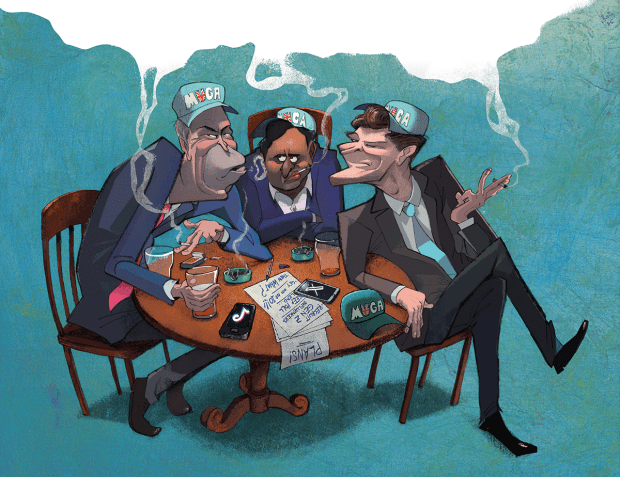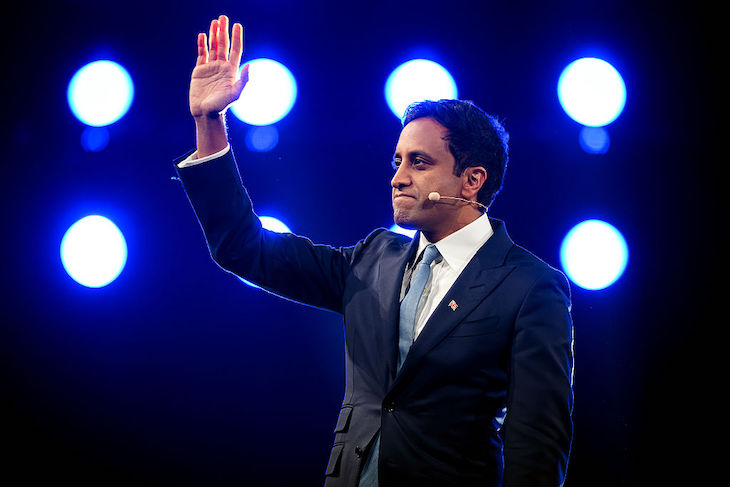
Lent has barely begun, yet on the right of British politics the resurrection has already arrived. God, it seems, is back on the ballot. In the great schism of parties beginning with “re”, Rupert Lowe has launched his bid to “Restore Britain”, positioning himself as the more muscular alternative to Nigel Farage’s Reform. Restore promises to go further and faster – particularly on immigration and cultural decay – and faith has been placed front and centre. On launch day last week, Lowe declared: “Britain is a Christian country, and under a Restore Britain Government – it will remain a Christian country.”
Reform swiftly discovered its own ecclesiastical zeal
Not to be outdone, Reform swiftly discovered its own ecclesiastical zeal. Zia Yusuf, cast by Nigel Farage as a prospective Home Secretary, assured readers in the Times that Reform would “restore Britain’s Christian heritage”, floating policies such as reintroducing Christianity into the school curriculum and banning church buildings from being converted into mosques.
It is a curious moment of popularity for a faith that, until recently, was treated by much of polite society as faintly embarrassing. The difficulty is that Britain has not been recognisably Christian for some time.
The 2021 Census marked the first occasion on which fewer than half of the population identified as Christian. Even among those who still tick the box, church attendance tells a different story: in towns and villages across the country, once-full pews now sit sparsely populated. One might wonder how many of Reform and Restore’s newly devout politicians are personally doing their part to reverse this particular trend.
The social data is striking. Almost a quarter of Britons say their lives lack meaning – yet only six per cent of religious Britons report the same. One in five people report experiencing a common mental health problem like anxiety and depression in any given week in England. A wealth of studies link religious participation with better mental health outcomes. In a country unsure what life is for, it’s hardly surprising that parliament now debates a “right” to state-assisted suicide.
Family life tells a similar story. Where Christian norms once embedded a general expectation of lifelong marriage, the age of no-fault divorce and low-commitment relationships has seen 42 per cent of marriages end before their 25th anniversary. Most British adults are not married at all. Nearly half of all British teens today do not live with both birth parents, forfeiting the well-documented benefits that appear to be associated with living with married parents: stronger physical and mental health, better academic and behavioural outcomes, and greater protection from physical and sexual abuse, amongst others.
Then there is the sexual revolution’s ledger. Women’s happiness has declined steadily since the 1970s. One in three babies in the UK is aborted. More than half of UK therapists report seeing a rise in out-of-control porn usage, with patients describing escalation to more extreme content. A 2024 study found that 1.8 million Britons have participated in child sexual abuse online. Tearing up Christianity’s guidelines on healthy sexuality did not set the train free; it ripped it off the tracks.
Yet perhaps the clearest indication that Britain is not meaningfully Christian lies in the treatment of those who remain so.
In 2024, army veteran Adam Smith-Connor was convicted of breaching a “safe zone” after silently praying for a few minutes near an abortion facility – reflecting, privately, on a child he had lost two decades earlier. He obstructed no one. After confirming to police that he was praying in his mind, he was successfully prosecuted and ordered to pay £9,000 in costs. So great, it seems, was the fear that his Christian thoughts would cause offence to others in the area.
He is not alone. This year, Isabel Vaughan-Spruce again faces trial after silently praying near a Birmingham abortion facility, under “buffer zone” legislation designed to prevent harassment, but that reaches into discriminating against Christian belief. Like Smith-Connor, she bothered nobody, and stood quietly, lifting her thoughts towards God. She has pleaded not guilty to a breach of the Public Order Act and her case goes to trial in October.
Policing thoughts is not in line with any form of liberal democracy. How can a country claim a Christian identity while criminalising those who express the faith, even silently in their heads?
The right has discovered that Christianity polls better than it did a decade ago. But a Christian country cannot be conjured by press release, nor defended by immigration policy alone. If Britain hadn’t one migrant left, our chronic social problems triggered by the abandonment of Christianity would persist.
Rhetoric about heritage is cheap. We need to see skin in the game from Reform and Restore alike. A commitment to repealing the anti-prayer “buffer zone” law, for starters, would show there is bite behind the bark. Reflection on their direction on abortion and assisted suicide is essential. Promoting a Christian view of marriage and family would benefit the country enormously. If the parties of the right are competing for holy points this season, they may find guidance in the wisdom of Proverbs 14:23: “mere talk leads only to poverty”, but “all hard work brings a profit”.