After the end of the Soviet era, Western nations and multinationals built an interdependent global economy on top of US-centred infrastructure and a rules-based international trade and commerce system.
This globalisation made nations heavily interdependent.
Communications: Consider how most of the world’s internet traffic passes through the town of Ashburn, Virginia, a major hub for data centres.
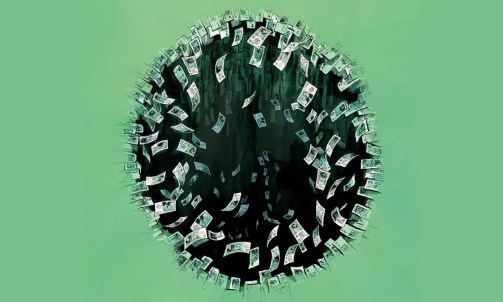
The international payments system: This system, on which trade and investment operate, came together using the US dollar for international transactions carried out under the Belgium-based SWIFT financial messaging network.
Critical technologies: These include high-level computer chips for AI and rare earths that are universally used in modern machines and electronics.
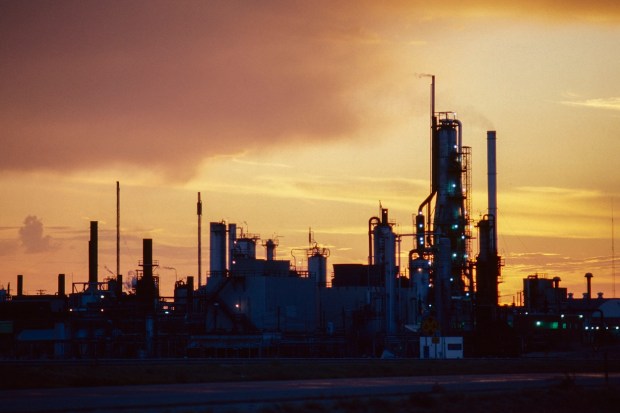
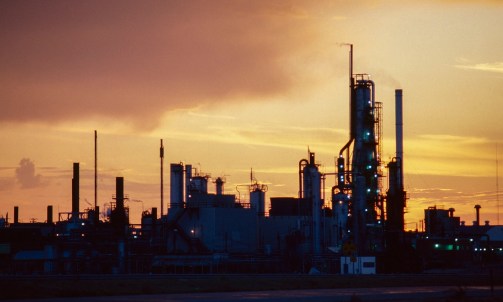
Energy: Energy extraction and processing require highly specialised technologies. In energy, the United States is self-reliant, Russia is a huge exporter, China is a huge importer.
Each of these systems can be understood as its own ‘stack’ of interconnected complexes of related technologies and services that reinforce one another, for example, buying into the world wide web means buying into the US-initiated e-commerce system.
Then there are interconnected markets: China’s rapid climb to become the world’s second largest economy relied on exports into American and European markets.
Globalisation’s legacy
Globalisation built a world vastly different from that of the Cold War era, when the communist bloc largely operated independently of the rest of the world. Many believed that globalisation’s interdependence would incorporate the old communist bloc into an ordered, prosperous, peaceful world.
Instead, globalisation’s legacy is a world where interdependence is being weaponised to gain geopolitical advantage.
Beijing used subsidies and import regulations to dominate world manufacturing, in defiance of the rules-based order. Then it undertook one of the biggest military buildups in history, becoming increasingly belligerent towards Taiwan, nations bordering the South China Sea which it claims, and, recently, Japan.
Then, Russian President Vladimir Putin’s war on Ukraine abruptly ended Europe’s longest period of peace since the second world war.
Now Russia is learning how interdependence can be weaponised against it. War has brought sanctions and Ukrainian attacks on its vital oil and gas infrastructure; the freezing of its overseas assets; and the loss of access to critical technologies and equipment to keep its industries functioning. Its economy is being battered.
Russia’s state-owned monopoly rail company RZD is over $US50 billion ($A71.2 billion) in debt, while the civilian airline fleet cannot access parts needed for its US-manufactured airliners. Businesses large and small are facing crippling debt.
This is on top of Russia’s ‘mincemeat’ grinding casualties of between 800,000 and 1.2 million troops on Ukrainian battlefields.
The lessons could not be lost on Xi Jinping as he eyes Taiwan.
The US understands how to leverage strategic interdependence, and Chinese leaders have learned its strengths and weaknesses.
Just as Beijing took strategic control of the world’s processing and supply of rare earths and critical minerals, it aims to achieve global domination in other key technologies. If Taiwan was seized, this could give China huge leverage over the production of key computer chips. The most sophisticated semiconductors are produced by only a few US, Taiwanese, Japanese, and South Korean companies.
However, attacking Taiwan would risk a wider war with the US, Japan and other regional states, interdiction of China’s vulnerable sea lanes that deliver oil, coal, iron ore and a host of raw materials that feed China’s industries, and loss of major overseas markets and revenue that keep its economy growing.
China’s economy is already suffering under the weight of a deflating property market, and the combined debts of the Beijing Government, stated-owned enterprises and regional governments. It has high unemployment among youth, with many disillusioned with the Chinese Communist Party (CCP).
Fundamentally, the CCP’s legitimacy relies on delivering ongoing economic growth to its citizens.
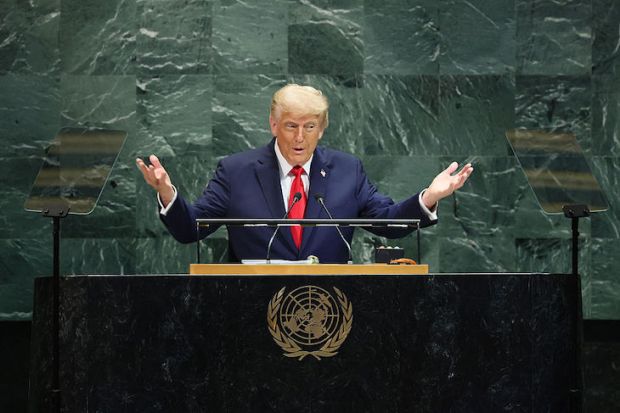
On top of all this, America’s allies – including Australia, the EU, Canada and Ukraine – are having to deal with a mercurial US President who treats his country’s long-term alliances as unimportant, and believes that what matters in international affairs is the same as the way he ran his family business, ‘the art of the deal’.
Interdependence as deterrence
In today’s turbulent world there is an ‘unpredictable interplay’ of raw power politics.
As nations weaponise interdependence, the connecting fabric of the global economy is being rewoven according to this new logic, creating a world based more on offence and defence than on common commercial interest.
Strategic interdependence won’t necessarily prevent regional proxy wars on the periphery, like Iran’s proxies (Hamas and Hezbollah) attacking Israel. However, the sudden, devastating economic consequences that would ensure from a serious conflict between major powers may deter such nations from risking a superpower conflagration.
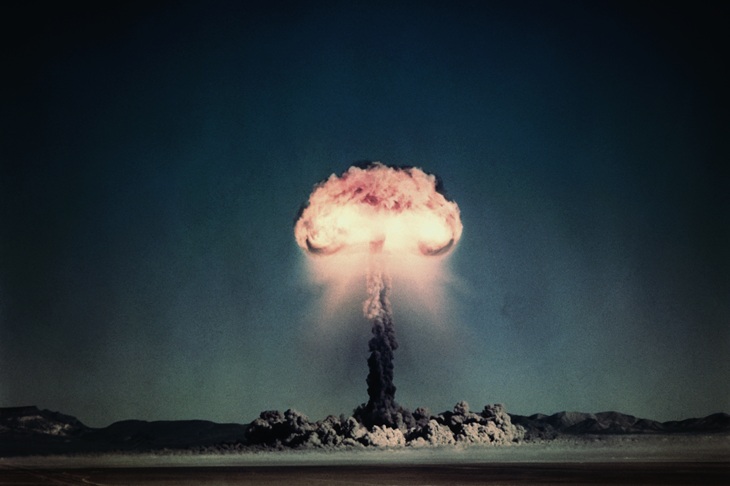
Just as in the Cold War, nuclear weapons deterred nations from such wars because a nuclear war risked ‘mutually assured destruction’, today a war between great powers would risk ‘mutually assured economic destruction’.
The challenge for democracies is to forge a new encompassing architecture that ensures their supplies of strategic stacks of technologies and protects those stacks from being captured and leveraged by hostile states.
Australia is particularly vulnerable. It lacks political and institutional awareness for the new turbulent world, has a tiny military and has allowed the strategic industries it needs to resist hostile power blackmail to be emasculated. These include shipbuilding, motor vehicle manufacturing, heavy engineering and electronics.
Sadly, Australia is hardly aware of the architecture it needs to protect its sovereignty.
Patrick J. Byrne is the immediate past national president of the National Civic Council.