The opening gala of Melbourne Symphony Orchestra this year with the renowned pianist Jean-Yves Thibaudet seems in every way congruent with the flamboyant extroversion of Jaime Martín who will be conducting a programme which is full of colour and vibrantly shaded emotion. It begins with one of the instantly recognisable pieces from John Williams’ Star Wars score, in this case the twenty-five minute suite that makes us remember why Williams can sound like Richard Strauss overseeing the dawn of creation.
It is enticing a young audience into the idiom of a ‘classical’ piece that seems intimately familiar but is at the same time formidably conceived.
Thibaudet will be doing Gershwin’s Piano Concerto in F which critics see as brilliantly segmenting itself into particular movements that reflect the different traditions the composer of Porgy and Bess and An American in Paris was heir to. We don’t automatically think of Gershwin’s lush urban modulation of Romantic feeling in terms of the different strands of influence he incorporated because they all resolve themselves into what we think of as the sound of New York – in all its complexity, its sweeping mournfulness and its overarching dynamism – but they’re there: musical aficionados note the Dixieland rhythms of defiance and the distinct yet equally authoritative depths of sadness of Yiddish song-making at its most buoyant. Not to mention the deep dramatic desolations and downtrodden power of the blues. Gershwin himself spoke of quickness and pulsation followed by a conscious poetry of nightfall and then a return to the eroticism and stridency of orgiastic movement that sticks to one pace inexorably.
Rachmaninoff, like Gershwin, inhabited different worlds. The Symphonic Dances belong to his last days in America and they are seen as exhibiting Rachmaninoff quoting from his earlier work by way of putting together a kind of elegy to his own endeavours and the life that shaped them. He mixes the mighty Resurrection that runs through his Vespers and uses it as the rejoinder to his Dies irae. Is this a nearly overwhelmingly poignant way of tracing the steps of the Dance of Death he is proffering and suffering? The guide books tell you the elements of this music – as the composer says goodbye to the grandeur and turbulence of the world – are often simple but soulful pieces of dance that evoke a sense of the different spirits of the life lived coming together. Some people hear the pull towards echoing the different times of the day but there is also the spectral suggestion that the souls of experience are coming together to dance their way to eternity. Is this as many think Rachmaninoff creating something like a last self-portrait, a selection that signifies a coming home and a transfiguration? Melbourne is lucky to have an artist of Thibaudet’s eminence embodying and demonstrating the glory of the pianist’s art at its zenith. He has worked with sopranos like Renée Fleming and a great mezzo like Cecilia Bartolli. His recording of Liszt elicited the very highest praise from that legendary figure Vladimir Horowitz himself who said of the recoding rhapsodically that, ‘It was amazing, such dexterity, such technique, such articulation, such command.’
He has done a complete Satie and he has done opera without words as if the essence of music was a fingertip inheritance for this archangel of his field. He won an Oscar for the music he did for the Ian McEwan film Atonement and when he was in the saddle (so to speak) this consummate pianist wore clothes designed by the great Vivienne Westwood as if this god-like pair of hands had his primary destiny as a fashion icon.
Every conceivable angle on Thibaudet is too good to be true so he is the ideal master guest for the Melbourne Symphony Orchestra’s coming Gala Thursday 5 March to Saturday 7 March.
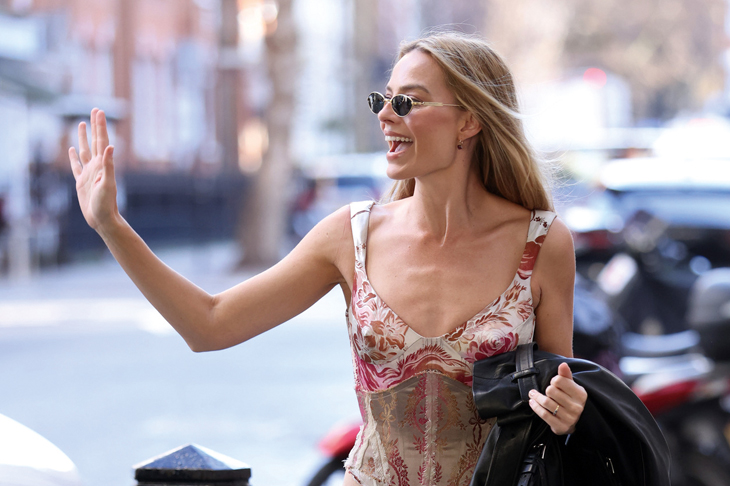
Australians are in the running for awards. Rose Byrne for If I Had Legs I’d Kick You and Jacob Elordi for Justin Kurzell’s Narrow Road to the Deep North. Elordi is also nominated for an Academy Award for Frankenstein. At the same time he’s Heathcliff in Wuthering Heights with Margot Robbie. Elordi cuts a swathe in Narrow Road with Justin Kurzel stretching him towards his character’s maturity in the person of the distinguished Irish actor Ciarán Hinds.
Wuthering Heights was filmed in 1939 with Merle Oberon as Cathy and Laurence Olivier as Heathcliff and with David Niven as Edgar Linton and Dame Flora Robson as Nelly Dean. Memories of an English master raging against Larry as a suave hero rather than the monster he thought he was. My teacher was incapable of getting his head around the idea of Heathcliff as a monster and a romantic hero. But my recollection of the old film is dark and stormy enough and everyone remembers Cathy saying of Heathcliff, ‘He’s more myself than I am.’
Wuthering Heights is one of the most savage depictions of love and destruction in our literature. It’s like some tragic horror concocted by those old Norse warriors and quite some distance from Jane Eyre whose creator Charlotte Bronte was something like the Daphne Du Maurier of her day. Olivier did Rebecca for Hitchcock and Pride and Prejudice (with Greer Garson). It will be interesting to see what suave and savage heroes award Jacob Elordi might get.
Rai Gaita, that wise man, said that things shifted in music because of Bob Dylan. ‘Before that everyone had to try to experience classical music but Dylan changed all that.’ It’s a pity if it’s true and everyone should do their very best to avoid the ignominy involved in the temptation.
There’s such a thing as a ‘difficult pleasure’ which is what we’re confronted with when we we read Roberto Bolaño or Christina Stead or Gerard Murnane or Patrick White. Dylan didn’t write patter songs though ‘Subterranean Homesick Blues’ (‘Johnny’s in the basement fixin’ up his medicine/I’m on the pavement thinkin’ about the government’) does connect to rap. And at one point he wrote: ‘Relationships have all been bad / Mine are like Verlaine and Rimbaud’s.’
Those two were a legendary couple, never effectively represented on stage or screen. Christopher Hampton who has just turned 80 – and who translated Yasmina Reza’s Art which is embarking on a national tour with Richard Roxburgh – says the project that looked most promising had River Phoenix attached as the streetboy poet of genius and John Malkovich as the older man he drove mad.
Got something to add? Join the discussion and comment below.
You might disagree with half of it, but you’ll enjoy reading all of it. Try your first month for free, then just $2 a week for the remainder of your first year.