When Billie Eilish recently declared that ‘no one is illegal on stolen land’, the statement was received as a moral flourish – an applause line designed to signal seriousness and compassion. It asked nothing of the audience beyond assent. History, law, sovereignty, and consequence were compressed into a sentence that felt virtuous precisely because it avoided specificity. The line worked not as an argument, but as a shibboleth: a phrase that identifies moral belonging while foreclosing further inquiry.
This is not unusual. Much of contemporary liberal discourse, particularly as it circulates through Hollywood, operates on the same principle. Moral intention is treated as self-justifying. To question implications is to risk being accused of cruelty. The work of thinking to the end is quietly set aside in favour of signalling where one stands.
The danger of this posture is not that it expresses concern for others. The danger is that it substitutes concern for judgment. When slogans replace analysis, reality does not disappear; it waits.
Few works of art expose this error more clearly than Luis Buñuel’s Viridiana. The film is often misunderstood as an attack on charity or faith. It is neither. Buñuel’s target is moral innocence elevated into principle – the belief that wanting to do good exempts one from grappling with human nature, incentives, and consequence.
Official trailer for the 4K Restoration of Luis Buñuel's VIRIDIANA, opening at @filmforum on November 14th and select cities soon! pic.twitter.com/f1KZAtkEAp
— Janus Films (@janusfilms) November 5, 2025
Viridiana herself is sincere. She is sheltered, earnest, and certain of her virtue. She opens her home to society’s outcasts not out of vanity, but out of conviction. Boundaries trouble her. They feel unkind. She assumes that goodwill, once extended, will reshape behaviour. Buñuel does not rush to contradict her. He allows the experiment to run.
What follows is not a melodrama about evil people exploiting kindness. It is something more unsettling. The guests behave as people often do when structure is removed and accountability dissolves. Gratitude erodes. Disorder emerges. The household becomes unstable, then unsafe. The most infamous scene – the grotesque banquet parodying the Last Supper – is not included for shock alone. It marks the moment when moral theatre replaces moral reality. Charity becomes a performance; the people it is meant to help become props.
Buñuel’s point is practical rather than ideological. Human behaviour does not improve simply because boundaries offend our sensibilities. Rules exist not to humiliate, but to manage reality. When they are dismantled without a plan for what replaces them, the result is not liberation but chaos. Viridiana’s intentions do not save her from this outcome. They blind her to it until it is too late.
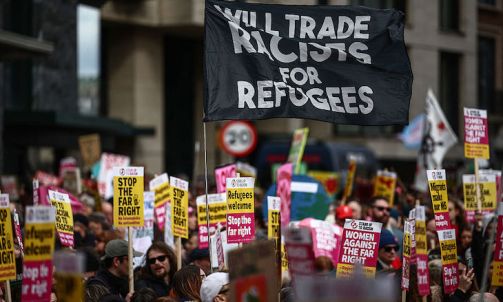
This pattern is visible well beyond the film. Hollywood liberalism has grown increasingly confident in moral language that treats limits as inherently suspect. Borders, enforcement, and restraint are framed as moral failures rather than functional necessities. The focus remains on intention – who feels compassion, who signals virtue – while the downstream effects are left unexamined.
The slogans function efficiently. ‘No one is illegal.’ ‘Borders are violence.’ ‘Compassion has no downside.’ Each phrase flattens a complex reality into something that can be repeated without cost. None of them asks where responsibility goes when boundaries dissolve, who absorbs risk when enforcement is stigmatised, or how order is maintained when authority itself is treated as illegitimate.
The contradiction becomes harder to ignore when one looks at the lives of those who repeat these slogans most loudly. Advocates of a world without borders tend to live behind gates, walls, and security details. They enjoy the benefits of order while condemning the structures that produce it. This is not hypocrisy in the narrow sense. It is insulation. Risk is condemned in theory and outsourced in practice. The consequences are borne elsewhere, by communities with fewer resources and fewer exits.
Viridiana dramatises this insulation with painful clarity. The household becomes a moral stage, and the guests become symbols rather than people. Their actual behaviour is irrelevant to the ethical story being told. When that behaviour intrudes – violently and humiliatingly – the story collapses. Buñuel offers no redemption arc, no lesson neatly learned. He leaves the viewer with a recognition that innocence, when treated as doctrine, is not merely naïve but dangerous.
The relevance to contemporary debates about borders does not depend on equating migrants with criminals or compassion with folly. It rests on a simpler observation. Boundaries exist to manage reality, not to deny humanity. When boundaries are abolished in theory, they reassert themselves in practice, often in harsher and less accountable forms. Enforcement does not disappear; it becomes uneven. Protection does not vanish; it becomes privatised. Risk does not dissolve; it concentrates.
Liberal shibboleths resist this logic by refusing to follow ideas to their conclusions. They replace analysis with feeling and treat scepticism as moral failure. In doing so, they invite outcomes that undermine the very values they claim to defend. Disorder harms the vulnerable first. It erodes trust, fractures communities, and empowers those least constrained by law or conscience. These effects are not accidental. They are predictable.
Buñuel understood that nothing is more dangerous than certainty untested by consequence. Though often described as a socialist, he spared no institution that claimed moral authority. Church, bourgeoisie, revolutionaries – each fell under his scrutiny when righteousness replaced judgment. His films are hostile to sanctimony, not to kindness. They insist that goodness, to be genuine, must reckon with the world as it is.
The phrase ‘the road to hell is paved with good intentions’ endures because it names a recurring error. Intention feels sufficient. It offers moral closure without intellectual effort. Once a position is declared compassionate, inquiry is treated as hostility. This is how shibboleths function. They protect the speaker from doubt and the listener from responsibility.
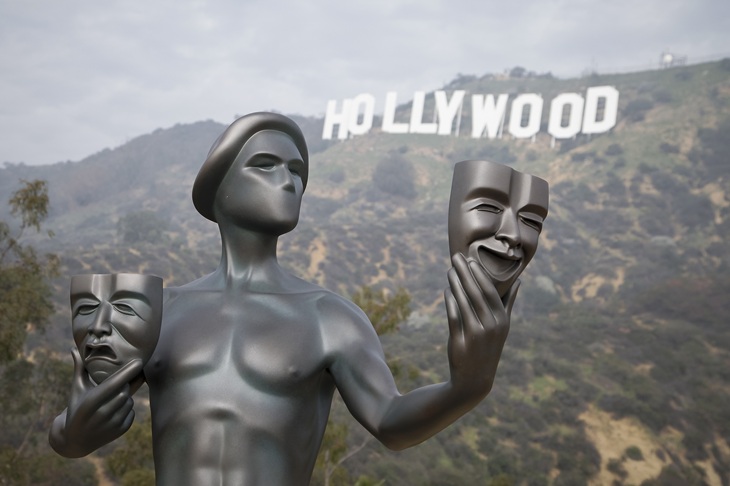
Hollywood’s moral confidence thrives in environments where consequences are distant. Awards ceremonies and social media reward posture, not prudence. Over time, this produces a culture that treats responsibility as optional and judgment as suspect. Reality, however, does not accept these terms. It waits, and it collects.
Viridiana offers no comfort, only clarity. The film ends not with wisdom gained, but with innocence broken. Buñuel’s refusal to console the audience is deliberate. He leaves us with a question rather than a lesson: whether compassion can survive without judgment, and whether virtue divorced from consequence remains virtue at all.
Billie Eilish’s remark resonates because it feels morally complete. Buñuel’s film endures because it is morally unfinished. It demands that we ask what follows from what we say, who pays when our abstractions meet the world, and whether refusing to think to the end is itself a moral failure.
The road remains well paved. The warning has not changed. What remains uncertain is whether those who speak most confidently about compassion are willing to confront the consequences waiting at the end.
Aaron J. Shuster is a writer, producer, philosopher, and cinematist. His work focuses on moral clarity, political inversion, and the intersection of history, ideology, and Western civilisational ethics.