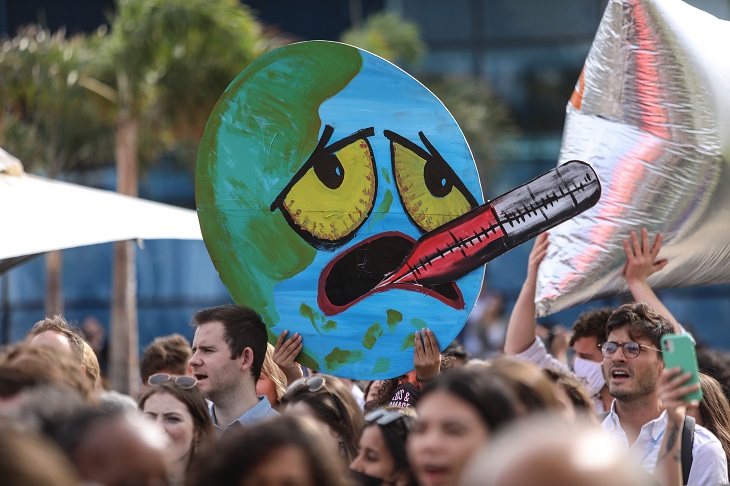
One of the enduring and acrimonious controversies in Australian politics concerns the disagreements between those who believe obstinately in the proposition that ‘global warming’ is caused by anthropogenic activity, and those who, lamenting the ideological basis of such a proposition, have scientifically disproven a link between human activity and rising global surface temperature anomalies.
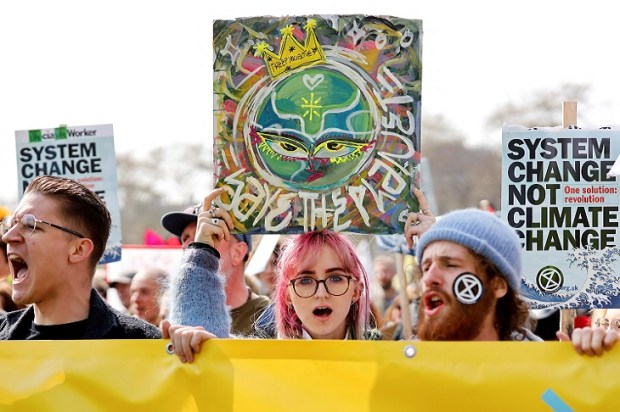
Of course, this debate has major economic consequences because the global warming enthusiasts rely on the ‘settled climate change science’ to relentlessly push for so-called ‘clean’ energy sources to replace the ‘dirty’ fossil fuels on which our economy was built and still relies.
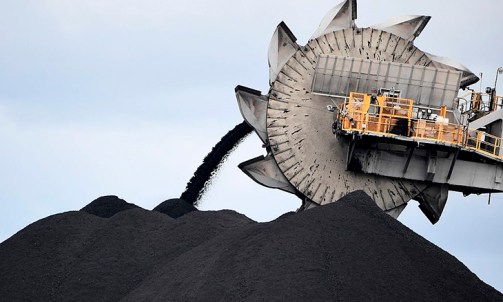
Wind and sunlight may be clean, but the equipment needed to harvest and process unpredictable weather-based energy supply is anything but and comes at a considerable cost to the taxpayer. By contrast, those who believe that abundant natural resources – hydrocarbons and nuclear – are essential to supply 24/7 power on demand, have made great advances in improving the efficiency of hydrocarbon power sources to benefit the economy, with a little-recognised massive benefit to the environment: by restoring carbon dioxide back into the atmosphere, the planet is experiencing re-greening on an Amazonian scale. As stated in an article on Global Greening:
In 2016, NASA reported that up to half of Earth’s vegetated lands have shown significant greening during the preceding 35 years, largely due to rising levels of atmospheric carbon dioxide. NASA measured a 10 per cent greening of the Earth between 2000 and 2020, alone. The greening represents a net increase in leaves on plants and trees equivalent in area to two times the size of the continental United States.
The climate change debate has polarised the country and divided it into opposing camps that are implacably opposed to each other.
This is exemplified by the Liberal Party’s adoption of its chameleon policy of jettisoning Net Zero emissions by 2050 without, however, retreating from the Paris Agreement of 2015 which aims at limiting the increase in temperature to 1.5° C above pre-industrial levels and achieving Net Zero emissions by 2050. Considering that even tomorrow’s local weather predictions are reliably unreliable, this is an absurd boast. This has led to claims that the Liberal Party is merely a component of a Uniparty that explains, at least to some extent, the meteoric rise of One Nation as a credible conservative movement which offers a consistent, common sense, message to the electorate.
Since well before the story of Chicken Little or its many variations was hatched, there have been outbreaks of mass panic and hysteria in the belief that the weather is affected and can be controlled by human activity. But the mighty volcanic eruptions circa 536-38 A.D., which occurred in the Northern Hemisphere, taught humankind that it is futile to seek to control the Earth’s temperature and weather.
Nevertheless, from Pericles to Plato, from Plague to Prosperity, there has always been debate about the relationship between mankind and natural forces. What follows is a case history of one such debate between early American opinion leaders. It is the debate between America’s third President, Thomas Jefferson (1743-1826), Samuel Williams (1743-1817), Professor of Mathematics and Natural Philosophy at Harvard University, and Noah Webster (1758-1843), a state politician who is better known today for his compilation of the great Webster’s Dictionary of the English language.
The debate began because Jefferson believed human actions were responsible for a temperature increase during his era – a viewpoint that feels unexpectedly contemporary. Jefferson, in his Notes on the State of Virginia, commenting upon and lamenting observable changes in the climate, ruminates about warming:
A change in our climate however is taking place very sensibly. Both heats and colds are become much more moderate within the memory even of the middle-aged. Snows are less frequent and less deep. They do not often lie, below the mountains, more than one, two, or three days, and very rarely a week. They are remembered to have been formerly frequent, deep, and of long continuance. The elderly inform me the Earth used to be covered with snow about three months in every year. The rivers, which then seldom failed to freeze over in the course of the winter, scarcely ever do so now. This change has produced an unfortunate fluctuation between heat and cold, in the spring of the year, which is very fatal to fruits.
Jefferson, for several years, had meticulously taken measurements of the temperature (and rainfall) around his state to proffer the view, throughout his treatise, that deforestation has contributed to a rise in temperature.
Samuel Williams, author of the 1794 book The Natural and Civil History of Vermont, supported Jefferson’s climate change perspective. He also opined that deforestation was partially responsible for America ‘suddenly changing from a state of vast uncultivated wilderness, to that of numerous settlements’. Specifically, Williams noted:
… the climate is perpetually changing and altering, in all its circumstances and affections: and this change … rapid and constant … is the subject; of common observation and experience. It has been observed in every part of the United States … when the settlers move into a new township, their first; business is to cut down the trees, clear up the lands, and sow them with grain. The Earth is no sooner laid open to the influence of the sun and winds, than the effects of cultivation begin to appear. The surface of the Earth becomes more warm and dry. … the cold decreases, the Earth and air become more warm; and the whole temperature of the climate, becomes more equal, uniform and moderate. At the same time the lands and roads become more dry and hard … the number and quantity of the snows decrease; the winds receive new directions, and the weather and seasons become much altered. These changes … have formed a remarkable change of climate … an alteration in the temperature. The cold of the winters decrease; the rivers are not frozen … as they formerly were.
However, Jefferson’s and Williams’s views, blaming anthropogenic activity for their observable change in the climate, were controversial, even in their own era. Their view, that ‘science’ clearly proves that human activity (including clearing and burning forests) can increase temperatures, was not without its critics. Jefferson and Williams may be right as far as spot temperatures are concerned, but any extrapolation to global temperatures is as unscientific as it is wrong.
Their views were opposed by Noah Webster, a climate sceptic, who compiled his thoughts on climate change in 1810 in On the supposed change of the temperatures in winter. He is very critical of Jefferson’s views on climate:
What evidence there is of a diminution of heat in summer, I do not know, but I find abundant evidence that no such diminution has taken pace … Mr Jefferson seems to have no authority for his opinion but the observations of elderly and middle-aged people … perhaps Mr Jefferson’s observations refer to the interior and mountainous parts of the State, where by the clearing of the lands, the winters may have become less steady, and the snow less durable; but this is no proof of a general diminution of cold in the winter; it proves only more variable weather … it appears to me extremely unphilosophical to support any considerable change in the annual heat or cold of a particular county.
Webster argued that there is no actual diminution of the aggregate amount of cold in winter in North America and Europe. In essence, he accuses Jefferson and Williams of failing to understand the distinction between Urbanised Heat Islands (UHI) that are responsible for higher temperatures in urbanised areas, and climate change.
Jefferson was not the only President who dabbled in the climate change pot. President Theodore Roosevelt (1858-1919) was another American polymath who is remembered for his ecological efforts. Roosevelt, the 26th President of the United States, was likely influenced by these historical antecedents when he adopted significant conservation measures such as the creation of the American national parks system. It is said that his ecological concerns have laid the basis of today’s conservation movement. Within his lifetime, Roosevelt knew of the heartbreaking Winter of the Blue Snow, a severe weather event that occurred in the Winter of 1886-87, killed cattle and bankrupted ranchers. He vividly described this catastrophe in his biography, The Rise of Theodore Roosevelt.
The current climatic conditions in the United States provide evidence of the wrongheadedness of these early climate change warriors. Blizzards currently covering a 2,000 km swathe of snow up to 50 cm deep from New York south across the mid-west to Texas is testimony to the fact that humans have no power to cause or prevent this climatic happening.
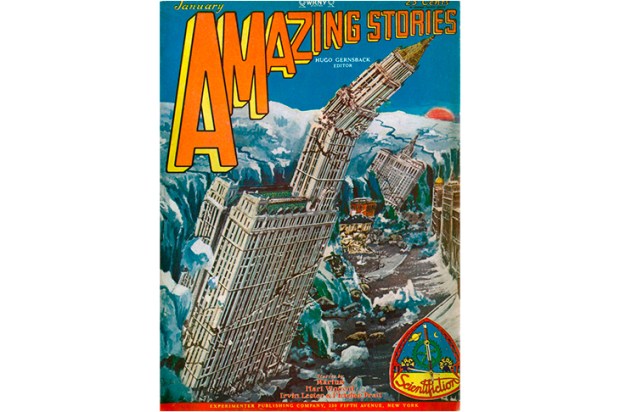
Indeed, it is delusional to believe that humans can control the weather or extreme climatic events. This should be clear when considering some of the most calamitous climatic disasters of the past. In 1815, Mount Tambora in Indonesia sent a cloud of ash and pyroclastic flow across the world causing the ‘Year without a summer’ – 1816 – and much suffering and deaths, but it coincided with the end of the two-century-long Little Ice Age. Coincidence? Solar farms would have been useless for over a year. Tambora blew heaps of greenhouse gasses into the stratosphere, of which carbon dioxide was a small component, and the planet warmed enough to shrug off the Little Ice Age, and humankind returned to the golden age we now enjoy. Also, the biggest volcanic eruption since Krakatoa in 1883 occurred at Hunga Tonga in 2022. Years later, the aerosols from this eruption are still in the upper atmosphere causing weather extremes from floods to droughts, heatwaves to blizzards in patchy areas of the surface as the aerosols disperse in response to rotational and cyclical planetary forces.
However, what humans can learn from the early climate change debates is to ensure there is infrastructure in place, capable of dealing with such climatic events. In that case, discussions in Australia (and globally) ought to concentrate on developing defensive strategies to help communities endure the turmoil caused by climate-related disruptions. Climate control is possible within enclosed spaces such as motor vehicles or apartments but despite all of the parliamentary pontifications, at this stage the climate control panel of Planet Earth is beyond reach of mere mortals.