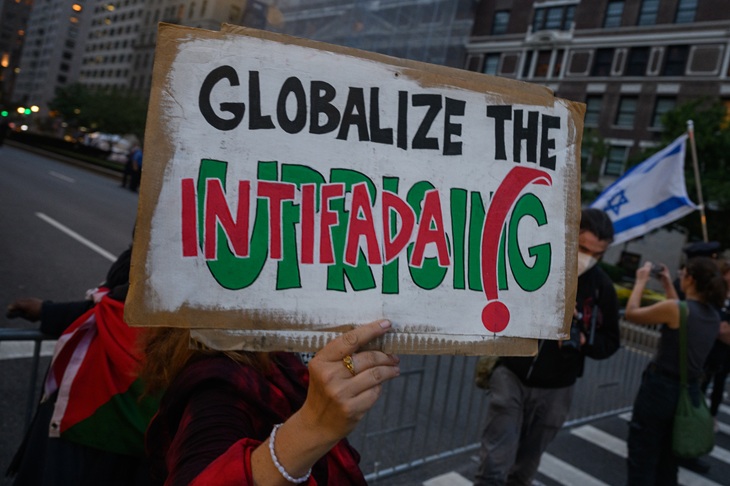
After hundreds of pages of submissions and dozens of hours of expert testimony on the rise of Antisemitism and hate speech in New South Wales, a state parliamentary committee has landed on a remarkably limited response: the NSW government should consider the banning of a single three-word phrase – ‘Globalise the Intifada’.
For those of us who spent weeks preparing evidence, research, and lived experience on how Jew hatred manifests and operates, the inquiry’s conclusion is little more than lip service – a symbolic gesture that fails to identify the adaptive, institutional, and pervasive nature of anti-Jewish hostility in Australia and the world.
The Inquiry, Measures to prohibit slogans that incite hatred, was framed as a response to the surge in Antisemitic incidents since 2023 and Bondi Beach terror attack in 2025.
However, from the outset, the inquiry’s Terms of Reference constrained the committee to a narrow question: Should particular slogans be banned? The focus on words, rather than ideas, is the wrong approach. Slogans are endless. Easily swapped out for new ones. For every phrase prohibited, another one will eventually emerge. This will become a never-ending game of legislative whac-a-mole that’s resource-intensive and reactive.
To its credit (because I am not that grumpy), the mere existence of the Inquiry signals that the government recognises a problem. It became obvious once Jews have been murdered on Australian soil, a tragedy that had already happened overseas in Washington, Boulder, and Manchester in 2025 alone.
Were these murders driven by slogans? No. They were driven by false narratives about Jews. That’s why a surface-level speech issue will not solve deeper ideological prejudice.
In preparing our submission, we deliberately focused on the anti-Jewish false narratives that give rise to the slogans used today. We documented not just what was being said, but why and how it manifests, why it is harmful, where it is being deployed, and by whom. The ‘who’ being one of the crucial elements of our submission. In too many cases, the most prominent promoters of anti-Jewish rhetoric have been public figures with institutional platforms whose words carry authority and legitimacy.
The Inquiry largely failed to confront this.
It treated slogans as discrete, self-contained problems rather than as manifestations of a wider ideological shift and the organisational infrastructure that sustains it. In order to combat anti-Jewish narratives we need our public figures – especially the government – to understand where the narratives come from, the networks that sustain them, and the institutions that enable their spread. I’ve said time and time again, history shows that when societies normalise narratives that demonise and dehumanise Jews, the consequences are harassment, exclusion, vandalism, and violence.
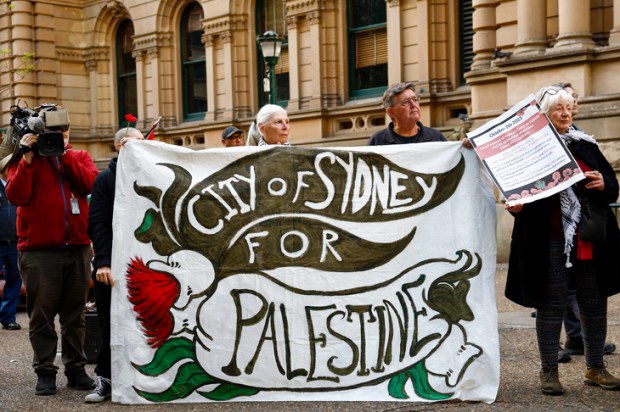
Recent events in the United Kingdom should give Australian lawmakers some insight. In a widely reported case, pro-Palestinian activists who attacked an Israeli-linked defence facility (Elbit) were acquitted by a jury despite clear evidence of criminal damage and assault. This is even in the UK where police now arrest people chanting ‘Globalise the Intifada’. The enforcement against this slogan has not prevented related violence or ensured the successful prosecution of those who acted on anti-Jewish narratives. Continued vandalism, harassment, and violence against Jewish communities in the UK demonstrates that banning words does little to shift bad ideology.
This is the practical limit of banning slogans without combatting bad ideas.
Laws can criminalise certain slogans but they cannot on their own change a culture that has been persuaded that Zionists – and by extension Jews – are villains and that Israel is uniquely criminal, because that narrative has taken hold in mainstream public opinion.
That is why the real battleground is not vocabulary but ideology. The problem is not simply what people chant on the streets, but the stories they have been taught to believe about Jews and Israel.
The Institute for the Study of Global Antisemitism and Policy (ISGAP) was clearer than the Inquiry. In its submission, ISGAP warned that protest rhetoric is not random or spontaneous, but part of a longer-term strategy to shift the Overton Window, gradually normalising more radical discourse until what once seemed extreme becomes acceptable. In this model, slogans are not the starting point of hostility; they are milestones along a pathway of dangerous ideological entrenchment.
Apropos of this, the point is not simply whether one slogan is banned. The deeper issue is that a culture of demonising rhetoric about Jews and Israel has been normalised in universities, in schools, in cultural institutions, and across large parts of the media. This is not ‘spirited public debate.’ It is the normalisation of hatred.
Shutting down certain slogans can be useful on one level, but it is only half the job. If governments are serious, they must also actively challenge the false narratives that give those slogans their power. That means confronting what is being taught in classrooms, what is being amplified on campuses, what is being legitimised by institutions, and what is being laundered through mainstream commentary.
On that note, the real test will not be a single banned phrase but whether the Royal Commission into Antisemitism is willing to acknowledge the deeper ideological problem and who is promoting them, before they do further damage.