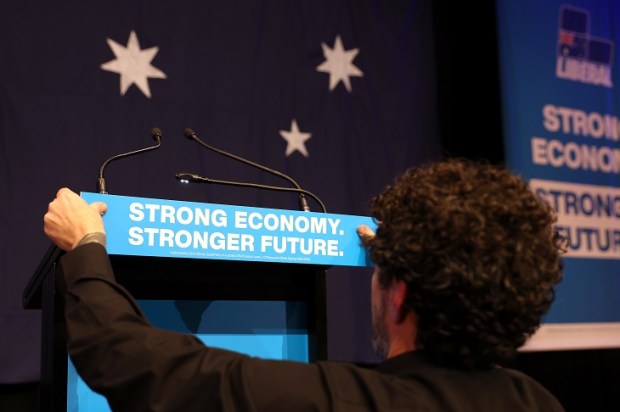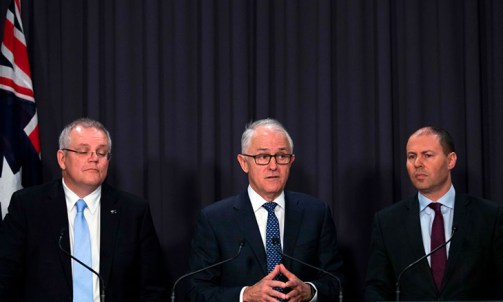
Give it a couple of weeks, or more precisely, a couple of pay cycles, and the National Party will be back at the Liberal Party’s door, cap in hand, asking to resurrect the Coalition.
Nothing sharpens the National Party’s thinking quite like the sudden disappearance of a giant bucket of taxpayer money, and particularly the loss of opposition ministry salaries and the perks that go with them. Principle, it turns out, has a remarkably short half-life when the payroll changes.
We have seen this movie before. This is exactly how it played out last time, and there is no serious reason to believe it will end any differently now. In fact, the outreach has already begun. The choreography is familiar: loud public chest-beating, followed by quiet phone calls, followed by a slow, sheepish walk back to the fold.
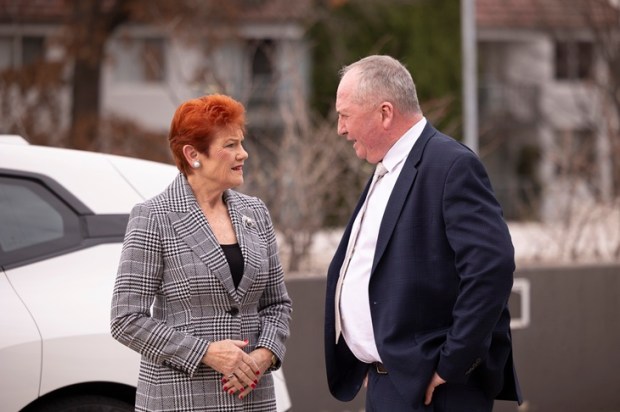
There are, to be fair, a handful of exceptions, most notably Senator Matt Canavan, but that is precisely the point. They are exceptions. They do not define the culture, conduct, or priorities of the parliamentary National Party as a whole.
Which brings us to the question the Liberal Party persistently refuses to ask itself: Why on earth does it continue to treat the Nationals as an equal coalition partner?
Why not deal with them the way Labor deals with the Greens?
No formal coalition. No permanent joint-custody arrangement. Simply humour them when necessary, take their votes when the arithmetic requires it, and accept their preferences at election time. Transactional, not marital.
End what is a protection racket in everything but name. The Nationals like to boast that they keep winning their seats, but could that perhaps be because they face no electoral competition from the Liberal Party?
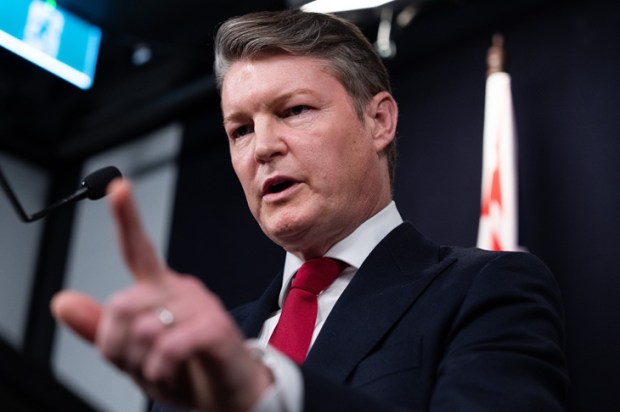
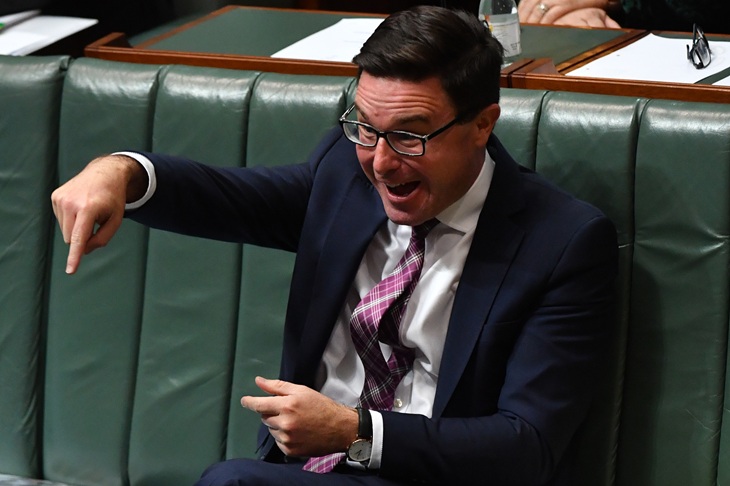
I would wager there is more chance of a Liberal winning in David Littleproud’s seat of Maranoa than there is of a National winning in Tim Wilson’s seat of Goldstein. History offers plenty of examples of Liberals winning seats off the Nationals when a retirement allows genuine competition to occur.
And let us be brutally honest about the broader reality. The National Party of today is not the National Party of the past. There are no John Andersons. No Tim Fishers. No serious national figures with a governing temperament and a sense of responsibility beyond their own patch of turf. That era is gone. It is dead, buried, and cremated.
What remains is the era of Barnaby Joyce and David Littleproud: performative politics, grievance-fuelled theatrics, and an endless appetite for attention. A party more interested in leverage than leadership, and more comfortable with outrage than outcomes.
These are not people primarily concerned with governing responsibly. They are concerned with survival, relevance, and extracting concessions; loudly, repeatedly, and without any apparent sense of shame.
So let us ask the question plainly: Who actually benefits from the Coalition continuing to exist? Is it the Liberals, or is it the Nationals?
The answer seems obvious. The Nationals gain relevance, protection, and wildly disproportionate influence they could never secure on their own. The Liberals, meanwhile, inherit the baggage.
The brand damage inflicted on the Liberal Party by constant National Party stunts, threats, and hysterics is real and cumulative. Every tantrum, every manufactured crisis, every public ultimatum reinforces the impression of a divided, unserious political project incapable of governing coherently.
And ultimately, what exactly do the Nationals bring to the table? Beyond demands for ever-larger buckets of taxpayer money to be splashed narrowly across their own constituencies purely to preserve a shrinking electoral footprint. What is the net benefit?
At some point, the Liberal Party has to stop treating the Coalition as sacred tradition and start treating it as what it actually is: a cost-benefit calculation.
Right now, the costs are obvious. The benefits are increasingly fictional.