Former prime minister, Malcolm Turnbull was in the habit of telling us that Australia is the most successful multicultural nation in the world. Let’s face it, this is an incredibly low bar given the experience of many countries with different ethnic or religious groups living within a given boundary. Just think about several Asian countries and the clear schisms that exist between ethnic/religious groups. The unresolved settlement of those divisions is apparent for anyone who cares to look.
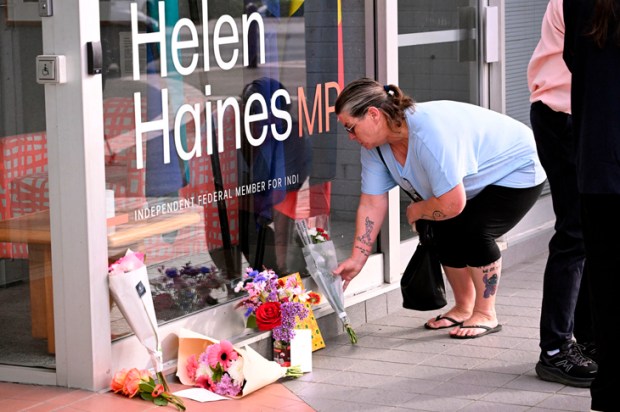
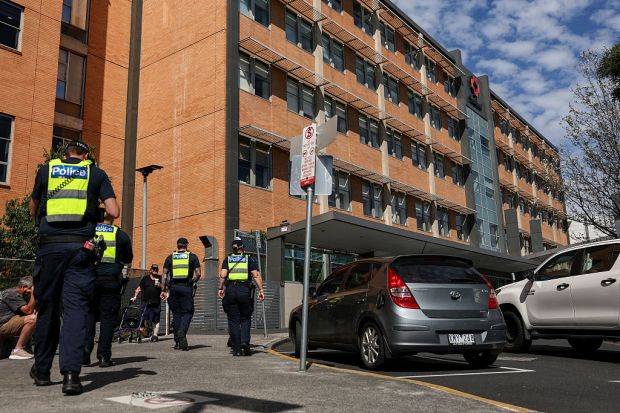
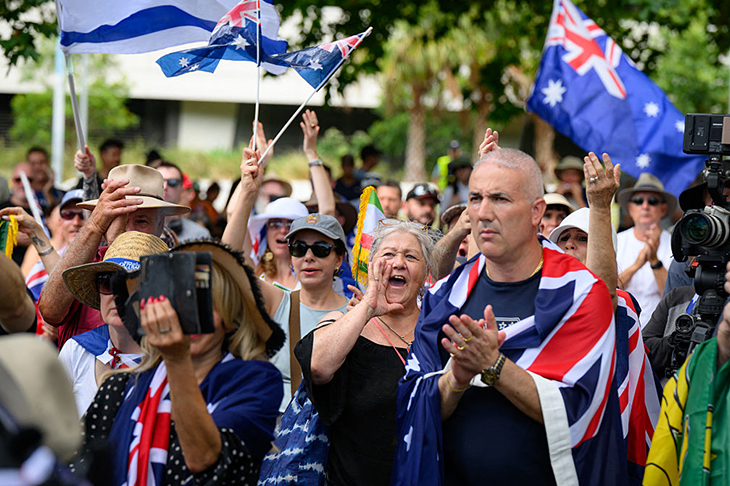
We haven’t heard so much about Australia’s magnificent multicultural model lately, although apologists never entirely give up. The odd problematic instance might be overlooked, and week upon week of hate-filled pro-Palestinian demonstrations are justified in the name of free speech. But fifteen persons, mainly Jews, killed at Bondi by a father-and-son team inspired by radical Islam, that’s another thing altogether. Or that is what we thought at the time.
Let’s face it, Speccie readers, our Prime Minister doesn’t do principle; he does politics. His immediate reaction to the Bondi killings was to express sympathy, while thinking about the political solutions that would wedge the opposition while retaining votes in marginal seats.
It’s why he opted for greater gun control as his first choice of policy response. Sure, the now-deceased assassin was legally licensed to own six guns, although it is not clear that all were used on the day. There had been some hold-up with the issuing of the licences, but some low-level clerk in the police force – or was it a case of computer says ‘yes’? – eventually gave the non-citizen, albeit with permanent residence, the go-ahead.
Let’s also be clear that the despicable two hoped to inflict a great deal of harm by detonating several home-made explosive devices. It’s just that they didn’t go off. I haven’t heard Albo mention greater control over explosive devices.
It has become clear that the enforcement of the current gun control laws is patchy, to say the least. Queensland, for instance, still has only paper-based records, which makes cross-referencing close to impossible. Several states could improve the administrative side of things.
But gun control was never the real issue, particularly as it relates to stamping out antisemitism. Any tightening of the regulations would have a disproportionate impact on those living in rural and regional communities. The National party would never agree, and voters could easily flock to One Nation.
Any gun buyback would just involve gun owners handing in their rubbish firearms. But Albo would still tell us that he was doing something, acting with conviction post-Bondi. It would play well in city electorates where most voters couldn’t tell the difference between a rifle and a shotgun and don’t like guns, in any case.
Of course, the last thing that Albanese – and, you must assume, other factional mates in the party – wanted was a royal commission into antisemitism. Gosh, any in-depth analysis carries the risk that the complicity of the Labor government in fostering antisemitism and antisemitic acts could be exposed. At the very least, a superficial examination would reveal the government’s failure to act.
While Albo was wasting time fending off the inevitable, he proposed the strengthening of hate speech laws to combat antisemitism. It was always a stretch to penalise people making comments about race to induce greater social harmony. But it was worse than that: it would become a criminal offence to publicly promote or incite racial hatred, with jail sentences (up to five years) being one possible penalty. The test rested on whether the conduct ‘would cause a reasonable person who is the target, or a member of the target group, to be intimidated, to fear harassment or violence, or to fear for their safety’. There was to be an exemption for quotations from religious texts.
(As a commentator who regularly writes about immigration, I was beginning to wonder whether I could be caught in the snare of this offence. I often refer to the impact of large-scale migration on social cohesion. I also provide evidence on the negative economic effects of immigration as well as the positive ones.)
Again, I’m sure most Speccie readers were in my camp: aghast at this infringement on freedom of expression as well as its highly subjective nature. You only have to look at what’s happened in the UK to know that this is a path we do not want to take. Each day, underutilised police officers trawl through people’s social media feeds to spot hate speech. People are warned, people are harassed. And, in some instances, people have been jailed.
Albo has now had to ditch this part of his omnibus bill given the lack of support from both the Coalition and the Greens. No one should lament this development. Combatting antisemitism was never the real objective of this new racial vilification offence.
The Royal Commission on Antisemitism and Social Cohesion includes as one of its objectives: ‘Promoting Social Cohesion: making recommendations to strengthen social cohesion in Australia and counter the spread of ideologically and religiously motivated extremism’.
On the face of it, these words sound innocuous enough. Put your hand up if you are against social cohesion. But what does the term ‘social cohesion’ mean precisely? Is this a term that could also be used for malign or unrelated ends? Progressives often argue that income equality (and punitive taxation) are necessary for social cohesion. Is it possible that the largest and most forceful groups end up defining social cohesion for their own purposes?
The Scanlon Foundation recently released a report on the topic. Note here, this organisation takes a very Pollyanna view of multiculturalism and is highly supportive of high rates of immigration.
One standout finding is that only 46 per cent of adults surveyed felt a strong sense of belonging in Australia, down from close to two-thirds in the early-2020s. But according to the good folk down at Scanlon, 83 per cent ‘still agree that multiculturalism has been good for Australia’. This is notwithstanding the different interpretations that respondents place on the term, as well as the elicitation bias known to be connected to worthy-sounding questions.
One finding not emphasised in the report relates to attitudes towards people of different religious faiths. There has been a marked decline in positive attitudes towards Muslims: from 24 per cent in 2023 to 16 per cent in 2025. This is almost certainly a statistically significant fall. It is also the same time period after the 7 October 2023 attacks in Israel and the ongoing pro-Palestine demonstrations.
Of course, the idea that a government can legislate to create social cohesion is a complete furphy. In fact, most government actions in this space are likely to raise suspicions and can easily make matters worse.
The very concept of multiculturalism was always based on a falsehood: that all cultures are equal in every respect and that arriving migrants should be allowed – nay encouraged – to continue to adhere to the cultural values they bring with them. The fact is that this is the primary reason for the pickle we are in.
A multi-ethnic society with a shared set of values is a recipe for success; multiculturalism is the highway to problems, including antisemitism.
Got something to add? Join the discussion and comment below.
You might disagree with half of it, but you’ll enjoy reading all of it. Try your first month for free, then just $2 a week for the remainder of your first year.