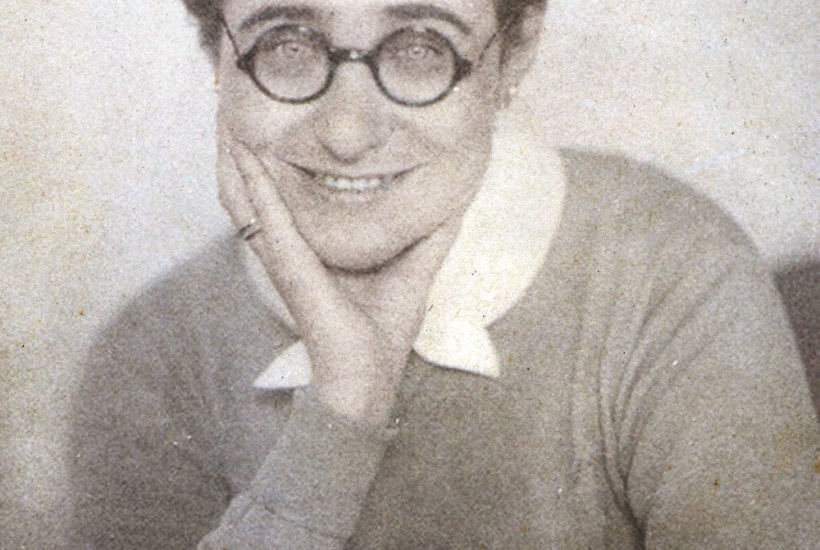
Sometimes the term ‘lost masterpiece’ proves to be little more than a publisher’s puff. At other times, however, a long-buried book that is dug up, dusted down and branded a classic is worthy of the accolade. That applies to Gabriele Tergit’s The Effingers. Originally published – and then promptly overlooked – in the author’s native Germany in 1951 and recently rediscovered and reappraised there, the novel, a vivid chronicle of German Jewish life over the course of 70 years, now appears in English for the first time.
Opening in 1878, Tergit charts the progress of siblings Paul and Karl Effinger as they leave their provincial hometown in the south of Germany to make their fortunes in Berlin. There they receive financial backing to open a factory from the bank of Emmanuel Oppner and his brother-in-law, Ludwig Goldschmidt. The Effingers graduate from humble screw producers to prominent car manufacturers and marry Oppner’s daughters Klara and Annette. Enjoying success, wealth and higher social standing, their future looks rosy. But a new era brings conflict and instability: war breaks out; hyper-inflation takes hold and savings are rendered worthless; and then the Nazis assume power and gradually tighten their stranglehold, endangering not just livelihoods but lives as well.
Over more than 800 pages, the novel traverses decades with a teeming cast of characters, making for a multigenerational epic. If its size is off-putting then so too is its subtitle, ‘A Berlin Saga’, for sagas, in places, as a rule, sag. There are longueurs in the form of domestic trivialities and discussions about gas engines. Chapters devoted to peripheral figures also impede narrative momentum.
But the book has many strengths. It is thoroughly immersive and unfolds in precise, often stark prose, expertly translated by Sophie Duvernoy. It is packed with well-drawn scenes of individual struggles and family dramas. Tergit (born Elise Hirschmann) wrote for Berlin newspapers until the Nazis forced her into exile, and she brings her sharp journalistic eye to bear in mapping the city and highlighting the political, societal and economic upheavals of the Weimar Republic. The novel constitutes not only a sweeping panorama but also a series of captivating portraits. Standout characters range from Paul, who yearns for a simple life, to Karl’s daughter Marianne, whose life is enriched by the women’s movement, to Emmanuel’s lovelorn son Theodor, who ‘wants to escape his life, since it doesn’t suit him’. At one point, Emmanuel declares: ‘Ever since we began to plumb the depths of nature we’ve lost interest in the human.’ Tergit never loses interest in the human, and ensures we root for her compelling characters until the bitter end.
Got something to add? Join the discussion and comment below.
You might disagree with half of it, but you’ll enjoy reading all of it. Try your first month for free, then just $2 a week for the remainder of your first year.