When To Kill a Mockingbird was published, Flannery O’Connor, the author of those unholy and tragic fables born of intense and unusual Catholicism, said that Harper Lee had written a children’s story, and the author of The Violent Bear It Away wondered if she realised. This is tricky ground. Is Huckleberry Finn a children’s book? Not in the same sense and with the same innocence as its companion piece Tom Sawyer surely is, although Mark Twain does adorn it with the figure of Huck.
On the other hand Pudd’nhead Wilson is probably one of the greatest novels ever written about a court case and is a long way from child’s play for all the hilarity of Twain’s dark humour. It’s a pity but readers often opt for either Moby Dick or Huckleberry Finn when they’re both towering representations of the American soul. ‘Call me Ishmael’: those opening words usher in Melville’s storm-tossed dark horror of an epic. Melville, with his intense radical literariness, said that America did not want an American Milton, it didn’t even want an American Shakespeare. I will always be grateful to the man from Oregon (who spoke in the soft, cultivated, nearly Irish accent of that state) who declared that if ever there was an American Milton, it was Melville. And isn’t it part of the fascination of John Huston’s film of Moby Dick that the villainous tragic hero, Ahab, that Satan with a lost leg, swearing and blaspheming against the great white whale, is played with looming grandeur by Gregory Peck, the man who would embody the idealism of America as that wise and good man, Atticus Finch, not least when To Kill a Mockingbird became a kind of hymn book for the civil rights movement. Charlton Heston, who would end up on the right, was part of the great march, and he also recorded part of Moby Dick in that rich, sometimes sardonic voice that made him, after his intimations of great prophets and heroes, such a convincing Richelieu in Dick Lester’s Three Musketeers.
But Melville was a supremely experimental parable maker. Billy Budd is a lean and ghostly fable set to music by Benjamin Britten, and brilliantly directed in Australia by Neil Armfield in 2005, and powerfully filmed in 1962 by Peter Ustinov, in haunting black and white with the young angelic-looking Terence Stamp as Billy and that dynamic horror Claggant, played by the great Robert Ryan, who wants to have his way with him.
But Melville looks forward to Kafka, and also has a deep affinity with Gogol, who wrote ‘The Overcoat’ and ‘Diary of a Madman’. Remember Melville’s great story, ‘Bartleby the Scrivener’, about the clerk who says to everyone who asks him to do anything, ‘I would prefer not to.’ It is one of the greatest examples of shorter fiction in the whole of American literature.
Melville comes out of that moment when America yearned for the great literature it might write when it was in fact writing it. It can be said of the Melville of Moby Dick – as Doctor Johnson said of the Milton of Paradise Lost – that he ‘writ no language’ and that he composed in a ‘Babylonish dialect’, but what else can you do when you raise monsters from the vasty deep.
Twain, of course, wanted the transfiguration of the great variety of idiolects that formed the vernacular of the United States, and we believe Ernest Hemingway when he says, ‘All modern American literature comes from one book by Mark Twain called Huckleberry Finn.’
He also said Australia’s history was like a set of beautiful lies, and it is one of the richest compliments this continent, with its democratic achievement, has been paid, despite all the horrors of terra nullius. Do we think of these things especially at this time of year, with the twelve days of Christmas coming at us like a destiny or a predestination in the face of every horror?
Ian McKellen is in the habit of quoting his Cambridge tutor, who used to say that he was only interested in seeing Twelfth Night performed by archangels. Is this because it’s like Il Trovatore – all it requires is a handful of the greatest performers alive – Caruso and Melba, and the best you can offer. I’m not old enough to have seen Vivien Leigh tour here in Twelfth Night – which she did in 1961 – though a baby boomer could catch the John Barton/Judi Dench production in the summer of 1969 with Dench as Viola and Donald Sinden as Malvolio.
From January 31, you can see Glenn Elston’s Twelfth Night in Melbourne’s Botanical Gardens. Elston’s productions are picnic shows in the open air with the warmth they generate. One that was treasured in 2010 featured Kate Kendall as a country-and-western Beatrice in Much Ado About Nothing. Among classic recordings there’s a DVD of Twelfth Night with Ralph Richardson as a matchless Sir Toby, Alec Guinness as Malvolio and Joan Plowright as Viola and Sebastian. Tommy Steele sings the songs of Feste, Adrienne Corri is a sumptuous Olivia. There was also a very idiomatic Twelfth Night, which began with the very Australian voice of Max Cullen reading from an old text: ‘This is Illyria, Lady.’
It’s a reminder of the passing of Tim Robertson, who wrote a book, The Pram Factory, about the renaissance of Australian drama, and never seems to have been used properly despite the marvels of his timing and the richness of his voice. There’s the memory of him in The Big Steal, saying to Ben Mendelsohn, ‘Don’t touch her breasts’, but it would be good to have seen him in some of the great Shakespearean roles. Requiescat.
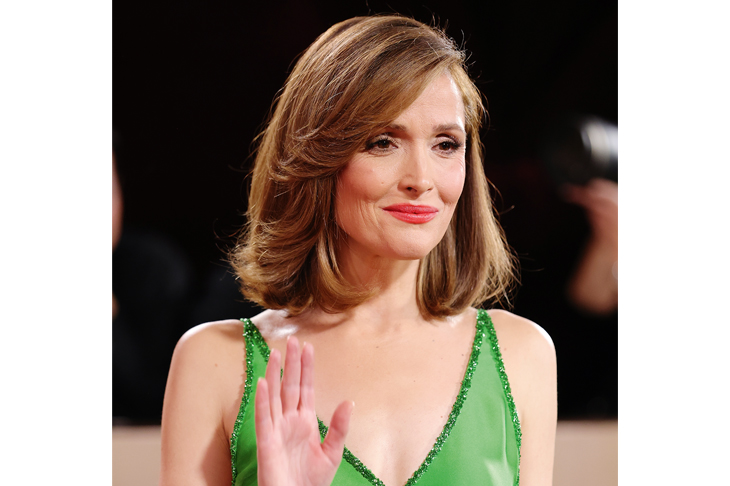
We’re lucky to have that great contemporary actress, Rose Byrne, who has given us her Medea (directed by Simon Stone, with Bobby Cannavale as Jason, at the Brooklyn Academy of Music in 2020). She’s a dynamo in Physical, and it’s cheering to see she’s won a Golden Globe for best actress for the endearingly named If I Had Legs I’d Kick You. Would to God she had done Arthur Miller’s View from the Bridge in Australia as promised. There was another appealing choice in Paul Thomas Anderson’s One Battle After Another, for which Teyana Taylor won best supporting actress in this Thomas Pynchon adaptation, which has also won Paul Thomas Anderson best director and best screenplay. And Timothée Chalamet – the man with the perfect Dylan singing voice – won best actor for Marty Supreme.
Got something to add? Join the discussion and comment below.
You might disagree with half of it, but you’ll enjoy reading all of it. Try your first month for free, then just $2 a week for the remainder of your first year.