With wayward political ideologies hell-bent on bankrupting our two largest cities, Australia’s federation is due for a refresh.
To save the democracies of New South Wales and Victoria, Sydney and Melbourne should be carved out of the existing states to become independent city-states.
This isn’t a radical fantasy, it’s a practical solution inspired by successful models abroad and enabled by our own Constitution. By doing so, we can liberate regional NSW and Victoria from the dominance of urban elites, allowing each to chart their own course without the burdensome cross-subsidies that currently distort our politics and economies.
The rift between Australia’s big cities and their regional counterparts is no secret. Sydney and Melbourne, with their swelling populations and progressive agendas, wield disproportionate influence over state governments.
Take, for example, policies cooked up in the cities: cancelling Christmas, funding climate change grifters, expansive socialist housing programs, and a raft of ‘progressive’ ideas that undermine individual freedoms and the primacy of the family.
Such progressive nonsense undermines the realities of life in the bush.
Consequently, farmers in the Riverina or miners in the Latrobe Valley find their interests sidelined by decisions made thousands of kilometres away.
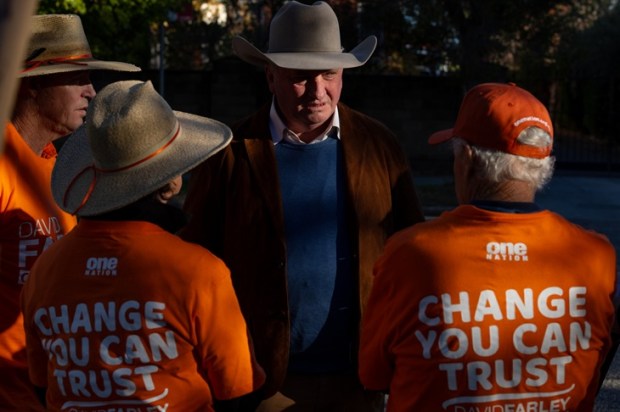
As now One Nation MP Barnaby Joyce has long argued, this setup disenfranchises regional communities, particularly when it comes to the fruits of their labour. Joyce has championed the idea of new states for areas like New England, pointing out that royalties from natural resources like coal and gas flow disproportionately to city coffers, funding urban luxuries while regions struggle with infrastructure deficits.
In recent times, farmland is being destroyed to make inner-city elites feel better about their carbon footprint while farmers are paying the bill. In NSW and Victoria in particular, sheer numbers of people mean that people in the regions are under-represented when it comes to regional issues. Further, states’ rights, designed to be protected by the Senate, have been commandeered by the major political parties.
Politicians and polling agencies don’t give a toss about regional Australia. And while they keep harping on about how progressive ideas dominate Australian politics and that immigration and young people have changed our political landscape forever, they are doing so by spending other people’s money. Particularly people in the regions who actually generate the cities’ wealth.
If regional Australians had greater control over their own political destinies, the cities would have to live within their means. This would include how many immigrants they can house, how many bike lanes they could subsidise, and how much subsidised public housing the state governments could build at government prices, in government timeframes, and for city folk who continue to drain resources from the regions.
If Sydney and Melbourne were excised as city-states, regional NSW and Victoria could retain control over their vast natural wealth, directing mining royalties and agricultural revenues toward local priorities like roads, hospitals, and water security. No longer would bush taxpayers foot the bill for metropolitan light rail or subsidised arts festivals. As Joyce emphasised in his push for regional self-determination, such separation would ensure a fairer distribution of royalties to regions and empower them to thrive on their own terms.
We don’t have to look far for proof that city-states can work within a federal framework. Germany offers a compelling blueprint. Among its 16 federal states, Berlin, Hamburg, and Bremen are city-states that function autonomously. These urban enclaves handle their own governance, from education and policing to economic policy, without the drag of sprawling rural territories. Berlin, for instance, operates as both a city and a state, with its own parliament and executive, seamlessly integrated into Germany’s federal system. This model allows cities to pursue tailored policies while rural states like Bavaria focus on agriculture and traditional industries.
The result is a more balanced federation where urban and rural voices aren’t constantly at odds. Australia’s cities could follow suit, adopting their policies on issues like gender ideology or climate activism, but crucially, without free-riding on regional resources.
Sceptics might dismiss this as constitutionally impossible, but our founding document begs to differ. Section 121 of the Australian Constitution explicitly empowers the federal Parliament to admit to the Commonwealth or establish new states, while Section 124 allows for the formation of new states by separating territory from existing ones with the consent of the affected state parliaments.
It’s been done before. Queensland separated from NSW in 1859, and there have been multiple plebiscites on new states since. The process isn’t easy, requiring political will and perhaps referendums, but it’s entirely feasible. And growing disillusionment in the regions means the appetite for such changes is ravenous.
Ultimately, this reform would realign Australian politics along more authentic lines. If the big cities want to embrace un-Australian values and prioritise globalist agendas over national resilience, then they can fill their boots. But they will have to make their boots using their own resources, their own taxes, their own land, and their own people.
Regional folk shouldn’t be forced to subsidise inner-city fairy-tale existences, where baristas debate pronouns while farmers battle dictatorial energy infrastructure laws.
By creating Sydney and Melbourne as city-states, we’d not only save New South Wales and Victoria but rejuvenate our federation, ensuring every Australian’s voice is heard in a system that truly represents them. It’s time to draw the line and let the cities stand on their own two feet.
Dr Michael de Percy @FlaneurPolitiq is the Spectator Australia’s Canberra Press Gallery Correspondent. If you would like to support his writing, or read more of Michael, please visit his website.