2025 is drawing to a close. So, because everyone likes a listicle, let’s now trawl through some of the worst of politics over the past year.
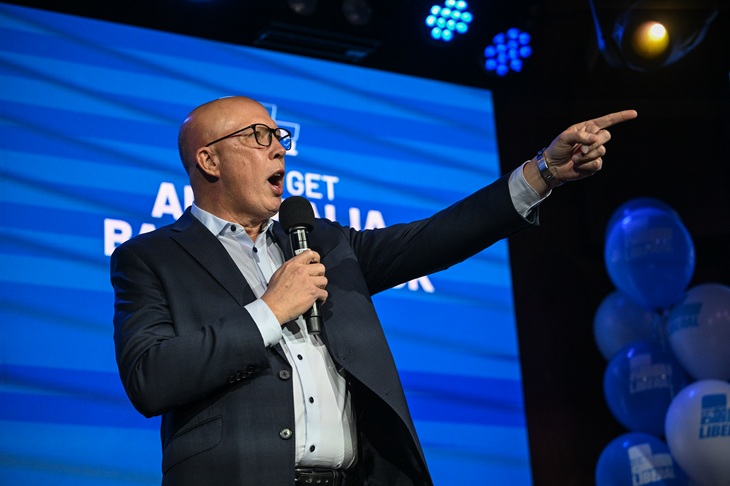
1: Losing big: Peter Dutton shows us precisely how to turn a small lead, to a knife-edge tie, to a catastrophic defeat. Peter Dutton was once riding high after the defeat of the Voice Referendum, which failed to secure a majority in any state or overall. But, he squandered this lead.
I ascribe the loss to a lack of clear messaging and the inability to present a positive aspirational vision to the electorate. Indeed, I argued for such a vision back in early 2023. Peter Dutton came across as indecisive, prevaricating between positions. He also seemed scared of his own shadow, unable to call out Anthony Albanese’s fabrications – and there were many – for fear of seeming harsh.
Peter Dutton was 2025’s biggest electoral loser, forcing the Coalition into a tiny minority and losing his own seat in the process.
I was also tempted to include the entire Liberal Party in this list, including the state Liberal leaders. However, by the end of 2025, they appeared to have stemmed the bleeding. The new state leaders are not perfect, but, they appear to be less devoid of charisma than their predecessors, which is a slight improvement.
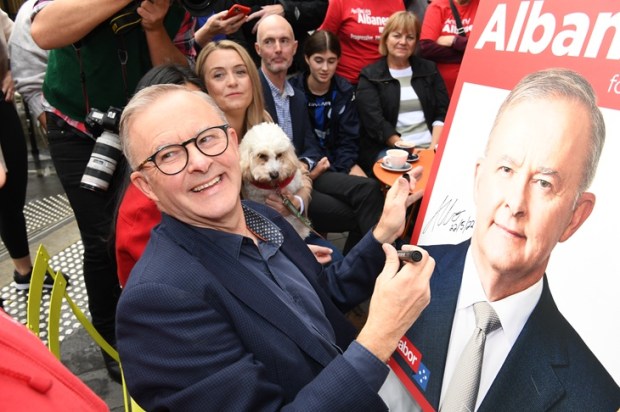
2: When divide-and-conquer stops working: Anthony Albanese is a tentative entry in this list. Albo has maintained strong polling. He is politically savvy, being adept at cynical divide-and-conquer style politics. However, this approach finally came unstuck towards the end of 2025 with his ham-fisted response to the Bondi massacre.
In the wake of the massacre, he decided to blame guns and crack down on ‘hate speech’. Normally, this would work. However, the Jewish community was having none of it, seeing through the approach as a cynical exercise in deflection. It is one thing for the opposition to excoriate you. But, when the victims of the attack call out your BS, it is very difficult to hoodwink people.
3: A treaty no one wants: Victoria is broke. The Victorian government – led by Jacinta Allan – should be trying to save money. Instead, Australia’s highest paid premier is doing precisely the opposite, presiding over a treaty that is set to cost taxpayers at least $70 million per year. A figure that even treaty-supporters have confirmed, seeing it as a victory because it is at least smaller than the previous claimed costs. This is despite the majority of Victorians voting against the Voice. And, given that a treaty is exponentially more severe and onerous than the Voice, you would think they would also object to it. So much for democracy.
The treaty will be costly. The initial cost is for the relevant bureaucrats and members of the Victorian voice-style organisation. As indicated, this is at least $70 million per year. This is because we must consider opportunity costs and lost productivity. For example, when regulatory tape delays or stops projects, businesses lose money. Taxpayers also pay through lost payroll tax, GST revenue, corporate tax, and individual tax. That is, crunching business indirectly costs us all by crunching the tax base. Unfortunately, Jacinta Allan does not seem to care.
4: Spending spree … with other peoples’ money: Politicians’ snouts are always in the trough. Even when they are not, they spend like drunken sailors. The headlines involving Anika Wells and Don Farrell neatly show that politicians have enjoyed their travel ‘entitlements’, something that Anthony Albanese tried to avoid acknowledging for as long as possible. It caught up with him, and he has since been dragged kicking and screaming towards travel reform.
The bigger issue is more fundamental, however: the irresponsible spending is a microcosm of how government acts. Julie Inman-Grant’s office has spent over a million on international travel even though she is merely the domestic eSafety Commissioner. How was that travel justified in the court of public opinion? Who knows. Similarly with Anika Wells, who somehow managed to spend nearly 100k to make a six-minute speech in New York. In my view, public figures exercised a lack of responsibility when spending our money.
5: Incompetence mixed with ideology – ushering in a socialist death spiral: Jim Chalmers deserves an entry in this list for his sheer incompetence. Not only has he presided over a worsening budget situation despite record tax revenue, he has plans to make it worse.
The problem is a death spiral. To see how this works, Australia needs to grow its tax base. This is because a growing economy enables the government to take a smaller slice of a growing pie. However, if the government introduces regulation and taxes that reduce the tax base, then the available pie shrinks and the government starts taking a larger proportional slice.
The UK is a cautionary tale. Rachel Reeves, the Chancellor of the Exchequer (i.e., Treasurer) displayed true incompetence, hiking capital gains tax rates only to see capital gains tax revenue fall. This was due to capital moving overseas and people simply deciding not to sell assets lest they lose equity to the government. It was obvious that this would happen to anyone with any experience in finance. Unfortunately, politicians lack real-world experience.
Chalmers is the chief architect of this potential death spiral. This includes his tax grab on super, which originally included a tax on unrealised gains and his push into 2026 to increase capital gains tax despite Australia’s CGT – which tops out at 47 per cent – being literally the highest in the world. Chalmers is a good spin doctor, but he is one of the most contemptible politicians in Parliament. You couple this with a complete lack of spending restraint and it is clear that Chalmers is not up to the job.
2026 is shaping up to be more of the dismal same, but at least the Coalition may have grown a spine and might finally be holding the Federal and State governments to account.