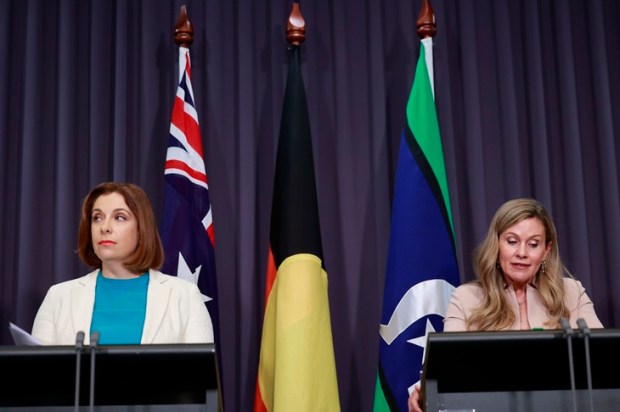
Australia has decided that those aged under 16 years should spend less time on Instagram, TikTok, and whatever new digital distraction emerges next. Ostensibly, this law was introduced to save children from themselves, or at least to save society from a generation of zombie-scrollers raised on a diet of harmful content. Effective December 10, 2025, the new law requires social media platforms operating in Australia to take ‘reasonable steps’ to prevent children under 16 from holding accounts on their services. Platforms that fail face fines approaching AUD 50 million.
In short, Australia just hired a digital nanny to pry teenage faces off screens before they fuse permanently – somewhat reminiscent of Snow White’s wicked queen finally winning custody of the Magic Mirror in many renditions of the classic.
On paper, the benefits seem obvious. Fewer notifications may mean more scraped knees, heated debates over playground rules, and spontaneous adventures that teach children more about life than any curated influencer feed ever could. By nudging kids into the offline world, the law could rekindle face-to-face interaction, hands-on learning, and the kind of healthy mischief that builds resilience, problem-solving skills, and critical thinking. A harmless prank, a backyard gardening experiment, or a new game invented on the spot are experiences no algorithm can replicate.
Yet the story is far from simple. For a child who wants to share a gardening technique, a homemade science project, or an artistic undertaking, online platforms have been the easiest – and often the only – way to connect with the wider world. Under the new age-verification rules, those avenues may narrow dramatically. Screens may shrink, but so may children’s access to global audiences, mentors, and collaborative communities that nurture creativity.
Attempts to comply with the law may also incentivise platforms to tighten verification, collect more user data, and introduce more intrusive screening systems. Critics warn of ‘function creep’ where tools built to protect children may evolve into government-grade surveillance for everyone.
The irony sharpens in the face of international comparisons. Consider China, often portrayed as a model of digital control, with strict gaming curfews, real-name verification, and content filters for children. Yet despite these constraints, Chinese youngsters routinely display a bewildering array of inventiveness. These include building robots from scrap, dominating global hackathons, and inventing gadgets in garage workshops. What prompts such creative reactions? Since their constraints are clear, consistent, and rigid, creativity simply relocates and burgeons offline. In Beijing, while the screen says ‘no’, in the real world it translates to ‘figure it out yourself’.
In fact, as this article was being written, another example of Chinese defiance-by-ingenuity plopped straight into my social-media hotpot. News broke that an amateur aircraft tinkerer nicknamed Lao Zhou, using equipment from a noodle factory in Zouping, Shandong, had begun crafting DIY aeroplanes. He is part of a vibrant Chinese hobbyist subculture that uses social platforms to exchange ideas, showcase prototypes, and – when they can get away with it – sell their improvised creations.
Impressed rather than alarmed, authorities reportedly confiscated his latest flying machines and secured a promise that he would refrain from selling uncertified contraptions. Undeterred, Lao Zhou simply pivoted to a novel workaround. Buy enough of his noodles, and you will receive a ‘complimentary’ aeroplane thrown into the bargain. It represents a loophole embodying equal parts entrepreneurial flair and mischievous parody of regulation.
Some commentators observed that if Lao Zhou had pulled off this stunt elsewhere, he might have faced prison and a padlocked factory.
While fundamental safety regulations should be non-negotiable everywhere, punitive over-regulation tends to stifle creativity and innovation permanently. This inter-generational pitfall is one Australia should avoid.
This digital media contrast spills over to education systems as well. China’s university admissions, for all their intensity, are surprisingly transparent. The Gaokao, the national college entrance exam, is rigid and formulaic. A score above the published cutoff earns the individual a coveted spot at a top-tier tertiary institution. Universities, in turn, publish threshold scores, provincial quotas, and major-specific benchmarks. There are no essays, no legacy bonuses, no donor side-doors, and no elite-mediated backroom considerations involved here. It is exhausting and unforgiving, yet every teenager knows exactly what number opens the gate.
Now compare that with the opaque lottery of the United States’ Ivy League admissions, where identical applicants can be accepted or rejected for reasons buried in a black box of ‘holistic review’, ever-shifting institutional priorities, and metastasising donor-linked considerations. In an exquisite irony, the ‘authoritarian’ system hands teenagers a crystal-clear target and a level measuring stick, while its ‘free world’ counterpart drowns them in a subjective quagmire. Beijing tells a kid exactly what score opens the door; Harvard won’t even tell you where the door is.
Australia sits somewhere in between. Its university system is less opaque than its US counterpart, as ATAR scores and published cutoffs matter a great deal. However, exceptions and adjustments are becoming increasingly common.
Early offers, bonus-point schemes, equity adjustments, portfolio pathways for creative fields, and institution-specific selection ranks all introduce layers of discretion that the average family barely understands. While not nearly as murky as Ivy League admissions, Australia’s system is drifting toward a more complex, harder-to-navigate landscape where transparency is weakening. The broader pattern is unmistakable: democracies often underestimate how much opacity undermines aspiration and innovation.
Social media is, therefore, the only pathway to establish a child’s credentials and track record in an increasingly nebulous social mobility system.
This brings us back again to children affected by the new social media law. Offline exploration is essential, perhaps even overdue. But if Australia genuinely wants to cultivate a generation of creators, problem-solvers, and thinkers, it must ensure that children retain safe pathways to share their ideas, learn from others, and participate in global conversations. A balanced approach that encourages real-world mischief while preserving safe online expression is the key here. Otherwise, the country risks trading one form of limitation for another, and teaching children not curiosity but caution. A generation growing up with a ‘policeman in the mind’ is a generation wasted.
Healthy offline activity is vital, but so is the freedom to create, share, and experiment. Only then might it spark the creativity and resilience it seeks to protect.
Dr Mathew Maavak is a retired international consultant in strategic foresight, governance, nanotechnology, Big Data and artificial intelligence. His commentary on technology and global risk has appeared in outlets worldwide. He is also the author of the dystopian techno-thriller The Electric Reckoning.