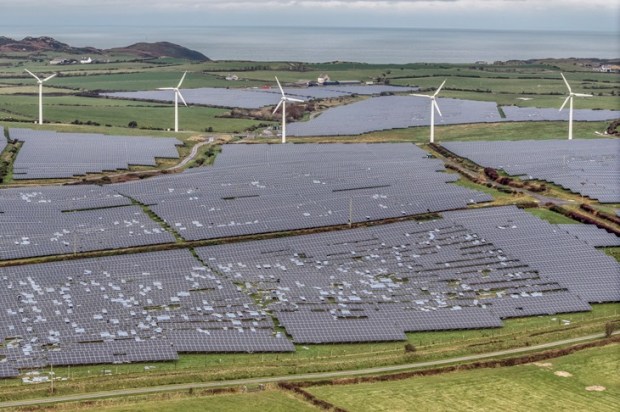
The key issue for economic policy remains the ‘transition’ away from dependable energy sources (coal, gas, nuclear, and hydro) towards low-density, unreliable wind and solar backed up by batteries and a cobweb of new transmission lines.
As 2025 comes to an end, we are seeing a diverse picture regarding the politics of energy.
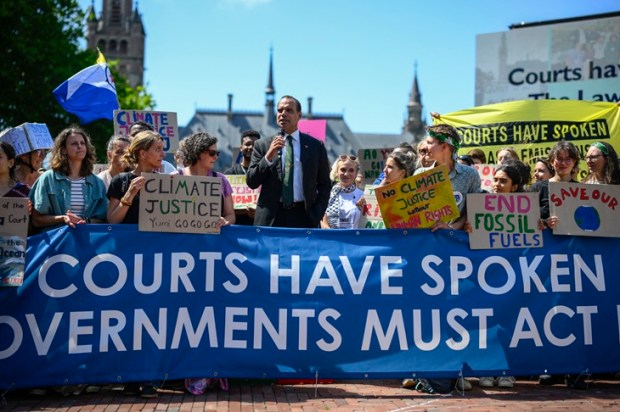
Globally, the 30th Conference of the Parties in Brazil was attended by a diminishing handful of world leaders.
The World Resources Institute (funded by governments and the usual array of philanthropy projects and Woke endowments) rolled out the canards – perilous temperature rise and climate disasters – and concluded:
‘A key question was how countries would address lagging ambition in their new climate commitments. Hopes … to end fossil fuel use … were ultimately dashed after opposition from petrostates.’
Australia lost out to Turkey as the venue for the 2026 COP31.
This was a bonus, saving the taxpayer at least $1 billion while forestalling some of the gushing verbal hyperbole from the Greens, subsidy seekers, and politicians looking to leverage climate panic.
In matters of substance, the ebbing tide of global climate alarmism, with its corollary of economic ruin, has barely reached Australia.
Although the different mechanisms to subsidise renewable energy change, the aggregate costs have remained fairly constant at $16 billion a year.
Recent changes have included the expansion of the so-called Capacity Investment Scheme (CIS), which subsidises renewables and batteries, and the subsidy for household batteries. Lower costs are entailed in the large-scale renewables subsidy as a result of the expansion of the CIS. The annualised aggregate costs are broken down below.
The Australian Bureau of Statistics provides estimates of spending on rooftop panels under the Small Scale Renewable Energy Scheme (SRES). This, like the other subsidies for wind and solar, actually undermines commercial investment.
The ABS notes that the SRES reduces the average out-of-pocket costs of installation by 50 per cent and that to further reduce costs to those installing the solar systems state and territory governments introduced Feed-in-Tariffs. Of course, the costs of these and other government measures is paid by other electricity consumers or by taxpayers.
Batteries have seen a remarkable improvement in technology, reducing their costs. But even so, reliance on them to ‘firm up’ intermittent supply based on wind/solar generation would cost at least the equivalent of national GDP and perhaps much more.
Nowhere in the world is battery storage being used other than for short-term balancing – their cost for long-term storage is hundreds of times that of gas storage.
Added to the subsidies is the spending that they incentivise for wind, solar, and batteries.
Spending fell in 2025 due to political uncertainty and a delay in introducing the batteries subsidy. But typically, the $16 billion a year in subsidies attracts a similar sum of private investment in inherently low productivity wind and solar. That spending – equivalent to around 10 per cent of private investment – is not only directed from resources that may add to productivity but actually undermines otherwise productive assets in coal and gas generation. It is little wonder that Australian productivity and therefore income levels are falling.
While the COP30 outcome is indicative of a global move away from climate alarmism and therefore low-productivity energy policies, in Australia, ALP politicians in office are showing an even greater enthusiasm for these policies.
With regard to the Coalition, the leadership’s lemming charge over the cliff of Net Zero emissions is continuing, though being moderated by the remarkable surge in support for One Nation.
Although most city-based Coalition politicians remain supportive of Net Zero others, and especially those representing rural and semi-rural are having second thoughts. This reflects worries about higher prices and lower reliability caused by the ‘transition’ to renewables and concerns among rural constituencies regarding wind and solar farms’ visual intrusions and impairment of farmland.
But Coalition policy remains unchanged under the new Victorian and NSW leaders, Jess Wilson and Kellie Sloane.
The bureaucracy also remains firmly supportive. That said, the agency most at risk of being blamed for a future supply crisis, the Australian Energy Market Operator (AEMO), has finally started to advise of the danger from planned closures of the coal generators that it had previously declared unfit for purpose. AEMO is now seeking coal generators provide a five-year notice that they are to close.
Australia is a laggard in recognising the detrimental outcomes of political interference to support wind/solar (and hydrogen) in energy policy. Hopefully, a reversal will take place before such measures are forced by the recognition of the catastrophic economic outcomes of high prices and unreliability without countervailing gains.