Last year, the Royal Life Saving’s annual drowning report recorded 128 drowning deaths in NSW to the year ending June 30, 2024.
This is the highest number since statistics were first recorded by RLS. The drowning rate of 1.53 per 100,000 population increased by 25 per cent compared to the 10-year average.
Most drownings occurred at beaches. The age group with the most drownings fell between 25-34. This is an age group you would expect to be generally physically capable.
Surf Life Saving Australia undertook a similar survey and highlighted a decline in swimming skills as a key contributor. Half of all children leave primary school in NSW at age 12 unable to swim even 50m!
These statistics are troubling and not acceptable in a developed modern society that mostly lives on the coast.
Drowning rates should be decreasing not increasing.
There are a few reasons for this trend, but one avoidable reason includes the cessation of compulsory learn to swim lessons for school-aged children. Mandatory swimming lessons were a feature of primary school curricula since the late 1800s. As a coastal nation, we realised very early the importance of teaching water safety. Learning to swim is a basic life skill and should be taught to all children.
School swimming carnivals used to be compulsory. These activities were a welcome break from the classroom and saw kids engage in useful physical activity. They have also contributed to Australia’s great success over the years as a competitive swimming nation. As part of post-war public works, Australian governments built hundreds of Olympic-sized public pools and ocean rock pools and spawned a great swimming culture.
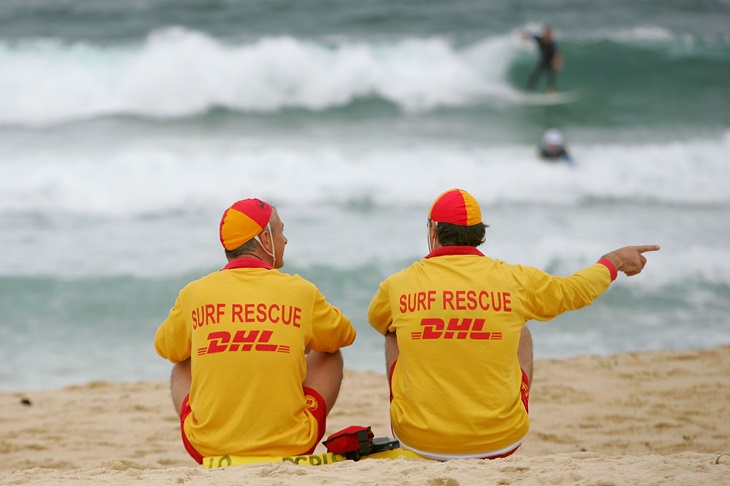
Despite most of our beaches being patrolled by professional lifeguards, volunteer lifesavers, drones, and other technology employed to make for safer beaches, drownings continue, and in greater numbers. I’m a volunteer lifesaver and was for a time the president of the Surf Club of one of Australia’s busiest beaches and I regularly see beachgoers get into serious trouble despite clear hazard signs and scores of lifeguards on duty. The general level of awareness of rips, currents, and powerful surf is very low and better communication and advertising is needed, and in languages other than English.
Australia has changed and our population is now made up of many ethnicities, including from countries that don’t have a swimming culture. These cultural groups are materially over-represented in drowning statistics. More than one-third of drownings are of people born overseas. Inland drownings more often occur in remote locations and involve disadvantaged areas and persons.
Beyond swimming, our education system seems to have gone out of its way to avoid any commitment to physical skills development. The result is kids leaving school without even the most basic swimming survival skills. This is unbelievable.
Sources say the cost of learn to swim programs is prohibitive, but what is the cost of drowning and avoidable loss of lives? On top of this we have a serious obesity epidemic with an alarming 1 in 4 children aged between 4 and 15 being overweight and obese. Education involves the development of the whole child, mentally, physically, and socially.
Recently, there has developed an obvious reluctance to challenge kids with physical activity and this has manifested as a reduction in compulsory sport and a de-emphasis on competitive sport, especially in the public education system. There is an ‘every child gets a prize mentality’ and participation is emphasised over improvement and achievement. Kids are not allowed to feel self-conscious or ‘body shamed’ but this approach has a cost as it hinders physical development, courage, and self-reliance.
The desire not to force kids into activities has been over-calibrated and permitted kids to opt out of sport altogether. Dropping previously compulsory swimming has led to deleterious impacts such as drowning and a less healthy population.
Compulsory learn to swim lessons should be reintroduced. The resources required to implement wide-scale swim lessons is significant but so are the benefits, including the development of key life skills and self-confidence.
Andrew Christopher is a lawyer and writer