Australia’s birth rate, which today averages just 1.48 children per adult woman according to new ABS data, is at an all-time low. Australia is not just below the statistical replacement rate, we are spiralling towards demographic collapse.
Leaders must urgently ask, can this be reversed? The go-to solution always seems to be about money, yet this cannot be the only issue. Even Hungary, which is spending over five per cent of its GDP on pro-natalist policies – including cash payments of over $50,000 to families who have three children – has seen only marginal increases in fertility rates.
Clearly, it is not just about money. To understand the fertility collapse in Australia and the West, we must consider other factors.
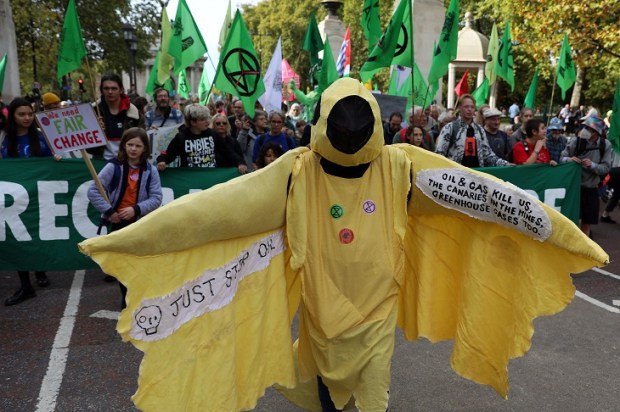
Notably, in a culture that celebrates careers, motherhood is undervalued. Economists Dean Spears and Mike Geruso believe because Western prosperity offers many meaningful ways to spend time, many deem the opportunity cost of parenting too high. Today the status outcome of having a child is lower than the status outcomes of various competing undertakings like pursuing a successful career. Because of trade-offs between career and family, children are deprioritised. This is compounded by apocalyptic climate rhetoric which has convinced many young people that having children would be bad for the climate, and depopulation is a good thing.
Therefore, the question of our time is how do we make a compelling case for more children?
Spears and Geruso believe they have the answer and have published a book titled, After the Spike: Population, Progress, and the Case for People. The thesis is that firstly, a larger population means a greater pool of ideas. If a consistent share of people will grow up to become scientists, entrepreneurs, and inventors, then a larger population ultimately means more minds capable of solving the challenges we face.
Secondly, a larger population makes solutions more financially viable. Problems can be addressed more cost-effectively and efficiently at scale. The incentive for investors and innovators is far stronger when a product can be sold to millions rather than thousands.
Technological progress reduced pollution in China even as populations grew. Likewise, the World Economic Forum has shown the carbon footprint of children today is 10 times smaller than their grandparents’. Consequently, depopulation could very well result in poorer climate outcomes as well as poorer human outcomes.
Young adults need to understand this – and they would if our education system taught it. Anxiety about the climate starts early. In schools, children are taught to see humanity itself as a threat to the planet. Consequently, government policy around education is one of the first issues to address.
The Institute of Public Affairs’ latest review of the National Curriculum reveals that alarmist and age-inappropriate climate content is contributing significantly to climate anxiety in young Australians.
As IPA Adjunct Fellow and child psychologist, Clare Rowe, has said, primary-aged children are in a critical stage of psychological development. At this stage, they tend to think in concrete and literal terms. When they are exposed to slogans like ‘We must act now!’ or ‘There is no planet B!’ they often interpret these statements as literal and catastrophic. It fuels the fear the activists seek to create, along with pathological distress.
Reforming how climate change is taught is crucial. Australia’s National Curriculum’s cross-curriculum priority of ‘Sustainability’ is currently taught in all subject areas, including those unrelated to the climate, such as maths and English. This is the first thing that needs to be repealed.
Government messaging must also reflect the status we give motherhood. We need to re-frame motherhood as a high-status and fundamentally important role for women – one essential to the nation’s future. Regrettably, Australia’s childcare policy is currently driven by workforce re-entry rather than family flourishing.
Policies like the inordinate government subsidisation of daycare so mothers can get back to work quickly, not because parents necessarily want to, but because the economy requires it, must be addressed. So too must the obsession with a high level of female workforce participation. This does not mean winding back years of advancement for women in the workplace but rather giving them a choice to care for their child if that is their priority. Remote work and job-sharing options, where feasible, should also be encouraged as they make it easier for parents to balance work and care. It would be far better to direct Australia’s multi-billion-dollar childcare subsidy to parents, not providers, to allow families to choose what care suits them best.
Such policies would not only assist many women who would like to be able to afford a second or third child. It would also signal that the government honours the pivotal role of motherhood and parenting, and respects individual choice around caring for young children.
If we are serious about solving the fertility crisis, we must stop pretending this is only about economics. It’s also about education, culture and status. Only when we accept this can we address our ongoing policy and messaging failures and begin to fix the problem.
Brianna McKee is the National Manager of Generation Liberty and a Research Fellow at the Institute of Public Affairs.