Australia’s National Climate Assessment makes for disturbing reading, not just for its apocalyptic forecasts but for its lack of scientific method.
Fundamental to such an assessment is acknowledgement of data sets, opinions, and publications which offer evidence contrary to the findings of the Assessment. Its writers are surely aware of the US Department of Energy report released last July, A Critical Review of Impacts of Greenhouse Gas Emissions on the US Climate.
Among the key findings, the US report concludes that carbon dioxide (CO2)-induced warming appears to be less damaging economically than commonly believed, and that aggressive mitigation strategies could be more harmful than beneficial.
Additionally, the report finds that US policy actions are expected to have undetectably small direct impacts on the global climate and any effects will emerge only with long delays.
While being targeted at the US, the report on global climate obviously has high relevance globally.
The authors of the US report are led by Steven Koonin, a scientist of prestige who has held appointments as a professor of physics at Harvard University and New York University, and was selected by Democrat President Obama to be an under-secretary of science in his administration 2009-11. Two coauthors are John Christy and Roy Spencer, both recipients of the 1991 NASA Exceptional Scientific Achievement Medal for work on satellite temperature records which have contributed so much to our understanding of global temperature variations.
The views of scientists such as Koonin and colleagues cannot be ignored.
It horrifies me to discover that Australia’s national climate assessment does not mention the US DOE report or reference its authors, let alone admit existence of scientific controversy. A student would fail an undergraduate assignment for such an oversight.
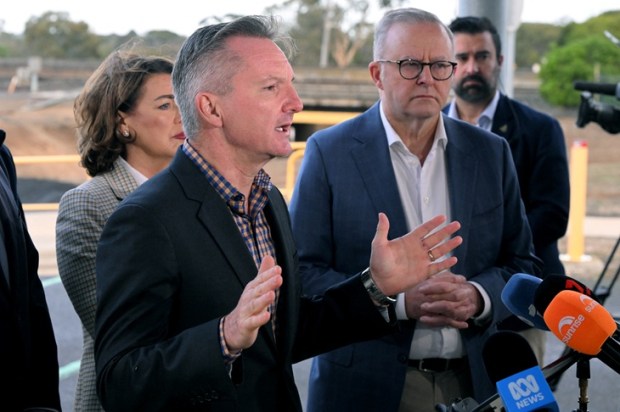
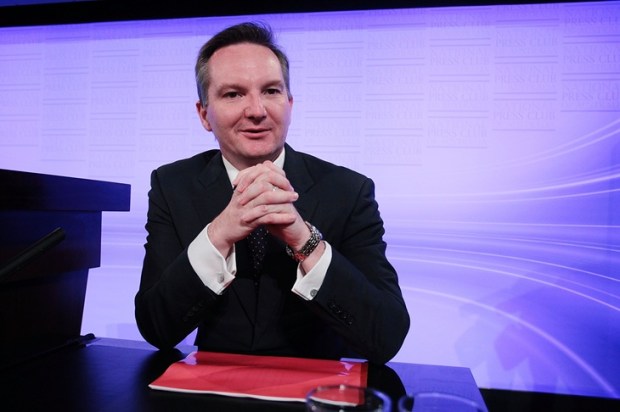
Sadly for Australia, the uncritical acceptance of such mistakes by our Minister for Energy Chris Bowen, may not be rectified by a year of further study.
The Net Zero transition could cost 27 million Australians trillions of dollars over the next 20 years in misdirected and ineffective funding.
Michael Asten, retired professor of geophysics, Victoria