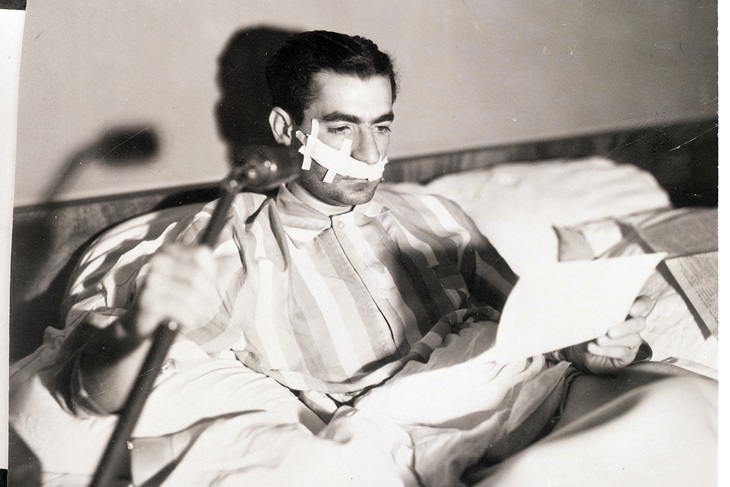
On February 5, 1949, Mohammad Reza Shah Pahlavi Aryamehr was the target of an assassination attempt during the inauguration of the Faculty of Law at the University of Tehran. He was shot five times but miraculously survived. This event was not merely a personal attack on the Shah; it symbolised the effort of extremist groups to control the cultural and identity future of the Iranian nation.
The Fadaiyan-e Islam group knew well that if universities and modern education became firmly established in Iran, they could no longer send young people to religious seminaries for ideological brainwashing and turn them into tools for advancing their extremist agenda. The Shah, on the other hand, sought to ensure that the Iranian nation remained ‘Iranian’, with its national and historical identity intact, resisting extremist Marxist, Leninist, and radical Islamic currents.
Eight decades later, a similar scenario unfolded in the United States. On September 10, just one day before the anniversary of the September 11 tragedy, Charlie Kirk, an American social activist and writer, was targeted during an open questions event at a university. He openly spoke against radical leftists and extremist Islamism, emphasising the importance of American identity and the preservation of national values. Carley’s goal mirrored that of the Shah: to warn the younger generation not to fall into extremist ideological traps and to retain the ability to distinguish truth from falsehood.
These events demonstrate that if nations do not return to their original identity and historical roots, they face serious threats. The combined force of radical leftism and extremist Islamism not only erodes ethical and cultural norms but can also weaken the foundations of society and education. These two currents target universities because they are the breeding ground for future generations a place where young minds should be nurtured to be inquisitive, creative, and independent, rather than being ideologically manufactured.
Historical experiences clearly show the wide-ranging damage that the fusion of extremist ideologies from communism and Marxism to radical political Islam can cause. This unholy alliance, spanning from the Middle East to Europe and the United States, has turned generations of youth into instruments of ideological warfare, destroying human and ethical values. The result is a generation that, instead of questioning, analysing, and thinking critically, falls into the trap of political slogans and violence; a generation incapable of making independent decisions, whose worldview is confined by imposed ideological frameworks.
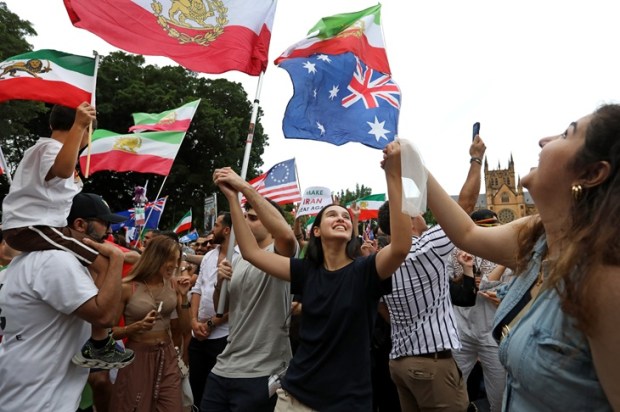
Even in advanced and democratic societies like Australia, this threat is real. A few weeks ago, a demonstration was held in which the image of Ali Khamenei, the leader of a radical Islamic regime, was displayed. Such events serve as a warning for Australia’s future. If this kind of ideological infiltration is not seriously addressed, the tragic fate that occurred in Iran could repeat here: the loss of independent thinking, the weakening of ethics and culture, and the creation of a generation that, instead of thinking independently, simply follows extremist ideologies.
Therefore, it is clear that Marxist leftist groups and radical Islamists have always targeted young generations and universities because they understand that controlling young minds means controlling the future of a nation. If a society cannot protect itself from these threats through awareness, proper education, and the strengthening of cultural and national identity, the consequences will be deep and long-term – damaging not only ethics and culture but also social security, political stability, and even the scientific and economic future of the nation. Preserving historical identity, reinforcing human values, and promoting independent and creative education remain the only effective ways to counter these destructive currents.
Leila Naseri: Author | Composer | Social Cultural Activist