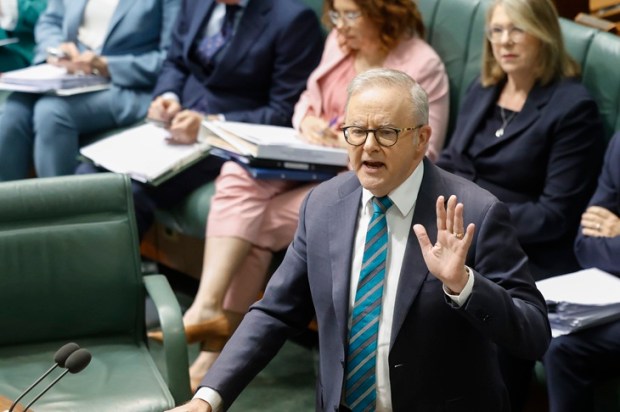
When Senator Jacinta Price commented on Australian immigration policy, and in particular Indian immigration, she was doing precisely what she was elected to do – keeping the government of the day accountable and ensuring the public interest remains represented.
To view her comments any other way is to use them as a diversionary tactic and to channel a former Prime Minister when he labelled the Senate ‘unrepresentative’.
Jacinta Price was elected to the Australian Senate. The Senate represents the interests of the people in each state and territory. Senators are elected in each state and the territory to scrutinise bills that come before the Chamber and ensure their public interest.
Senators are elected by proportional representation, which is an electoral system in which major parties, independents, and groups are elected in proportion to the number of votes they receive.
This system argues that independents and groups have equal opportunity with parties to be represented, although in reality, the system is far more complicated.
More than 250 years, ago Edmund Burke was elected to the British Parliament as the member for Bristol. Mr Burke lived in London and spent very little time in Bristol, which back then was a three- or four-day drive by horse and carriage from London.
One can understand his reticence to travel to and fro and thus his desire to create an argument for his absence.
Mr Burke developed a theory of representative government that privileged the idea of the trustee over the alternative idea of the delegate. A delegate, he argued, was merely doing the bidding of vested interested whereas a trustee, or true representative, used independent judgment in all matters of public interest where the electorate was concerned.
Mr Burke was not the originator of the theory of representative government, but he was one of the first to put the theory into practice.
In this it is important to note the parallel between Jacinta Price and Edmund Burke – Senator Price has used independent judgment to call out a matter of vital public interest – immigration policy.
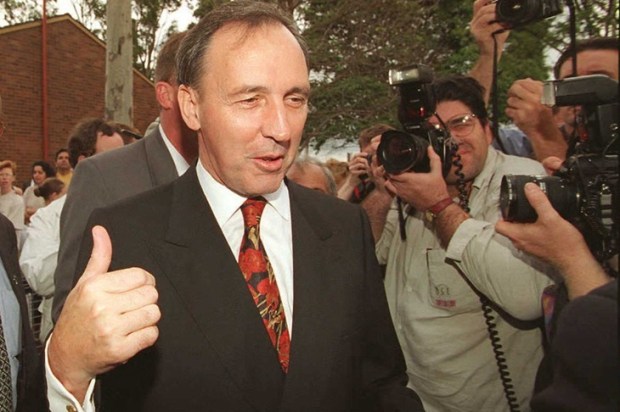
A former Australian Prime Minister, Paul Keating, once described the Senate as being unrepresentative. He added a colourful noun so that the phrase became a political tactic designed to challenge his opponents.
As Labor held no majority in the Senate at the time, his government had to negotiate the passage of legislation. Mr Keating was not one to negotiate.
It appears that the debate that has become a sidebar to Senator Price’s comment involves not so much the government but her own colleagues in the Liberal and National parties and the legacy media, though I use the word colleagues advisedly.
It’s certainly one for the legacy media, which is doing some pretty serious pearl clutching; their ABC opines that ‘distress within the Indian community is continuing to run high’. This has included members of the Liberal Party apologising on behalf of Senator Price which takes not only the idea of party cohesion and dumps it in the pig trough but also takes the relationship of the House to the Senate to a whole new level.
Similarly, the NSW Opposition Leader found time to clutch his own string while issuing a statement of support for the Indian community and the ‘deep hurt many Indian Australian feel after a Federal Senator’s offensive comment last week’.
Was Senator Price right to comment on Indian voting patterns? Is there accurate data on cultural voting patterns in Australia, for example Indian, Chinese, Filipino, or Vietnamese (India 750,000; China 600,000; Philippines 320,000; Vietnam 280,000 as per 2022 statistics)?
Both major parties have, historically, chased the vote of migrant groups. A generation or so ago, it was the Greeks and Italians on whom they showered their largesse.
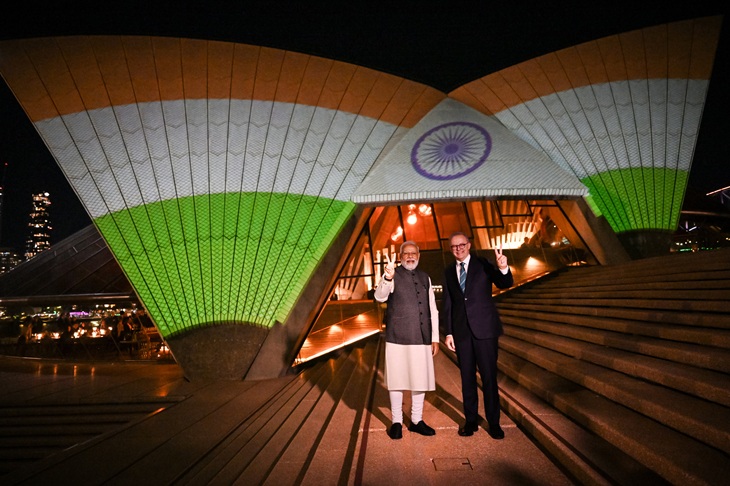
There is evidence that while the Coalition parties lie bleeding on the field of battle, Labor is today chasing particular migrant groups who may have once supported the Coalition. Recently, the Australian Prime Minister has been on somewhat of a political tour with the Prime Minister of India.
The various attacks on the comments made by Senator Price, however, are new.
A short time ago, in fact fewer than five months, ‘their ABC’ was as keen as mustard to promote a feature story highlighting individuals within the Indian community and the academy who voted for the Australian Labor Party.
One said he voted Labor because the Liberal Party refused to acknowledge climate change and disrespected Indigenous Australians. Another said she voted Labor because divisiveness and ‘othering’ was not what we stood for and that Labor priorities centred around ‘things that matter most to everyday Aussies’.
Ah, the irony.
An academic said she saw a ‘strong Labor primary vote’ in booths where the Indian diaspora had significant numbers, but she had two bob each way by adding that some Western Sydney seats favoured the Liberals.
There are presently 63 bills before Parliament, none of which is concerned with immigration.
This does not mean, however, that Senator Price nor any other Senator is precluded from speaking to the topic of immigration or any other topic if, as argued by Edmund Burke and others, that it is in the public interest.
Immigration is, was and always will be, a matter of vital public interest.