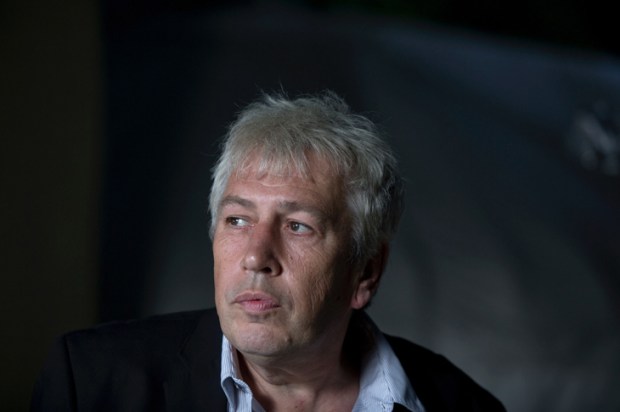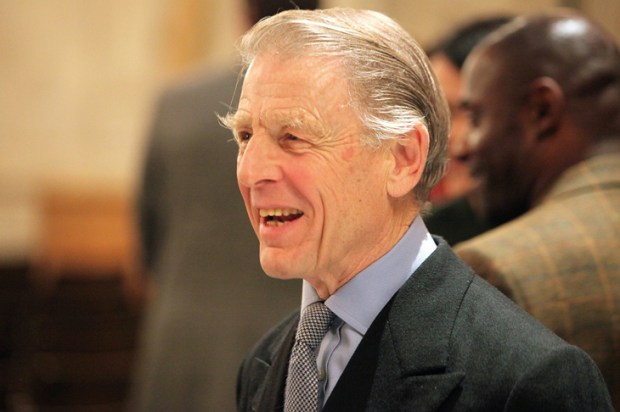
One of the greatest documentary filmmakers who ever lived died last week at the age of 97. He is the man who made The Sorrow and the Pity (Le Chagrin et la Pitié) which is the four-and-a-half-hour account of what old-timers born before the second world war refer to as the Fall of France. That generation of people now 90 or upwards saw the civilisation to which English language culture has always felt closest fall to the iron fist of Nazi Germany and in various complex and contradictory ways made love or war in the face of the conqueror. The Sorrow and the Pity is the story of the French Resistance and collaboration in Clermont-Ferrand, the town in the heart of Vichy France which paid obeisance to Hitler though it was ruled ostensibly by Marshal Petain the hero of Verdun, as Anthony Eden calls him, one of the great heroes on ‘our’ side in the first world war.
In the immediate aftermath of the war the parents of the baby boomers took delight in the sophistication of continental and especially French cinema. There was Les enfants du paradis with Arletty and Jean-Louis Barrault. Then there were the films by Max Ophüls, the father of the documentarian who made that suite of three Maupassant stories in 1952, who would go on to make The Earrings of Madame de… and Lola Montès and who to the delight of the young things of the post-war jubilation made La Ronde, the merry-go-round film from the Schnitzler play, with Anton Walbrook as the master of ceremonies, and Danielle Darrieux and Simone Signoret as the young women who find themselves in the arms of Barrault, a poet, and Gérard Philipe, an army officer.
Max Ophüls is one of the greatest masters of dramatic cinema who ever lived which gave a perspective to the non-fiction conjuror of The Sorrow and the Pity who said (of his relation to his father), ‘I don’t have an inferiority complex – I am inferior.’ Well, the man who knew he could never equal his father left almost every other documentarian for dead.
Marcel Ophüls insisted that he had no intention of setting out a case to prosecute France. ‘[The film] doesn’t attempt,’ he said, ‘to prosecute the French. Who can say their nation would have behaved better in the same circumstances?’ And Eden, diplomat, former prime minister and right hand of Churchill, says almost exactly the same thing in his fluent French. ‘One who has not suffered the horrors of an occupying power has no right to judge a nation that has.’
And still The Sorrow and the Pity caused an uproar when it was released in 1971, the year after De Gaulle’s death. Marcel Ophüls’ technique when he made the film in 1969 was to let any revelation follow its spontaneous course – he never prepared or rehearsed. A German officer from an aristocratic family says why shouldn’t he wear the Iron Cross with pride. Someone else says he is a Catholic, that makes him a monarchist.
There are the fascist demagogues who sometimes sound as if they want Germany to win the war. There are those who pitilessly round up the children to be sent to the camps. There are the disputes about this, but the reality is hideous enough. There are the old lefty stalwarts, humorous and droll and most of these people, in 1969, are in later middle age and because they’re telling what are old stories to them they all – whether they’re Nazis or Resistance fighters or freedom fighters – sound affable and everyday. This gives an uncanny quality to what comes across as a thundering case for the prosecution with the defining difference that the interlocutor and interviewers of genius, Marcel Ophüls (and his assistant André Harris) are not interested in vengeance or – if they are, covertly – it is only a remote implication.
This is how a very comprehensible bit of Vichy France took to the fall of a great nation. There is the outrage at Churchill destroying the French fleet. There is a bemused account of Charles de Gaulle and the Free French. Listen to him, someone says, coming across like the king of France.
And he does: both the glow of heroism and the touch of irony coexist. What Marcel Ophüls achieves – and the effect is miraculous in practice – is to go back in time so that we hear the easygoing relaxed chat of a lot of very recognisable human types who have a collective trust in the fact that Ophüls will accept what they’re saying as a position a reasonable human being might take.
There’s a moment where he points out, to Eden, that the royal families, the heads of governments, were seeking refuge from the Nazis, not getting into bed with them and Lord Avon – to give Eden his title – gives reluctant acquiescence to this but you don’t for a second doubt his horror at the obligation.
Marcel Ophüls wants to see humanity in the barbarity. There are the far-right atrocities of the most ghastly kind. It’s not pretty but it’s all made to seem everyday.
Ophüls followed this up with The Harvest of My Lai in 1970 about American atrocities in Vietnam and there’s another one, A Sense of Loss, about the troubles in Ireland. The work which Marcel Ophüls considered his masterpiece, In Memory of Justice, presented the double standards of those nations who had prosecuted with ferocity at Nuremberg despite having committed comparable crimes themselves.
His trick was the trick of the consummate listener. You can listen to these voices and feel they have nothing to do with the Holocaust whereas the implications are that the cries came from people just like us.
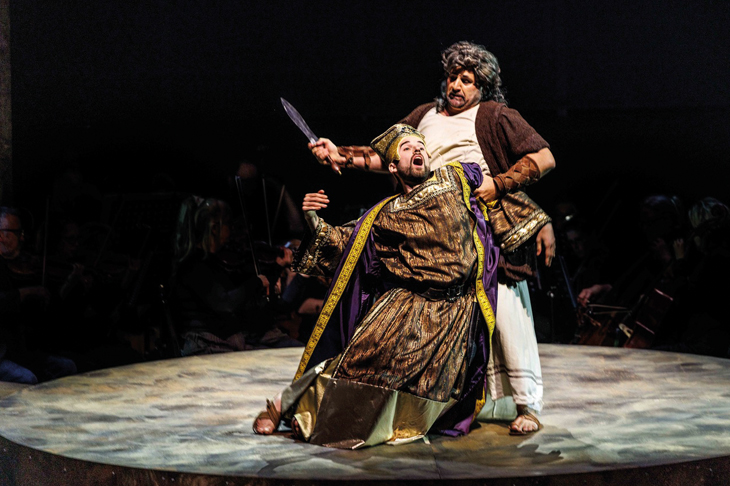
All of which is a far cry from Melbourne Opera’s production of Saint-Saëns Samson et Dalila which has the tremendous advantage of Rosario La Spina and Deborah Humble in the title roles and they rise to the challenge with great salt and savour and with a deadly sweetness on her part. You can see the composer’s eclecticism building to a towering and toppling conclusion.
Suzanne Chaundy gives us an abstract production à la Wolfgang Wagner but then there is the colour and movement of the flesh-tone ballet and the vocal magnificence of Eddie Muliaumaseali’i and the grandeur of his chant as the old Hebrew.
Got something to add? Join the discussion and comment below.
You might disagree with half of it, but you’ll enjoy reading all of it. Try your first month for free, then just $2 a week for the remainder of your first year.