The standard preamble to all marine weather bulletins is: ‘Welcome to the marine weather report. Please be aware that wind speeds may be 40 per cent higher than predicted and wave heights may be twice the height.’
Imagine, if you will, who else in the country could possibly get away with such margins of error!
‘Excuse me, madam, as your doctor I have to caution you that during this operation I may cut off 40 per cent more than needed and you may end up 50 per cent shorter than when you came in!’
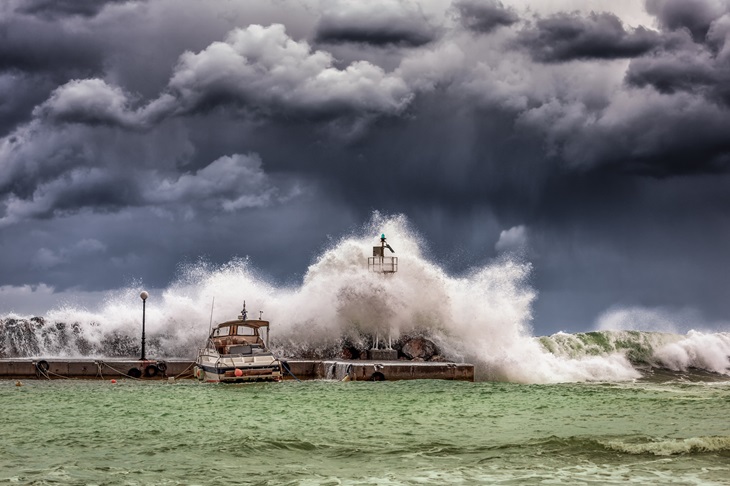
For those of us earning a living from the sea, weather is the main show-stopper and all of us are astonished that the forecasting is pretty ordinary. Often, only after you are miles from port and the wind starts whistling through the rigging, do you hear reports of a strong wind warning. Are these forecasters in an underground bunker in the CBD, you might wonder, or do they need a window and a Specsavers voucher?
I learned the frightening effect of extreme weather as a 19-year-old cadet on a ship caught in a cyclone in the Coral Sea. It had generated so much fear that I had serious doubts about seeing my 20th birthday. Extreme weather also claims about 30 large ships a year. They founder or are overwhelmed by the fury of it all.
South East Queensland has experienced the wettest November in years, despite the Bureau of Meteorology predicting ‘a very dry month’, possibly luring farmers to sell stock cheaply!
Some years ago, several of the Queensland marine tourist operators came to me to complain about the weather forecast being consistently wrong. Observing this for the next few weeks, the complaint was verified and I ended up in a stoush with the weather bureau on talkback ABC radio.
Why was it, I questioned, that when tourists were making their plans for the next day, the weather bureau predicted rain when that rain did not eventuate, or a shower came late in the evening? The threat of rain would deter the tourists from making reservations on charter fishing and diving boats, dining boats, and ferries.
This weather issue was reported on the local TV and all the Gold Coast theme parks entered the fray. They too had seen strong evidence of non-attendance due to incorrect weather forecasts.
The weather bureau chiefs, thick-skinned from years of abuse, laid out their reasons. The Bureau issued a 200-word forecast to all media outlets, they explained. Most radio stations then give a 10-second slot to a junior reporter, who will emphasise the word ‘rain’ from any suggestion of just an evening shower. Subsequently, Mr and Mrs tourist decided to stay indoors due to the forecast of rain. Marine operators ended up running empty boats on sunny days and theme parks were left almost empty, wondering where the crowds were.
The Bureau then agreed to précis the forecast so that even 10-second slots could not be misconstrued. It did improve the level of reporting and the tourists did get more accurate reports of what was happening the next day during daylight and that’s all they were interested in.
Having said that, months later while paying careful attention to the marine weather bulletins, whilst having a few at sea, I decided to anchor my old yacht at Tangalooma in the lee of Moreton Island for the predicted 15-20 knot easterlies.
At sunset, just as I anchored and made ready for the overnight stop, my inherent level of suspicion about the weather bureau made me do just one last check. Sure enough, there was a change to ‘westerly winds, 15-20 knots’ due that evening, rendering Tangalooma useless as a sheltered anchorage.
So I pulled up anchor and underwent another two hours of sailing in the dark across Moreton Bay to the Scarborough Harbour, as the rain and the westerlies kicked in, while I muttered statements about the parentage of weather bureau personnel. Adding to their precautionary blurb about the wind speeds and wave heights, perhaps they should mention that wind direction could be 180 degrees different.
But of course, it’s not just us marine people that suffer from meteorological misinformation. Airlines suffer too. I have been on enough flights that have encountered ‘clear air turbulence’ which in extreme cases have people crashing into the roof lining of the plane. My vast experience on planes leads me to suspect that there is a strong link between dinner trays with red wine and clear air turbulence.
A Swedish pal of mine, Jan Eric, an ex-pilot, advises that in the (likely) event that your lady gets huffy, argumentative or even aggressive in your relationship, just remember, it is like clear air turbulence:
You don’t know what causes it
You don’t see it coming
You don’t know how long it will last
Just hold tight until it passes
Scientific academics have proven that depressing weather can depress the spirits. Their proclamation that SAD – ‘seasonally adjusted depression’ – does, in fact, exist. This perhaps explains why the tax department is in Canberra.
Such is the unpredictability of weather in Melbourne, is why I left the place and why I shall continue these scribblings from Queensland. Having said that, the last two weeks have seen storms that finally were ‘unprecedented’ and have given us some serious reminders on tree pruning, emergency power backup, and torch batteries.
After losing the power, along with hundreds of thousands of other people, I felt very confident when the sun rose the next morning and naively thought my 5kW of solar panels would kick in and save all the food in the fridge and freezer. Fat chance they told me, because I chose not to install batteries when the panels were installed, the power being generated by my panels, when the grid is down, cannot be redirected into the house. Where is Chris Bowen when you need someone to remind you of real cheap power when the sun shines?
A marine industry guru, Hong Kong-based Eric Chu, insists that the weather forecast is never wrong, it’s the days they get confused.
Pexels