One of the great things about our federal system is that local governments ensure local issues are dealt with by political representatives who are closest to the people. But recent fires and floods are proving that council amalgamations have replaced political representation with bureaucratic symbolism that is not meeting local expectations.
Last week I was interviewed about the financial challenges facing NSW councils that surround the ACT. In particular, Queanbeyan-Palerang Regional Council has commenced a program of public consultation to consider ways to increase rates to deal with rising costs before applying for a Special Variation to the NSW government’s Independent Pricing and Regulatory Tribunal (IPART).
In NSW, local government rate increases are ‘pegged’ by IPART. At the moment, councils cannot increase rates by more than 2 per cent without applying to IPART for a Special Variation above the pegged rate. Queanbeyan-Palerang Regional Council (QPRC) is consulting with voters before applying for a Special Variation in accordance with IPART’s rules, which take into account ‘the level of community awareness and how efficiently the council has been managing its finances’.
QPRC was formed as part of a voluntary amalgamation of local governments in NSW under the Baird Coalition government in 2016. The merger forecast savings of some $13m over ten years based on the council’s own estimates, with KPMG estimating over $17m in benefits over the same period.
But recently, newly elected QPRC Mayor Kendrick Winchester was crying poor and commenced the community consultation to apply for a Special Variation to implement three potential rate increase scenarios, which will see rates increase by either:
- 12 per cent each year for three years,
- 18 per cent each year for three years, or
- 28 per cent in the first year, 25 per cent in the second year and 23 per cent in the third year.
Each scenario has different impacts on services, with scenario 3 being the only scenario where the council believes it can provide levels of service and maintenance that meet community expectations.
Back in 2004, the Carr Labor government forcibly amalgamated regional councils in NSW despite winning the 2003 election on a promise not to do so. Almost 20 years later, the failure of this policy is being realised.
In general, council amalgamations promised to decrease costs and improve services. But rising inflation and costs in materials, severe fires, a global pandemic, and recent flooding have not helped local governments to deliver services or conduct adequate maintenance. Until recently, councils in the southern NSW region were operating at surpluses ranging from 1-12 per cent, so it is clear the problem is not systemic. QPRC was operating with salary expenses some 10 per cent less than other nearby councils, so the potential for outsourcing or other cost-saving measures is moot.
While comparative financial results after 2020 are not readily available, increased costs and a spate of fires, floods, and road-damaging rains have undoubtedly consumed most councils’ modest surpluses. But NSW regional councils still charge much less for rates when compared with rates in the nearby ACT.
Property rates in the Australian Capital Territory (ACT) are much higher than those in southern NSW. But Canberrans tend to receive a much higher level of service and better access to high-quality infrastructure when compared with regional towns and rural communities within NSW local government areas (LGAs). It really is a case of ‘you get what you pay for’.
Take for example Gundaroo in the Yass Valley Council area. While property values are at near-Canberra levels, Gundaroo has no running water or sewerage system, and residents rely on water and septic tanks to provide what Canberrans normally expect to be services provided by the Territory government.
When Queanbeyan voluntarily merged with Palerang, the council also took on the additional cost of rural roads on top of an otherwise regional city operation. For the QPRC, the problem is exacerbated by the combination of trying to provide city conveniences while addressing rural realities.
NSW regional LGAs are diverse and represent a variety of communities ranging from cities and towns with surrounding rural areas such as Goulburn-Mulwaree and Yass Valley, to large, sparsely populated rural areas like the Upper Lachlan Shire. But recent events are challenging the rationale for amalgamations, especially where those amalgamations were forced upon ratepayers.
There is only so much that local councils can do without support from the state and federal governments, especially when addressing rain damage to major local roads. Upper Lachlan Shire, Yass Valley, and Queanbeyan Palerang Councils in particular have major regional roads that provide residents with access to the ACT. Many of these roads are effectively impassable to conventional passenger vehicles at the time of writing.
The problem was brought to the fore recently when a traffic incident on the Barton Highway near Canberra forced motorists onto regional roads to get back onto the Hume Highway. Northbound traffic was heavy and many conventional vehicles were parked on the narrow shoulders to repair punctured tyres resulting from potholes. Normal stuff for regional residents but not what one might expect under normal highway conditions within cooee of the national capital.
A major problem for local councils is the anguish experienced by residents as a result of bushfires and, more recently, floods. There are growing calls from southern NSW residents for local councils to be de-amalgamated.
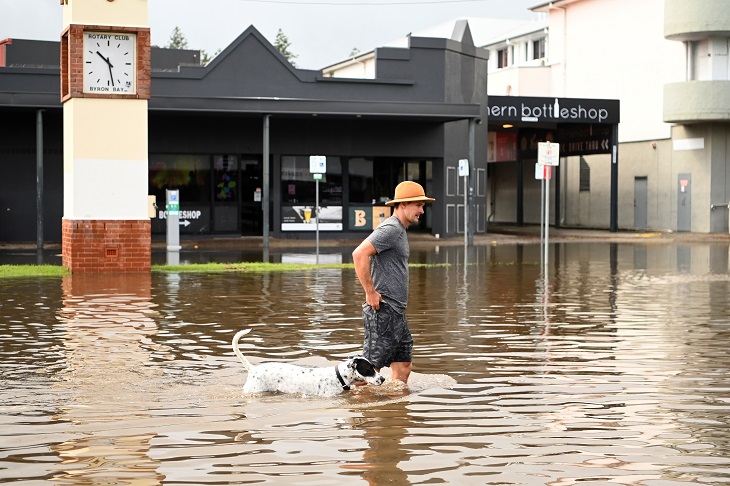
When your village floods and four days later you ask the mayor, ‘Where was the council?’ And the response is, ‘We didn’t know about the flood…’ The local council system is clearly failing citizens. And such a lack of faith in local government can bring about its very demise.
Wingecarribee Shire Council is currently under administration following the councillors’ sacking in 2021. Wingecarribee will remain in administration until the 2024 election. Infighting and a toxic culture were to blame for the council’s inability to function, but it emerged during the public inquiry that, in the ‘wake of the Black Summer bushfires’, the council ‘just wasn’t there’. A similar situation is emerging in the wake of recent flooding.
The biggest challenge in providing local services is that somebody has to pay. Either ratepayers pay higher rates, or other savings or revenue increases need to occur at the state or federal levels to cover the shortfall. Council amalgamations were meant to address these issues, but recent experience in NSW is reconfirming research from 2016 that demonstrated that council amalgamations do not live up to their promises.
In the small village of Gunning, Council’s response to the recent flood that impacted businesses on the main street has been slow and generally regarded as inadequate. De-amalgamation is back on the agenda as the rumour mill shifts into overdrive with gossip about Council’s dire financial position, proposed asset divestments, and the lack of maintenance on the flood gates on the local weir contributing to the flood emerging amid fears that the already-sparse local services will be cut even further.
Natural disasters are exposing the inadequacy of local government in Australia. Well-paid bureaucrats hold the reins and local government centres are increasingly concentrated in distant towns. Amalgamations have taken the ‘local’ out of local government.
Our elected local representatives are paid honorariums for their symbolic role while being held accountable for emergency responses they have no effective control over. Meanwhile, unelected bureaucrats are responsible for budgets that are already over-stretched to the point where a small village on the periphery of their ambit hardly draws attention.
Bringing back the ‘local’ requires a serious re-think of how local government functions and is funded in Australia. The current system is failing us and only the federal and state governments have the capacity to make it work. An inquiry into the function and funding of local governments in Australia in the post-fire, post-pandemic, and post-flood era is now due. Citizens deserve nothing less.