Devotees of radio traffic reports will be familiar with ‘Crittall’s Corner’. Along with the nearby Sun in the Sands roundabout, it is usually prefixed by the phrase ‘with traffic stretching as far back as…’
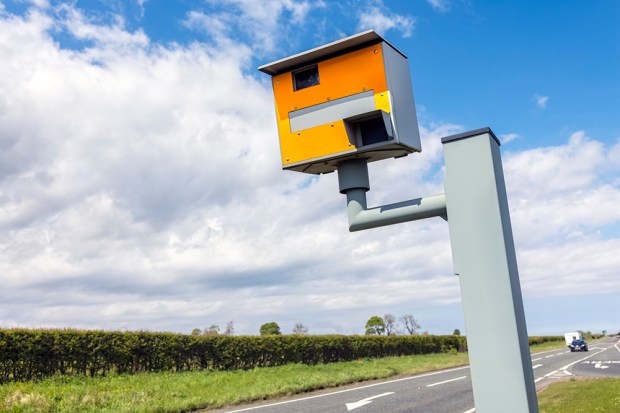
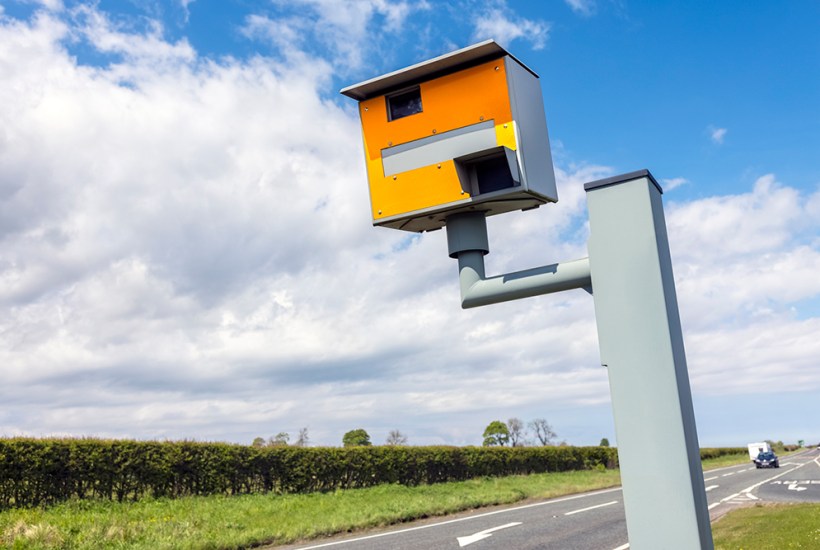
In October 2023, the speed limit on the eastbound A20 between Crittall’s Corner and Swanley was reduced from 70mph to 40mph after several cars veered off the road in the wet. There was certainly a drainage problem: indeed, in 2023, in torrential rain, I once aquaplaned on this very same stretch, so the decision was not unreasonable. However, it was signposted and enforced abominably. In one year, a speed camera on this stretch of road caught more than 66,000 drivers. Many were fined several times, often losing their licences and, in some cases, their jobs.
Common sense tells you that when 66,000 people are being fined, it’s probably the fault of the signage, not the motorists
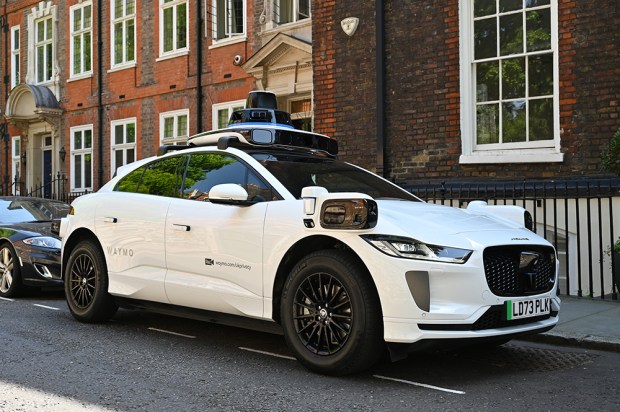
This should be considered a ‘Post Office scandal’ in miniature. It shares the same alarming features, where guilt is computerised, context-blind and instantaneous but absolution is legalistic and protracted. It is also a premonition of a world run by artificial intelligence. Speed cameras are, in their way, an early form of agentic AI.
Given that a large number of users of the A20 are either commuters or professional drivers, you might think that special signage would have been erected to alert people to the new speed limit, thereby saving lives rather than fining people. Except that the people responsible for road signage seem to be morons of a spectacular order; people whose appreciation for the basics of communication is so lacking, they will post, say, ‘A21 closed beyond B2099’ on an enormous digital gantry on the M25, when even the people who live on the B2099 have no idea where that might be. Many overhead motorway signs are placed to tell you which lane you need to be in… when it is too late to change lane.
Only now, in 2026, are courts considering overturning the A20 convictions, and on the technical grounds that the limit was authorised by someone without due authority. Yet simple common sense tells you that when 66,000 people are being fined, it’s probably the fault of the signage, not the motorists. Even with the support of three local MPs, it has taken years for these fines to be reversed, with authorities fighting the complainants every step of the way.
What has this got to do with AI? Well, it concerns something the writer Brian Klaas calls ‘effort collapse’. Many things in life are regulated not by financial cost, but by the effort required to do something. It’s one reason why A&E at most NHS hospitals is intentionally grim. Since the NHS cannot charge people for turning up, it effectively rations use of the service by making the waiting room small and unprepossessing. If A&E were enormous and furnished like an Edwardian brothel, people would turn up with only minor ailments; as things stand, you’ve got to be desperate to go. In the same vein, before the development of large language models, someone writing an application letter for a job was interested in working for you. This signal of intent has disappeared: job applicants are simply adopting a spray-and-pray approach.
Speed cameras are hence a form of effort collapse. Back in my childhood, to get done for speeding, the Dibble had to pull you over and write things in a notebook. They would duly arrest only more egregious offenders (mostly Princess Anne). No policeman would bother someone going 34mph in a 30 limit, yet speed cameras do this all the time. But there has been no corresponding recalibration of the penalty points awarded for minor offences.
AI makes decisions extremely fast and blind to wider context. Some of these decisions will inevitably defy common sense. That’s not a problem if there are similarly rapid mechanisms for overturning such decisions. However, as things stand, there is an enormous asymmetry between the speed with which decisions are taken and the time it takes to reverse them when they fail. If daft judgments can be issued in a millisecond, but can only be overturned after years of costly legal wrangling, we face a truly dystopian future.
Got something to add? Join the discussion and comment below.
You might disagree with half of it, but you’ll enjoy reading all of it. Try your first month for free, then just $2 a week for the remainder of your first year.