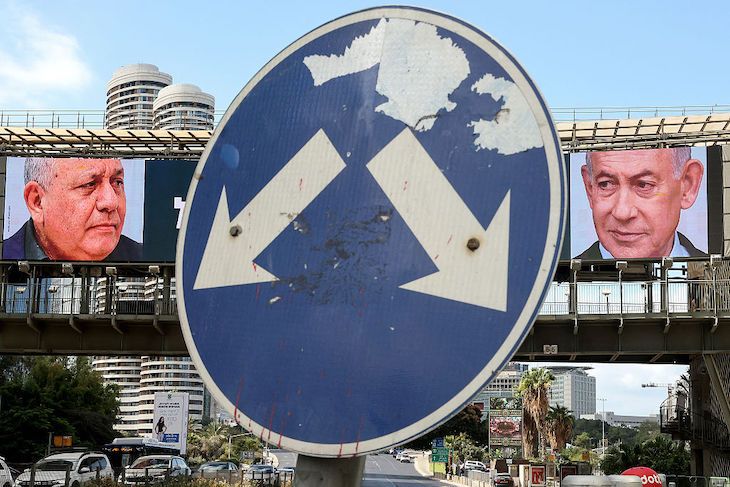
I landed in Israel as acres of commentary continued to declare its current election the most consequential ever. An emergency. The language is familiar. The last chance to save Israeli democracy. The last chance to remove the right. The last chance to restore a serious government. The last chance to stop Benjamin Netanyahu. The last chance to save Benjamin Netanyahu. The last chance to deal Iran a decisive blow. Every election here arrives carrying some version of apocalypse.
Reports of Israelis flying in from across the world specifically to vote tell you something about the political culture
Israel, meanwhile, votes. It votes often. It argues loudly. It produces coalitions, defections, scandals, backroom deals, campaign shocks, court cases and spectacular bust-ups between politicians who may find themselves sharing a television studio one week and a coalition negotiation the next. There are serious questions at stake, certainly. There always are in Israel. And from the perspective of an outsider who has spent a great deal of time here, it remains clear that Israelis take the business of their country extraordinarily seriously.
Ben-Gurion Airport offered one small example. Reports of Israelis flying in from across the world specifically to vote tell you something about the political culture. Much has been written about the thousands coming home, determined to remove Netanyahu. But thousands also are coming to keep him in office. The argument matters less than the act. People are crossing continents to put a piece of paper in a ballot box. How many democracies inspire that kind of civic urgency among citizens who may currently be living thousands of miles away?
There is something revealing in the sight of an airport filled with returning voters. Israel is a country whose citizens understand, sometimes with exhausting intensity, that the state belongs to them and that its direction is their responsibility. For Jews, that fact carries historical weight that can disappear beneath the daily noise of Israeli politics.
For centuries, Jews prayed towards Jerusalem, spoke of return, carried the memory of Zion across exile and persecution. The aspiration survived as liturgy, memory, culture and longing long before it became a modern political programme. Then came the nineteenth century. Hovevei Zion emerged in the 1880s. The First Aliyah followed. Jews began building communities, institutions and settlements with an increasingly explicit national purpose. Theodor Herzl supplied the political architecture. In The Jewish State in 1896, he described the restoration of Jewish sovereignty as an ancient idea requiring modern political means. A year later, he convened the First Zionist Congress in Basel. David Ben-Gurion eventually stood in Tel Aviv on 14 May 1948 and declared a Jewish state.
The transformation is staggering when viewed across generations. Jews who had spent centuries dependent upon kings, governments, churches, empires and host societies for their safety now possessed a sovereign state in which they could determine their own government. That is what those queues at Ben-Gurion Airport represent. An Israeli flying home from London, New York or Paris to vote is participating in something that earlier generations of Jews could scarcely have imagined as ordinary.
Ordinary is the remarkable part. Israeli democracy has become sufficiently normal that people can complain about it, distrust politicians, scream about coalitions, accuse opponents of destroying the country, vote them out, vote them back in and begin the argument all over again. That is political life.
The argument is as vital internationally today as ever, and acquires another edge when one looks beyond Israel. Across the Jewish world, security has again become a pressing concern. Britain offers a particularly uncomfortable example: the BBC has agreed to pay £400,000 to an award-winning Jewish documentary-maker who alleged she was subjected to antisemitism and pushed out of the corporation after October 7. More than 1,900 antisemitic incidents occurred in the first six months of 2026, including 135 assaults, the highest six-month assault figure recorded.
Then consider what happened in north London yesterday. JW3, the Jewish community centre on Finchley Road, hosted an aliyah event for Jews considering moving to Israel (ask yourself why so many are considering it). The Metropolitan Police imposed protest restrictions around the venue, saying the operation was intended to prevent intimidation and disruption to the local community. Outside, a pro-Palestinian protester shouted “genociders” at Jewish attendees entering an event about leaving Britain for Israel.
The scene is grimly self-explanatory. British Jews attend an event to explore building their future in Israel. Police impose restrictions around the building because intimidation is anticipated. Jews entering are abused nonetheless. For some of those inside, the argument for aliyah may have been made before a single person opened their mouth.
Britain remains a democracy with functioning institutions and a police force protecting Jewish citizens exercising their rights. The pressure is still real. Herzl’s question has survived because Jewish security has repeatedly proved vulnerable to changes in politics, culture and public mood. Few non-Jews fully understand how drastic and fast the shift has been.
Israel represents one answer to that vulnerability: sovereignty. And sovereignty means responsibility. It means deciding who governs you. It means choosing who commands your armed forces, manages your borders, negotiates with allies and enemies, raises your children into citizenship and carries responsibility for the security of the Jewish state.
That is what Israelis are doing tomorrow. There will be winners. There will be losers. There will be outrage, triumph, recrimination and, eventually, another election. The state will continue to be Jewish, and continue to be democratic. Democracy is alive and kicking here, and those elected with collaborate, argue, and rule. Life will go on.
Generations of Jews dreamed of reaching the point where Jewish political life could become this lively – this ordinary. Israelis have inherited that dream. The ballot box is one of the places where they keep it alive.