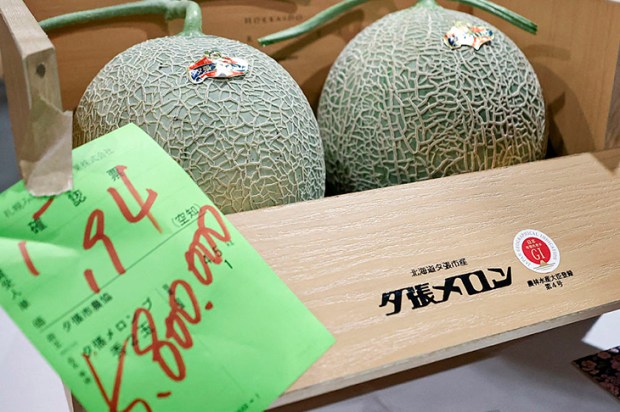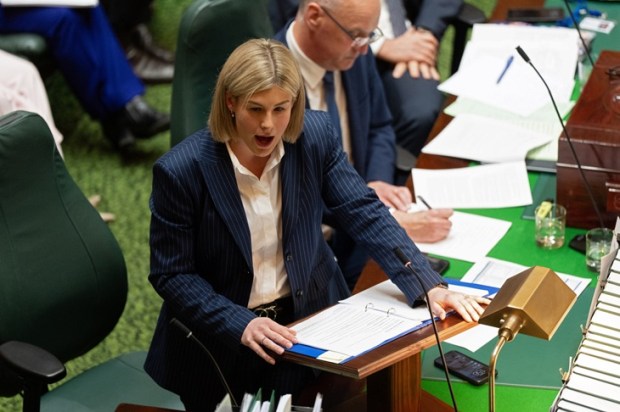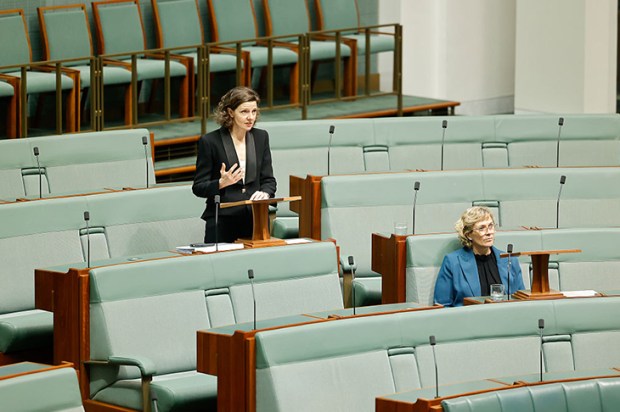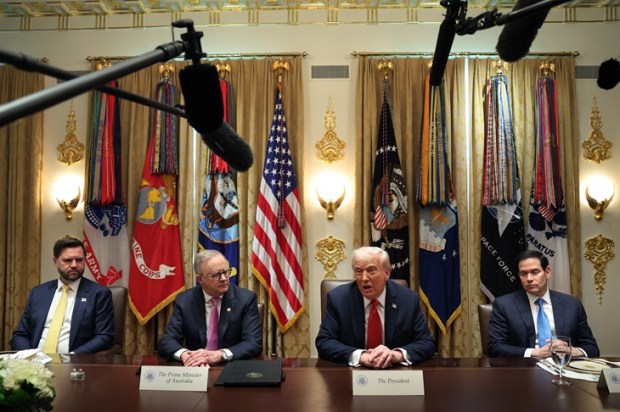
I don’t know if Anthony Albanese actually learned anything from his recent sojourn at the United Nations, but I doubt it. So far as I could tell, he spent most of his time hugging and kissing any foreign potentate who happened to be passing by. Moreover, his appointment as a Leading Global Citizen stretched credulity to breaking point. And his speech to a virtually empty General Assembly seemed to consist of little but vacuous assertions about the horrors that await us from artificial intelligence. I suppose we should be grateful that at least he spared the UN from his recent offerings on how to denigrate women, and in particular the role of the melon in Australian-Japanese relations. But if he had his wits about him, he could have learned quite a bit about how the UN operates and sometimes fails to live up to the lofty principles it espouses.
Moreover, this has made me reflect with modesty on my own small contribution to world peace and progress as one of the two parliamentary members of Australia’s delegation to the General Assembly in 1976. My role was to speak to that distinguished chamber on a resolution providing for the independence of the group of islands known as the Comoros and to tell the UN what we thought of it.
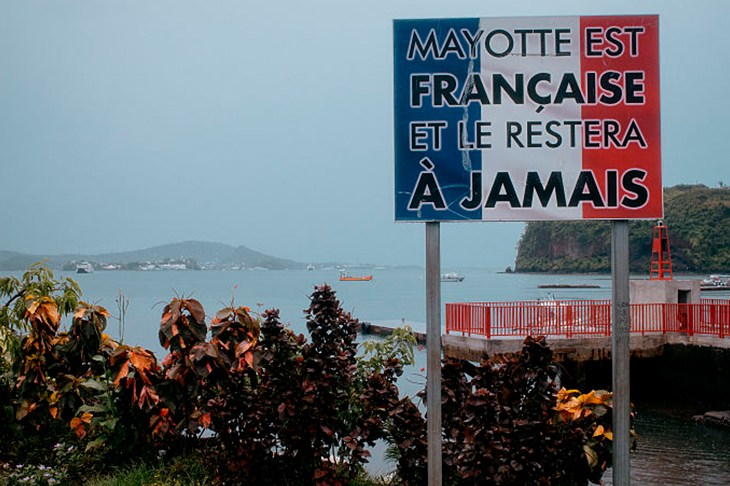
The Comoros are a group of four volcanic islands, stranded in the Indian Ocean between Madagascar and the African coast and one of those islands is named Mayotte. For several hundred years the Comoros was a mosquito-ridden haven for pirates that was ruled by a succession of Muslim sultans and cut-throats until it was sold by the then Sultan to King Louis Philippe in 1841 and for the next 100 years or so it rejoiced in its role as a French colony while it practised its only industry, trading in slaves. But as the winds of change gathered pace in the 1960s, a movement arose in the Comoros to shake off its colonial yoke and give it full independence, a move that was welcomed and then ordered by the enlightened international community. The French, however, were faced with a quandary. Could they grant independence to the Comoros without first ascertaining whether this was what the people of these sun-kissed islands really wanted?
Accordingly, France did the right thing and held a referendum in 1975 on independence, probably just as I was packing my bags for New York. The people of three of the Comoros islands did what was expected of them and dutifully voted ‘yes’. But those on the island of Mayotte had other ideas and voted ‘no’. In fact, not only did they vote to remain a colony, but they did so in no half-hearted manner, recording a 95-per-cent vote against independence. And they continued to say so in a series of further referenda, the only change in the result being that every time a referendum was held, the ‘no’ vote in Mayotte increased, until it ended up with a vote of 99.4 per cent against independence and in favour of remaining a colony. And who could blame them for taking that decision? After all, they had the shining examples of democratic statesmen like Ho Chi Min, Castro, Kenyatta, Sukarno, Mobutu, Idi Amin, Papa Doc, Gaddafi and Mao Zedong to show what was in store for them if they abandoned colonialism and joined with the other islands of the Comoros in becoming a new and independent state. Even the French eventually caught on and declared Mayotte to be a special territory of France, a sort of halfway house. The people of Mayotte, however, still wanted the full enchilada and pleaded to remain a colony. This unfashionable notion was then put to another referendum which resulted in a vote of 95 per cent in favour, making it what must be the only time when a colony that was threatened with independence has voted to remain in the warm embrace of its colonial overload. But that was undoubtedly what they wanted.
This novelty, of course, was more than the UN and the enlightened international community could bear, and as I took my seat in the General Assembly a resolution was proposed to undo what the good people of Mayotte had clearly declared that they wanted. Roughly translated into normal English, rare as that is at the UN, it thundered: how could the people of Mayotte dare have a say in their own destiny? How could the French dare have the impertinence to ask them? And there should be no more of this nonsense of giving people a free vote on their future. Above all: no more referenda! France stood condemned by this resolution and was ordered to abandon Mayotte and leave its people to whatever designs the new republic of the Comoros had in store for them.
The vote on this resolution was 102 in favour, which tells you a lot about the UN, 1 against (France of course), and Australia with 27 other countries abstained. We should have voted against it, of course, but at least we refused to go along with this flagrant denial of the wish for self-determination.
But Mayotte did not give up. Frustrated by the UN’s refusal to give them freedom in the way they wanted, they upped the ante and applied to become an actual part of France itself. They succeeded, and that is what they are today, but no thanks to the United Nations which had opposed them every inch of the way. Indeed, they are now so much a part of France that they are also a member of the European Union and a stable and prosperous one at that. As for the new Comoros, it descended into chaos, poverty, dictatorship, coup and counter-coup, with most of its population spending their time and energy trying to migrate to Mayotte to share in its prosperity.
The lesson for Mr Albanese: the United Nations is not always right and does not always measure up to its own lofty ideals.
Got something to add? Join the discussion and comment below.
You might disagree with half of it, but you’ll enjoy reading all of it. Try your first month for free, then just $2 a week for the remainder of your first year.