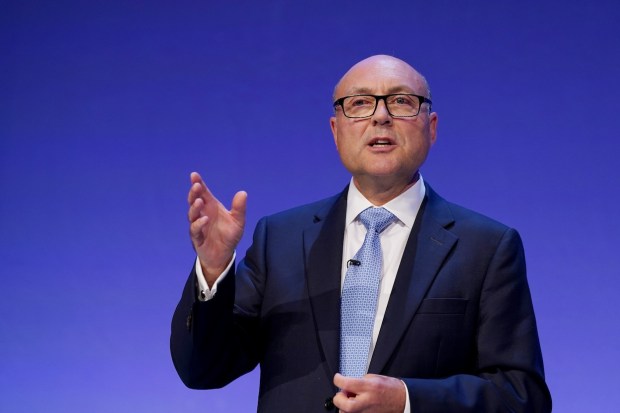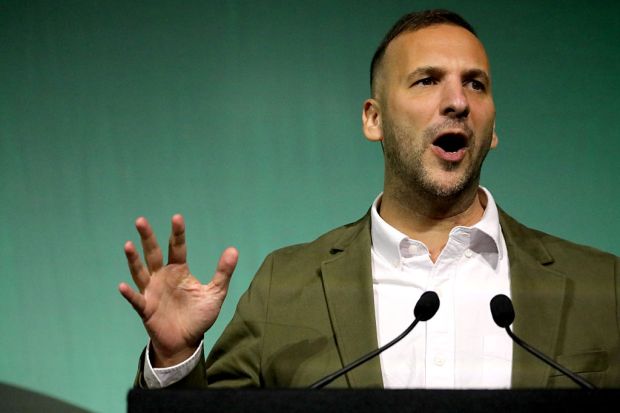
Day three of the Tory conference. A giant drone hung over the stage for the afternoon’s session on defence. Plenty of giant drones were hungover in the audience too. We heard from a Ukrainian politician who lamented that we lived in an era where ‘force of law’ had been replaced by ‘law of force’. Unfortunately, Britain is a country which has yet to learn that lesson itself.
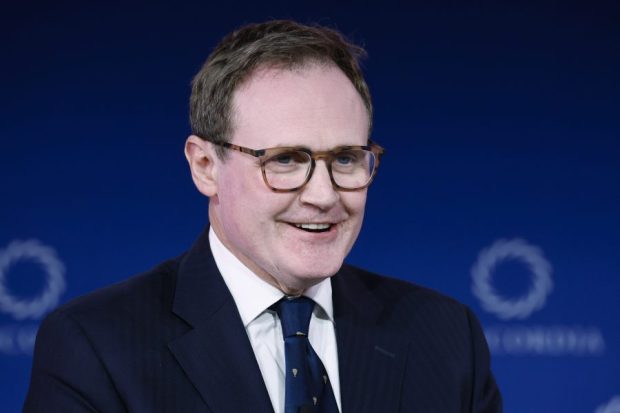
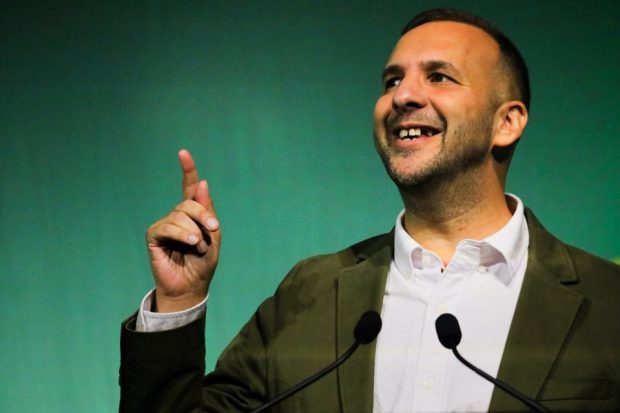
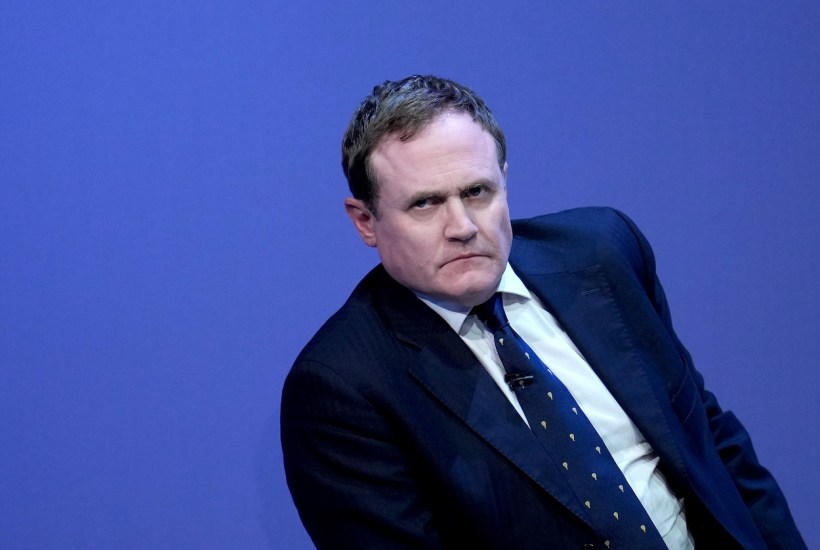
This was the grand unveiling of new shadow foreign secretary Tom Tugendhat; not a man known for his shy and retiring nature. There was some bottom-crawling to be done by the new recruit: ‘Kemi has shown that she is absolutely brilliant… You chose well, conference, you really did.’ There was much guffawing at this; Robert Jenrick has been one of the punchbags of conference. He has turned from being a one-time party darling to being a sort of King Rat figure, booed and jeered at every turn, and featuring heavily as a diminutive, wailing figure in the party’s AI Bayeux Tapestry.
Another panto villain for the depleted ranks of the Tory faithful was Ed Miliband, whose very mention elicited laughter from the audience. ‘We have a foreign secretary who thinks that the right thing to do is shake hands with the Iranian foreign minister at the same time that the Iranian government is planning to attack,’ pronounced Tugendhat, as if this statement of diplomatic reality was a line from Live at the Apollo.
Tellingly, Tugendhat was at his best not speaking about the future but lamenting the present. He did an enjoyable booting of the Chagos ‘deal’, complaining about ‘courtroom colonialism’. He slagged off his would-be colleagues with aplomb: ‘Many in the Foreign Office have acted as if they were an international NGO.’ Dissecting the problem is all well and good. However, the fact remains that the Tories had 14 years to do something about these issues and left them unaddressed.
We had the now-obligatory autocued lines followed by awkward pauses, trialled by Andrew Griffith yesterday. Maybe it was the shared hangover, but there was plenty of random perfunctory clapping between sentences. CCHQ’s tiresome insistence on autocue has a way of sucking the energy out of even some of their most accomplished speakers.
Elsewhere, for the second time in two days, the guest-star outshone the main stump speeches. The historian Niall Ferguson sat down for an interview with shadow deputy leader Alex Burghart, who slightly fluffed his opening: ‘You’ve just been to Russia,’ said Burghart. Ferguson replied that he’d actually been in Kyiv; not an ideal mix-up given Mr Putin’s territorial ambitions. Sir Niall explained that during the visit his group had been targeted by a Russian drone, in a bid to put them off supporting Ukraine. ‘As someone who grew up in Glasgow, that elicits the exact opposite response,’ he said, in his best tough-man voice.
Sir Niall had the air of a revivalist preacher as he tried to whip up the hungover, the recently embarrassed and the nearly dead. He lamented that British foreign policy was characterised by a ‘failure of imagination’ that war and tragedy could befall us again. Ferguson proved a better defender of the Tories’ promised air defence system than the leader of the opposition herself. He complimented the Conservative party for finally taking the subject seriously, adding: ‘I have never been to a Tory conference before, but I came to this one.’ What could possibly have attracted the perhaps not long to still be Mr Ferguson to the event? We’ll never know: it’s not our place to peer into the future.
I speculate about Ferguson’s reasons for being there, but the presence of Tory historians in the Upper House undoubtedly makes a nice change from the Blairite bag-carriers and bob-haircutted Lib Dems who once ran sanitation for Swindon borough council. However, they are in real danger of running out of right-wing historians to ennoble. Who’s next? The ghost of Thomas Carlyle? David Irving? Lord Starkey would annoy all the right people but Labour’s gerrymandering age-limits currently rule him out.
Whately’s line felt especially harsh on Jim Callaghan
Elsewhere we had a performance by Helen Whately, the shadow work and pensions secretary, who spoke of cutting welfare to fund military expenditure. She compared Britain’s situation to that of the 1970s, when governments put ‘butter before guns’ – hilariously, a quote from Hermann Goring. It’s certainly true that Harold Wilson loved amalgamating regiments but a more recent comparison would be George effing Osborne gutting the Argylls.
Whately’s line felt especially harsh on Jim Callaghan. Few loved guns, especially when they were trained on IRA terrorists, more than Sunny Jim. In fact more defence cuts then came in the first chunk of the Thatcher government, which had to be reversed post-Falklands. Once again, the Tories’ own past seems to be their greatest enemy.