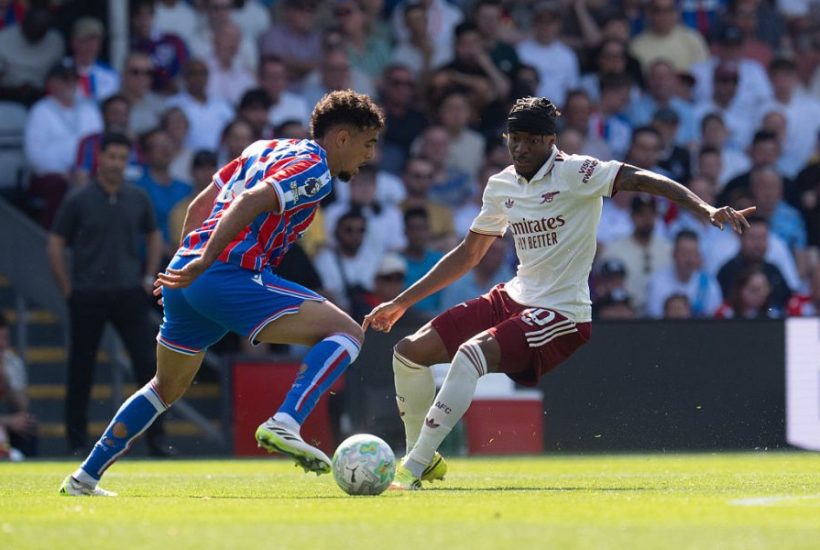
The new Premier League season kicks off tonight, with champions Arsenal playing newly promoted Coventry City at the Emirates Stadium. The competition remains the commercial juggernaut of global football, broadcast in 189 countries with an estimated 1.9 billion followers. Projected revenues, according to the Deloitte Annual Football Finance Review, are expected to exceed £7 billion this season.
But scratch a little deeper, and there is an unmistakable sense of flux about the competition. Gone are the big beast managers with their all-consuming rivalries. Pep Guardiola of Manchester City, whose genius has transformed the fortunes of that club, is the latest to depart. Who will fill the void? Could it finally be the era of Mikel Arteta of Arsenal, now the longest-serving manager in the league? Xabi Alonso, newly installed at Chelsea? Michael Carrick at Old Trafford? Andoni Iraola at Liverpool?
It feels a bit, well, meh. Hardly the stuff of old, with the snarling face-offs between Alex Ferguson and Arsène Wenger or the mighty clash of footballing philosophies when Jurgen Klopp and Guardiola squared off. Is there a manager out there who rivals Jose Mourinho when it comes to the dark arts, happily pitting himself against, well, everyone else?
Whisper it, but some of the passion has gone, replaced by gimmicks aplenty
Come to think of it, how many superstar footballers are there gracing this season’s Premier League? In years gone by, fans were spoilt by the likes of Thierry Henry, Eden Hazard, David Beckham, Eric Cantona and Dennis Bergkamp. Mo Salah and Kevin De Bruyne might rival these Premier League greats but they have departed the scene. Only Erling Haaland of Manchester City remains in the category of global superstar.
The league at its best is about more than just football. It is as much about the managerial press conferences, the clashes on the touchline, the after-match diatribes, the intense fan rivalries, the punditry, the referees and, a little more recently, the uselessness of VAR. Whisper it, but some of the passion has gone, replaced by gimmicks aplenty.
The latest is a plan to air on-field exchanges between the players and referees. The audio will be used during live Premier League games for the first time this season. The conversations that take place between referees and VAR – the ones that actually matter – won’t be broadcast. It follows the introduction last season of Ref Cam, which involves the referee wearing a camera attached to the ear. The footage pleases the sport’s all-important television paymasters but adds little to the overall fan experience.
Turning to the new season, what can we expect? Arsenal, having won their first league crown in 22 years, start as early favourites. Their 3-0 demolition of Manchester City in the FA Community Shield last weekend is seen in some quarters as a sign that the Gunners are set to dominate for years to come. Maybe, maybe not. Winning the Community Shield is about as meaningful as victory in a pre-season friendly. Still, Gunners fans are entitled to be pleased with their settled squad. And, in Mikel Arteta, they have a manager who has answered the doubters by finally winning the title.
The rest of the so-called ‘Big Six’ are supposedly in transition. This is a term often deployed to excuse a failure to compete. For example, Manchester United, serial Premier League winners in the past, have been transitioning – i.e., failing – for 13 years now. The top teams have been splashing the cash in an inflated transfer market. The three promoted sides from the Championship have been spending big too: Coventry, Ipswich and Hull have all recruited new players to ensure they have a chance of staying up. Watch out for Frank Lampard in the Coventry dugout: will he finally show he has what it takes to succeed as a manager in the top flight?
Quite a few clubs have new or newish managers. Who gets the boot first and how soon? Fulham have lost the experienced Marco Silva, replacing him with Alvaro Arbeloa who was a disaster in his short stint at Real Madrid. Can Iraola succeed at Liverpool? It’s a big jump from Bournemouth to Anfield. No one really knows how good he really is. What will Roberto de Zerbi do at Tottenham having survived the relegation scare last year? How good is Alonso really? He did brilliantly at Leverkusen, struggled at Real Madrid, and is now at Chelsea. Can he handle that volatile and demanding club? And then there’s Carrick at Manchester United. How will he do now that he has the job full-time?
A few bad results and the questions will start. No one knows what will happen with serial champions Manchester City without Pep in the dugout. Enzo Maresca, his replacement, has his work cut out. Newcastle’s new boss Matthias Jaissle is another who could come under pressure if he doesn’t start the season well.
The usual footballing cliché deployed at the beginning of every season is that it’s all to play for. Any team can beat anyone else on their day, and all that. The reality is more mundane. The newly promoted teams are usually in the mix for relegation. Hull will be favourites to go straight back down. The middling teams will spend most of the season somewhere around the middle. The title contenders are the same handful of top clubs. The expert consensus appears to be that it is Arsenal’s to lose. Maybe, as someone once famously said, we’ve had enough of the experts.