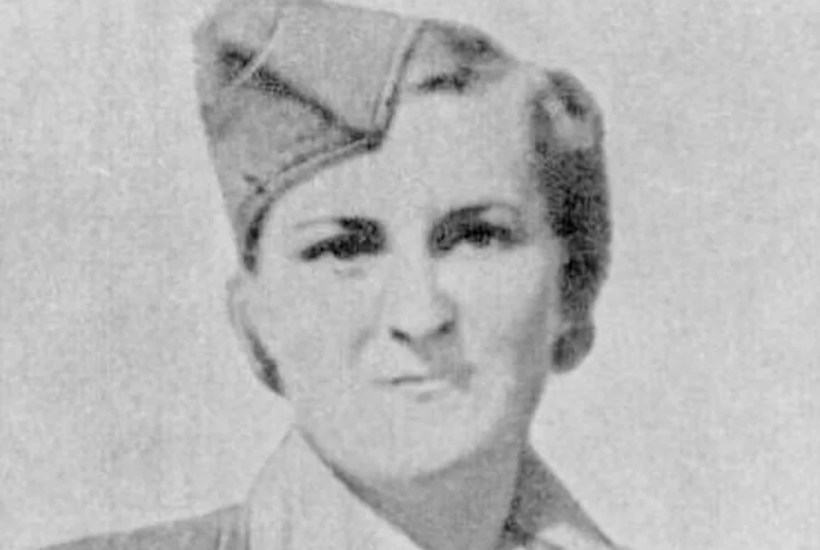
In 1957, Russell Ryan, an American is holidaying alone in Austria. There he meets a young woman called Hermine Braunsteiner. They fall in love and Russell takes Hermine back to America where they marry and set up home in the suburbs. All goes well until 1964, when a New York Times journalist knocks on the door and tells Russell that Hermine is a former concentration camp guard.
In writing this novel, Angharad Hampshire is drawing on the couple’s real-life story, and the reader is captivated from the outset. What exactly did Hermine do? How will Russell react to the accusations against her, and can he ever forgive her? Hampshire writes in short chapters, weaving together scenes from past and present, moving fluently between Austria, Germany and the US.
The chapters alternate between the voices of Hermine and Russell. Initially, the reader feels some sympathy for Hermine. We see her as a teenage housemaid with no prospects and no particular abilities. Her family are poor and she yearns to be able to send more money home. She can double her salary by working at a newly established women’s prison, so she takes the job.
Soon scenes of horror in the camps are juxtaposed with snapshots of Russell and Hermine’s life in America. Russell addresses his story directly to Hermine, as he continues to convince himself that she is a saint – kind, hard-working and friendly. In effect, even after Hermine is extradited to Germany for trial, Russell’s sections of the book read like a sincere, if bizarre, love letter.
As the German court examines the evidence in forensic detail, we come to hate Hermine (nicknamed ‘the Mare’, for kicking her victims half to death) and judge Russell as weak and delusional. Yet such is the power of Hampshire’s writing that some part of the mind cannot reject these characters entirely. We are forced to examine carefully Hermine’s insistence that she is being made a scapegoat for a whole system.
This is a clever, dark story which is not for the faint-hearted. Hampshire writes so deftly that it is hard to believe that this is her first novel. Many books purport to explain how under the Third Reich apparently harmless people became monsters; but I’ve never read one which comes as close as this to demonstrating exactly how that can happen.
Got something to add? Join the discussion and comment below.
You might disagree with half of it, but you’ll enjoy reading all of it. Try your first month for free, then just $2 a week for the remainder of your first year.