Aside from interruptions by wars and pandemics, the Isle of Man Tourist Trophy has been run since 1907. Better known as the TT, the Snaefell mountain course used since 1911 covers an Adrian Mole-esquel thirty-seven and three-quarter miles.
The TT was born as a rebellion against regulation. The Motor Act of 1903 introduced a 20mph speed limit on cars in the UK, so those who wanted to race approached the Manx government to host events. The Isle of Man still to this day technically has no speed limit on public roads outside its villages and towns.
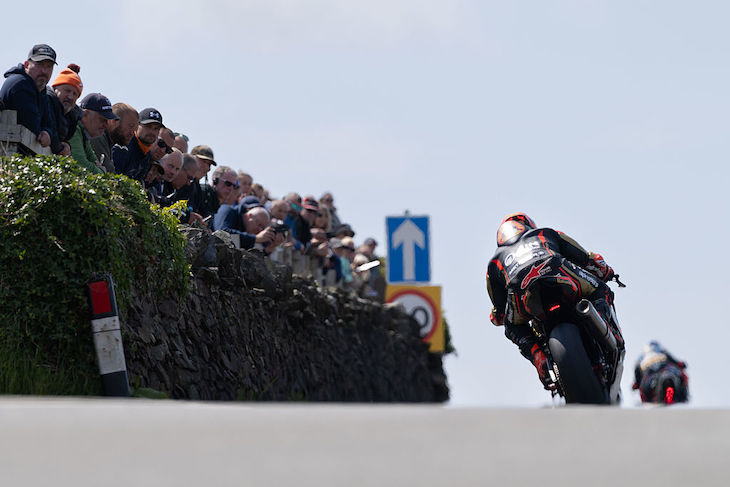
The TT Festival concludes this weekend with the running of the TT senior time trial. Riders reach speeds of up to 200mph and zoom past landmarks such as Sarah’s Cottage, Greg Willy’s Hill, and the K Tree. They need to average 130mph just to qualify. Overall, the competitors complete 226 miles in six laps, the equivalent of travelling from Liverpool to London in an hour and a half. The winner receives the splendidly named Marquis de Mouzilly St Mars trophy, named after its magnificent donor.
The TT is better than it has ever been
Watching a video from the perspective of the rider, as he completes an almost 40-mile lap in just over 15 minutes, is to be introduced to an almost unique example of courage, borderline insanity and a form of freedom rare in the modern world.
The need is not just for speed but for extraordinary stamina and extreme concentration. Riders race through everyday suburban roads and country lanes. One miscalculation, even a few inches, can spell disaster. Former TT winner and Manx native Richard ‘Milky’ Quayle talked us through a lap. His commentary was punctuated with ‘oh I came off on this bend’ and ‘I clipped a hedge here and came off’. Natural nonchalance glossing over accidents that must have resulted in a few broken bones. The riders are a mixture of professionals and part-timers. One piece of commentary overheard on race day: ‘He’s a wee fella, but he’s a farmer, so he’s strong and can shift a bike.’
There is something else that makes this event so special. Spectators stand just inches away from the action, watching from grass verges or their gardens, as riders pass them at 180mph. There is the occasional makeshift decked stand (some with garden chairs) and fencing, but most of the course is not cordoned off. Common sense is the order of the day. The overwhelming feeling is of one of informality and community, riders and spectators linked by a mutual respect and passion for the event. It is like the Superbike equivalent of a point-to-point, where the steeds are 1000cc bikes and the fences are humpback bridges taken at speed.
In the 1980s, the TT almost died. It was cut out of the international calendar, and star riders stayed away. It remained on life support for a few decades, but now it has turned a corner. The Manx government has got behind it and, since Covid, has overseen the kind of innovation needed to attract new fans, such as digital streaming. It now contributes at least £50 million to the island’s economy and attracts more than 50,000 visitors, almost doubling the island’s population. Even so, the TT, despite being one of the most complex mass-attendance events on earth, is overseen by a permanent staff of about 16 people. Fans and volunteers fill the gaps.
Now Hollywood has come calling. The film star Channing Tatum has been working on a TT movie for four years, backed by Brad Pitt and financed by Amazon. Brad Pitt was here this week, as was the Formula One driver Oscar Piastri, posting to his six million social media followers. There is a Netflix documentary waiting to air. By all accounts, Mr Tatum and his team have approached their subject with great respect. They are, they say, fans first, and want to bring this extraordinary event to a global audience, wrapped inside an engaging story of love and rivalry.
Time will tell whether they produce a parody or a paean. The omens are good that they will get it right. Nevertheless, it is still a dilemma for those that care about the race. The TT is better than it has ever been. It is profitable and popular. It is much safer, with hundreds of marshals, doctors, and safety officials minimising the risk without removing the jeopardy. But the event remains studiously informal, with spectators free to roam open paddocks, inspect the bikes and talk to the riders (who are surprisingly normal and sane in person). VIP passes are rarely in evidence. The biggest grandstand accommodates around 200 people. It’s reminiscent of a much more innocent, less commercial and regulated time. The racing driver James Hunt would be at home here.
It is inevitable that things will change. It’s right that the TT should be seen by more people, either in person or on screen. And it is also right that the sport as a whole should move with the times. The US media company Liberty has taken over Moto GP, the sport’s equivalent of Formula One. There is an urgent need to attract younger audiences and fans. The industry is still worth £1 billion to the UK economy, and as you would expect, we have traditionally dominated the sport. But we have fallen far behind the Spanish and the Italians, and the sport is little noticed by government. Maybe the Manx government’s careful revival of the TT will inspire them.