There’s a fascinating thought that the authors of Full Circle pursue for just a couple of pages, then leave hanging: ‘Association football offers an alternative history by which to consider the course cricket might have taken.’ In fact, the book demonstrates that cricket has followed football’s course, albeit about a century late. In cricket, too, professionals ousted amateurs, embraced the market, saw economic power shift east and chose a short format that allowed games to be played in an evening. Like it or loathe it, cricket has effectively become football.
Reading this serious and competent work, you wonder at times why the journalists Richard Heller and Peter Oborne bothered to write it. There are already countless cricket histories. Many in recent decades anticipated Full Circle’s aim of recounting the story from a different perspective than that of white male English amateurs. Much of the book is familiar. We probably didn’t need another retelling of the Bodyline Tests or the D’Oliveira Affair. Yet Full Circle offers a cohesive account of the sport’s transformation.
Cricket was codified in the 18th century, largely to help gamblers bet on it, but Victorian public schools remade the sport into an ideology. It supposedly built the characters of ruling-caste Englishmen, who (officially anyway) didn’t play for money. The cult of the amateur was so strong that W.G. Grace, the grandson of domestic servants, masqueraded as one, despite earning, in a 44-year first-class career, an estimated £120,000. Amateurs lost the role of cult chieftain in 1952 when Len Hutton became England’s first professional captain; but the MCC presided over the game for decades longer and often tried to appoint the ‘right sort of chap’ as captain. As late as 1988, Peter May, England’s chairman of selectors, gave the job for one disastrous Test to his godson Chris Cowdrey, whose sole obvious qualification was that he was a public school boy (Tonbridge).
Like football, cricket was revolutionised by television. Although one-day games had become popular in wartime Britain, afterwards the amateurs restored the long-format ‘first-class’ cricket that suited their own leisure hours. But from the 1970s, TV became dominant. It had no interest in county cricket and little in five-day Tests, especially when rain stopped programming. One-day competitions mushroomed. In 2003, Hampshire and Sussex played the first 20-over match.
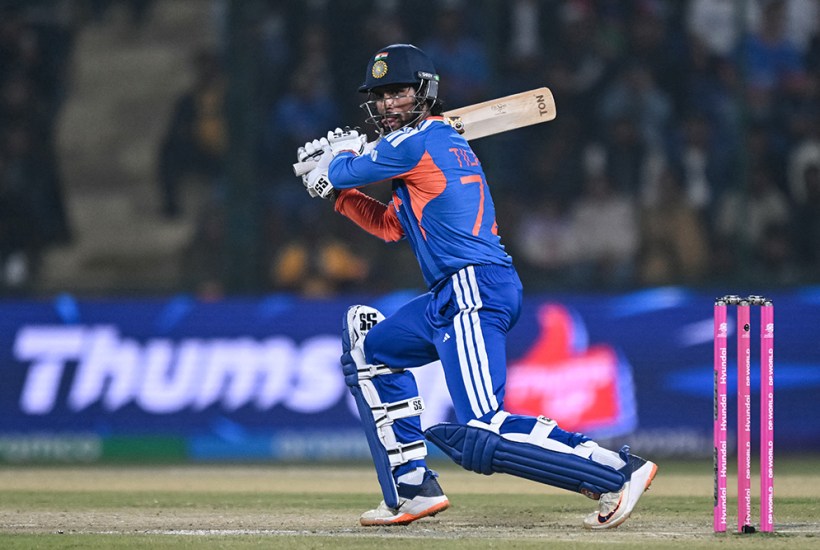
T20 matches worked on television and were picked up by the Indian Premier League, launched in 2008. Like football clubs, most of its franchises were identified with cities, and staffed by globetrotting journeymen dressed in garish colours. The IPL has become cricket’s equivalent of English football’s Premier League, while India is cricket’s hegemon, accounting for perhaps two-thirds of the sport’s revenues. The International Cricket Council, which has moved from Lord’s to Dubai, is chaired by Jay Shah, the son of India’s home affairs minister Amit Shah, number two in the ruling BJP party.
Cricket’s annual revenues have soared to an estimated $3.8 billion. Most of that stays in India, but the ICC has diverted a little funding to new territories and this, plus T20 and Indian emigration, have helped globalise the game. Ireland and Afghanistan have become serious new powers, official ‘Test nations’ that rarely bother playing Tests. By 2023, ‘103 countries had played at least one men’s T20 international match’, while 84 had played a women’s international – surely the fastest-growing form of the sport.
The authors offer vignettes from new cricketing territories: Germany, where cricket is carried largely by South Asian immigrants, China and even Ukraine. There is an entire chapter on Latin American cricket. In 2028, in Los Angeles, the sport will make its first Olympic appearance since 1900, inevitably in a T20 format. That will help secure some money and attention from governments.
Footballisation has helped popularise cricket, but some things have been lost. The authors mourn the vanished art of day-long defensive batting à la Chris Tavare in order to snatch a draw from a Test. They lament that Tests themselves have been ‘consigned to near irrelevance’ – although series between India, England and Australia remain popular. And they accuse the English ‘cricket establishment’ of seeking ‘the destruction of the traditional county game’.
That’s true: the county championship has been mostly squeezed into the chilly start and end of the season, with August reserved for the 100-ball game known, brilliantly, as The Hundred. However, it’s hard to share the authors’ sorrow. Judging by attendances, only a few thousand people nationwide were emotionally invested in county cricket. Few modern Britons feel any attachment to their notional county (a dying administrative unit) as opposed to their town or city. Should the county championship be kept alive forever, staffed largely by underpaid, overworked mediocrities who cheer when rain gives them some time off, just so that it can better prepare a few talents for Test cricket? I too think Tests are the truest form of the game; but most fans have voted for T20 cricket-as-football – and who’s to say they are wrong?
Got something to add? Join the discussion and comment below.
You might disagree with half of it, but you’ll enjoy reading all of it. Try your first month for free, then just $2 a week for the remainder of your first year.