Since Victorian times, sandwich-board men proclaiming doom have been part of our urban street life, particularly in London. I’ve felt like a sandwich-board man lately, having warned endlessly in my weekly Telegraph column that Britain is heading for fiscal meltdown. In June 2024, just before Labour took office, I signalled that a government led by Keir Starmer ‘could soon face borrowing difficulties’. Six months later, I cautioned ‘we face a return to 1976 unless Labour changes course’ – recalling that 50 years ago, Britain was forced to declare itself insolvent and go to the International Monetary Fund for a bailout.
It brings me no pleasure that many of the outcomes I warned of, to such derision, now dominate the news. The big global pension funds and insurers that lend governments serious money are deeply unimpressed with Labour’s huge borrowing and spending rises and growth-sapping tax hikes. That’s why borrowing costs are at a 30-year high. Of the £132 billion Labour borrowed during the fiscal year to March, a jaw-dropping £110 billion went on debt interest payments. That’s almost the same as education spending and twice as much as we spend on defence. Yes, the Tories left national debt north of 90 per cent of GDP. But this economically naive government has made a bad situation much worse. Now, with Labour lurching further left after getting hammered in last week’s local elections, the markets are calling time.
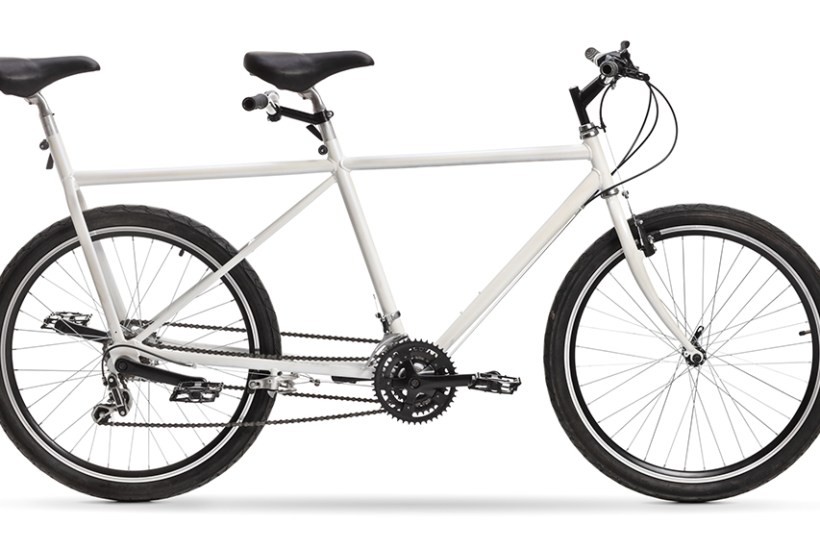
An economics obsessive, I’m a political nerd too – and would normally have spent Friday watching those election results. Instead, I was on my annual London-to-Paris-in-24-hours bike ride, raising money for Duchenne UK – a superb charity that funds research into a particularly nasty form of muscular dystrophy. Since the first ‘Duchenne Dash’ in 2013, the ride has become a significant part of my life. This year, to mix it up a bit, I was on a tandem with an American friend, Serge Kogan.
Tandems and hills don’t mix – you can’t stand on the pedals. Having left Herne Hill velodrome at Friday lunchtime, getting over the South Downs to the Newhaven ferry was tough. But cycling from Dieppe in the small hours, watching daybreak with 130 fellow riders, was truly life-affirming. As are the parents who run Duchenne UK. They are the best of us – and every year, I am reminded anew of their determination, dignity and courage.
To the beautiful East Sussex village of Alfriston to celebrate the life of a beautiful mind. Professor Lord Robert Skidelsky didn’t teach undergraduates at Warwick when I arrived to study economics there in the late 1980s. But I’d read the first volume of his superb biography of John Maynard Keynes, and made it my business to meet him. That sparked one of my deepest friendships, after Robert trusted me to help him on the second of what became his three-volume life of the 20th century’s most influential economist. Over many years, as a student, then a journalist and father, I visited Robert and his fabulous wife Augusta in Sussex, including when they lived in Keynes’s former home, Tilton House – where Robert and I worked on books and papers in the same study where Keynes wrote his seminal General Theory.
Robert was born in Manchuria to a prosperous Russian-Jewish family who fled to London. When I met him, he was one of the world’s leading historians, newly ennobled and advising the British government. I was a wide-eyed working-class London-Irish boy with even rougher stylistic edges than I have today – but I was hugely excited by the power of ideas, for good and evil. Robert saw me, gave me a chance and taught me to think and write. He died on 15 April, aged 86, and I will never forget him.
Someone still very much alive is Sir David Attenborough, who has just turned 100. Recording the Planet Normal podcast with my friend and fellow Telegraph columnist Allison Pearson, I was delighted to learn that, as a young newspaper interviewer, she ventured into the Venezuelan jungle with this icon of public-service broadcasting. Even when sleeping in mud huts under mosquito nets, Sir David would, he told Allison, wear his ‘poplin jim-jams – it’s like getting into clean sheets every night’.
As a sandwich-board man of the business pages, I’m ‘flabbergasted’ to be in the showbiz sections. Nobody wanted to know about my warnings of market meltdown but reporters now follow me around, asking: ‘How’s it going with Kate?’ Kate Garraway and I are from different parts of the media but have much in common – not least a shared sense of humour. Though it’s early days, there’s a definite spark between us. But can she ride a tandem?
Got something to add? Join the discussion and comment below.
You might disagree with half of it, but you’ll enjoy reading all of it. Try your first month for free, then just $2 a week for the remainder of your first year.