Speccie reader Tim writes: ‘I’m interested to know when (and why) “partner” took on its new meanings. Years ago, I thought it meant “business partner,” or “dance partner,” or “tennis partner” or “bridge partner,” etc. But now legally married people talk about their “partner,” as do de facto couples!’ Well, Tim, the people who study socio-linguistics tell me it was the sexually promiscuous community that wanted a name that wasn’t a spousal name but was a bit more than boyfriend or girlfriend. In pursuing this they ruined the perfectly good word ‘partner’. They wanted to leap from ‘partner’ to ‘partner’ like mountain goats leaping from rock to rock. This usage seems to date from the 1970s as a kind of linguistic aftermath to the 1960s explosion of sexual libertarianism.
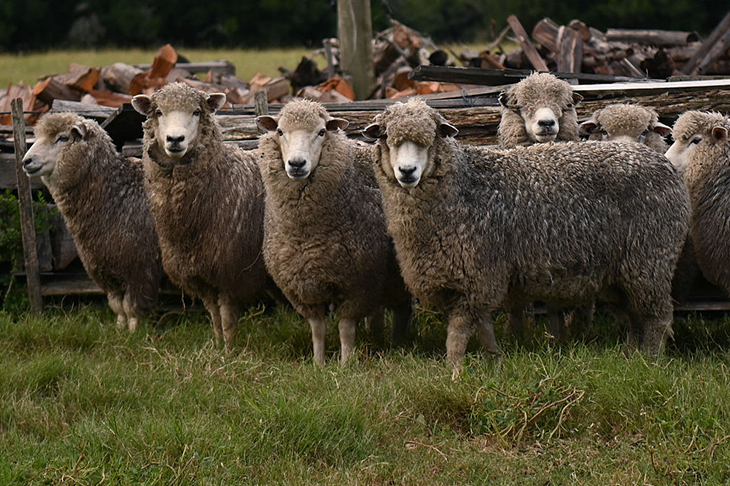
Have you noticed how some words have the same form for the singular and the plural? This came up when Speccie reader John asked me if there is a plural form for the word ‘cutlery’. Of course, with ‘cutlery’ the singular and plural forms are identical. There are many English words that are the same: manners, underpants, scissors, headquarters, belongings, goldfish, offspring, spacecraft, squid, tuna – and there are many, many others. The most famous example is ‘sheep’ – there’s no plural; whether you are talking about one or many it is always the same form ‘sheep’. Unless, of course, you are Jeremy Clarkson, in which case you have a licence to talk about ‘sheeps’.
When Prince Harry sued parts of the British tabloid media over invasion of his privacy he used an interesting word: ‘blagging’.They had, he said, been ‘blagging’ details of his private life. We know the word from watching too many British crime shows and know it means theft – but where does it come from? The world’s leading expert on slang, Jonathan Green, says it is a corruption of the earlier word ‘blackguard’. This started life (in 1535) as the name for the lowest class of servants, and over time (by 1674) had come to mean criminals and vagrants (perhaps because they were drawn from the very bottom of the servant class?) And ‘blackguard’, Green points out, was often slurred in common speech into ‘blaggard’ – thus becoming first a noun and then a verb connoting theft.
When a policy proposed by one party or other is buried by the public opinion polls, we are likely to be told that it is ‘dead as a doornail’. What’s so special about doornails? For a start, this is a very old expression – it seems to go back to about 1350. As for the ‘doornail’ word – the most likely reason it’s there is for the alliteration. In ‘dead as a doornail’ the repetition of the D sound makes it a stronger, more memorable phrase than just ‘dead as a nail’. But there is another possible reason for the choice of ‘doornail’. It comes from an era when doors were stout, strong timber fixtures, held together by very large, strong iron nails. And when nails are hammered in until they intrude out the other side, and the intruding bit is hammered over (hammered flat, in what carpenters call ‘clinching’ the nail) they are ‘dead’ in the since that they can never be prised out and re-used. Hence, they are ‘dead doornails’. And we should raise a glass to this phrase as, more than 650 years since it was born, it is still going strong!
Got something to add? Join the discussion and comment below.
Contact Kel at ozwords.com.au
You might disagree with half of it, but you’ll enjoy reading all of it. Try your first month for free, then just $2 a week for the remainder of your first year.