I grew up in a suburb of Stockport and when I was younger, Stockport town centre was, to put it politely, ‘angin. It could have been described using a lot of words beginning with f and s, but ‘fashionable’ and ‘sought-after’ weren’t among them.
However, this is no longer true. The wider transformation of Greater Manchester in my lifetime has been massive. Stockport is now regularly described (both ironically and unironically) as ‘the new Berlin.’ I know someone not from Greater Manchester who was interested in moving to Edgeley because it had nice coffee shops. Manchester city centre, which once emptied after office hours, is now packed with flats, bars, students, cranes, hotels and people who voluntarily pay £8 for a pint. It’s even pretty difficult to get Stockport County tickets these days too.
These are the sorts of sentences that would have sounded like jokes when I was growing up. As Jack Peacock pointed out recently, Stockport finished 12th in the original 2003 Crap Towns, but the Sunday Times named it the best place to live in the North West in 2024. There’s no Gail’s Bakery in Stockport town centre yet, but give it time.
- Why did Greater Manchester recover when so many other post-industrial cities struggled?
- Why did Greater Manchester manage to build institutions that function while the wider British state looks incapable of organising a piss-up in a Boddingtons brewery?
- Why did a Labour council become the most aggressively pro-growth, pro-development, pro-FDI political machine in the country?
- And how much credit should go to Andy Burnham?
Greater Manchester’s success is real, but none of it happened by accident. This is my attempt to explain the economic turnaround and what it might tell us about our potential future Dear Leader’s premiership.
Or, alternatively, if Andy Burnham loses the Makerfield by-election, this article may survive as a strange historical artefact from that brief period when the British political class became extremely interested in Manchester before forgetting about it again.
The City of Manchester’s population fell from 766,311 in 1931 to 392,819 by 2001. By the end of the 1970s, Manchester and the surrounding towns were losing 121 manufacturing jobs every working day. Within the actual city centre, the resident population (now close to 100,000) was only around 500 in 1990. During this time, the city was also being called ‘Gunchester’ because of gang violence.
This was frustrating, because Greater Manchester clearly had huge potential. It had a strategic location, a large labour market, an international airport, serious universities, civic pride, major influence on popular culture, and a name known around the world because of its football team (singular).
This was not an issue only faced by Manchester, at the time. Throughout Britain, the old manufacturing base was dying and nothing substantial was replacing it. Manchester had bits of services and plenty of public sector employment, but so did similar cities like Leeds or Birmingham. The turnaround needed something more and something unique.
During the 1980s, Labour councils in big cities were dealing with Thatcherism in different ways. The most (in)famous Labour council was Liverpool’s. Here, the Trotskyist group Militant tendency came to dominate Liverpool City Council with impossible promises, far-fetched resolutions and rigid dogma. This all culminated in the council playing politics with people’s jobs and services by setting an illegal budget in 1985.
Manchester Council’s Labour leadership moved in an entirely different direction. The city still wanted jobs, housing and public investment, but realised that permanent ideological warfare with Westminster would deliver none of it. Graham Stringer led Manchester City Council from 1984 to 1996 and acknowledged that the city needed the private sector to create jobs. This marked Manchester’s first tentative steps towards working more closely with developers and central government to get investment and jobs back into the city.
At this point, the two most important people in the story enter the picture: Richard Leese and Howard Bernstein.
Greater Manchester’s success is real, but none of it happened by accident
Richard Leese was elected to Manchester City Council in 1984, became deputy leader in 1990, and was leader of the council for 25 years from 1996 to 2021, as well as being Deputy Mayor of Greater Manchester from 2017 to 2021. He was the political anchor of modern Manchester’s economic turnaround, providing continuity, backing a long-term strategy and holding the line when individual projects went wrong.
Howard Bernstein joined Manchester town hall straight from school in 1971 as a junior clerk and stayed for nearly half a century, rising to become chief executive of Manchester City Council for 19 years from 1998 to 2017. Two early experiences were important in informing Bernstein’s later approach. The first was the 1986 creation of Manchester Airport plc under local-authority ownership by Greater Manchester’s ten councils, an early act of city-region coordination that Bernstein helped drive. The second was the early 1990s rebuilding of Hulme Crescents, backed by Michael Heseltine, which became one of the best-known regeneration schemes in Britain. By the end, he was a master at knowing how Whitehall worked, how to use masterplanning, how to get deals done, when to charm, when to cajole, when to tell people to get out of the way, and generally how to turn failing things around.
One weakness of British local (and national) government is churn, where personnel and strategies are constantly changing. Manchester got the opposite. The political side and the officer side were aligned for long enough to build trust with business, with government and with each other.
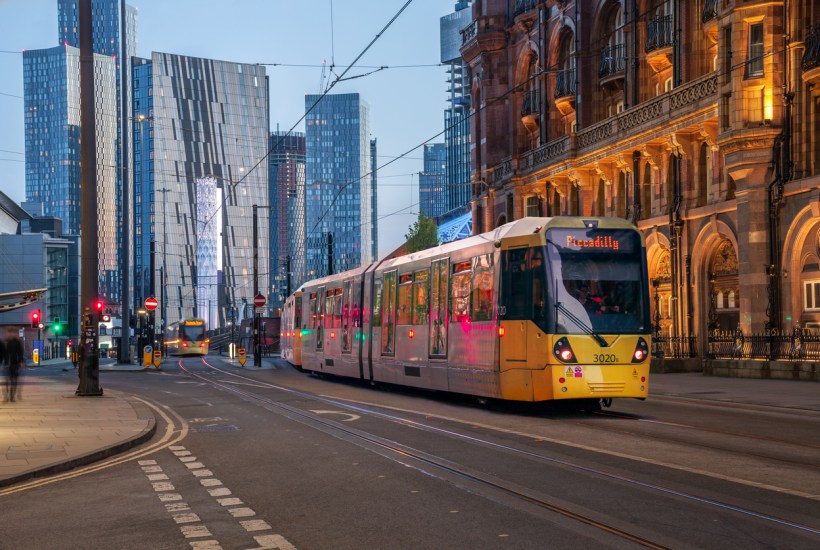
Three major developments in the late 20th century showed that the city was already trying to think bigger. First was the city’s tram network. Manchester had actually possessed one of Britain’s largest tram systems in Victorian times. Like many British cities, though, it ripped most of it out after WWII. That decision meant congestion worsened, cross-city rail connections remained terrible, and the city’s two main stations (Piccadilly and Victoria) still sat awkwardly at opposite ends of the centre.
Manchester spent decades producing increasingly desperate ideas to fix this. Underground tunnels, monorails, suspended railways, and at one point something called ‘Project Gondola’ were all proposed.
Finally, in the early 1980s, Greater Manchester’s transport authorities and British Rail settled on a modern light-rail tram system running both on converted rail lines and through the city streets themselves. The Conservative government approved the scheme and Metrolink began operating in 1992 with two initial lines connecting Bury and Altrincham.
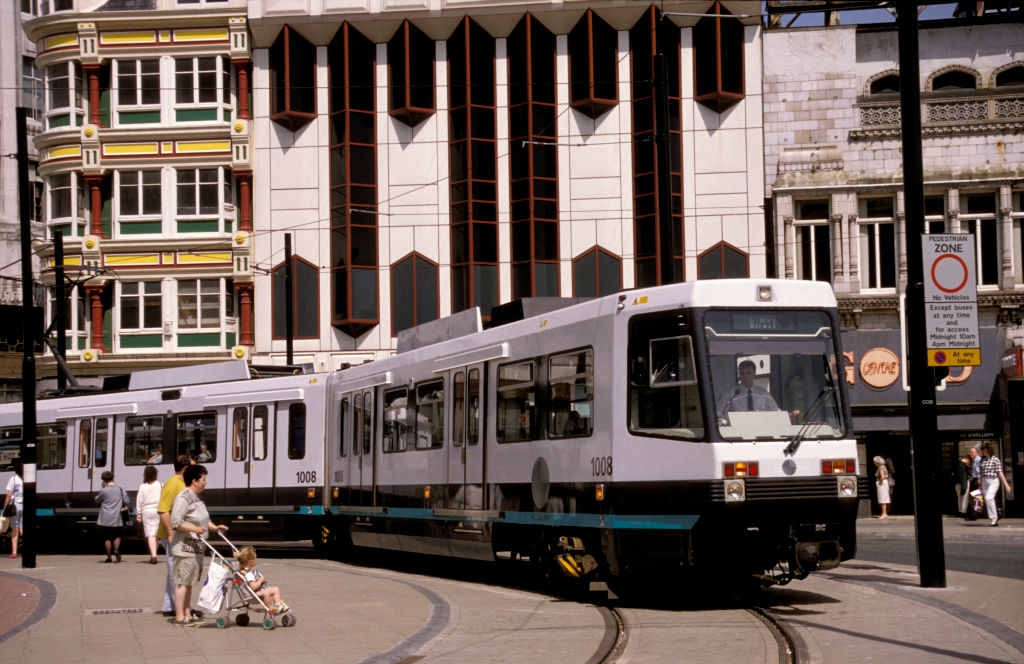 Metrolink, circa 1993 (photo: Getty)
After that, Bernstein and Leese expanded it aggressively. Over the following decades, Metrolink grew into a 64-mile network with almost 100 stops. Transport historian Paul Williams argues the system repeatedly proved its wider value:
‘Metrolink is very, very expensive to build. But if you spend the money wisely it’s been proven, time and time again, that Metrolink moves people from their cars onto the tram. It also creates more journeys, which might sound like a bad thing, but what I mean by that is we have people who feel isolated or lonely, they’re not able to get to the shops for instance. For them the option doesn’t tend to be car, or bus or tram. It’s more likely to be tram or not travel at all.’
It helped knit Greater Manchester together into something closer to a single functioning urban economy. By 2019-20, more than 44 million journeys a year were being made.
Second was the bid for the 2002 Commonwealth Games, which Manchester won in 1995. The council were clear from the start that this was not going to be treated as a two-week jamboree, but a means to drive long-term regeneration. A Manchester City Council memo in 1999 set out a number of its strategic goals for the games:
- The Games as a regeneration project: The Games were tied directly to the regeneration of East Manchester, one of the most deprived areas in the region.
- Build lasting infrastructure instead of temporary ‘event-only’ venues: The key example of this was that the main stadium would be converted into a permanent football venue for Manchester City.
- Create broad political support: They repeatedly framed the Games as ‘England’s Games’ and a ‘national undertaking,’ not merely a local project. The bid, therefore, secured backing from John Major’s Conservative government, Tony Blair’s Labour opposition, and national sports institutions.
- Build partnerships: Relatedly, the memo emphasises collaboration between local government, national government, sports councils, universities, business groups, regional agencies, arts organisations and private sponsors.
- Strengthen civic identity and international image: The games were aimed at creating civic pride in the region for residents, as well as improving Manchester’s international reputation with an eye on future international investment and World Cup and Olympic bids.
The other was the Trafford Centre, which was first dreamt up in the mid-1980s. Trafford Council backed the scheme, but other Greater Manchester authorities were sceptical. What followed was the usual British obstacle course of objections, legal challenges and transport wrangling. Planning permission was first granted in 1988, but transport concerns slowed the process. Full permission came in 1993, followed by a High Court challenge and then a House of Lords battle. The scheme was finally approved in 1995 and building began in May 1996. It took 27 months to build and cost about £600 million, far above the original budget.
For Manchester’s leaders, the lesson was that Greater Manchester had serious consumer pull, and big retailers were willing to come if you gave them a reason and a space. It also revealed that private developers could bring things the public sector couldn’t.
However, the Trafford Centre also showed how hard it was to build anything large when local authorities were not aligned. Big projects needed money, ambition and a political machine that could actually get things done.
On 15 June 1996, the IRA detonated a lorry bomb on Corporation Street beside the Arndale Centre. Although over 200 people were injured, fortunately no one was killed. However, it did remove more than a third of the city’s shopping, office and commercial space.
Leese had taken over leadership of the council only a few weeks before the blast, so his partnership with Bernstein therefore effectively began in crisis mode. Leese recognised, though, that the bomb, while terrible, had created a rare chance to fix previous blunders:
‘We decided to turn it into an opportunity. People would have got insurance money and rebuilt almost as before. Instead, we recognised we had an opportunity to undo some of the planning mistakes of the 60s and 70s and rebuild the city in a different way.’
Bernstein later made a similar point:
‘In the early 90s, we had spent a lot of time working with the private sector, landowners, developers, working through the way we wanted to see the city centre flourish… The bomb was a catastrophe, but it gave us an opportunity to accelerate the process of change that would otherwise have taken us 20 years to complete.’
In my view, the IRA bomb gets a bit overrated as to why Manchester turned around because, as Bernstein said, it mainly hastened a process that had already begun, rather than starting it. Land could be reassembled, public space could be redesigned, and the city could now present a plan to government with the message that you can’t stand in the way here because it’s (literally) a bomb site.
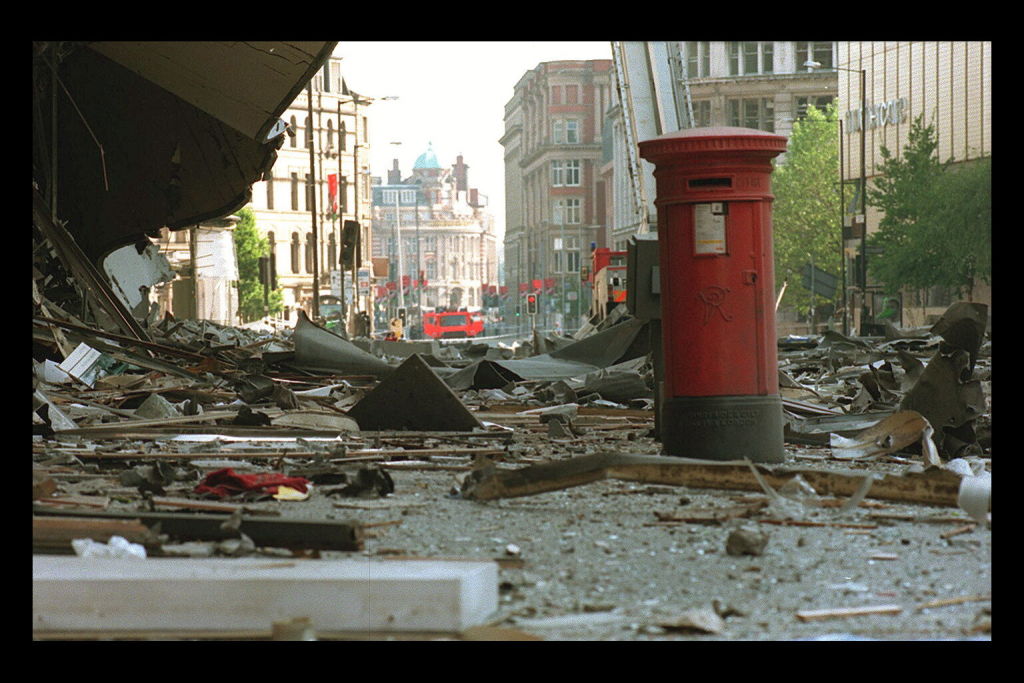 Aftermath of the IRA bomb (Photo: Getty)
According to Bernstein, Deputy Prime Minister Michael Heseltine was crucial because he moved quickly and gave the rebuild political weight:
Manchester should not be treated as a happy little accident. It’s one of the only serious growth stories Britain has produced in recent decades, and the rest of the country should be studying it much more closely
‘He was brilliant and cut through all the crap,’ says Bernstein, who was then deputy chief executive.’ He said: ‘Look, what we need here is an international design competition, a clear focus.’ He grasped [our] proposals to set up a taskforce, a very tight, focused, generically-skilled group of people in a small executive, who were custodians of a vision.’
Heseltine pushed for an international design competition, and Leese, Bernstein and him spent hours in Whitehall looking over design plans. When the awkward question of money came up, Manchester asked for £90 million… and Heseltine was convinced and agreed. The winning plan by the EDAW consortium opened up the northern part of the city centre, which had been crowded and cut off from the rest of town. Over the next few years, the rebuilt Marks & Spencer reopened, the Corn Exchange became the Triangle, the Printworks was revived, Cathedral Gardens was completed and Urbis opened.
The change to Manchester’s skyline is the most visible part of the story. The first skyscraper completed was Beetham Tower in 2006 (then known as the Hilton Tower). When it opened, I remember it being a bit of a weird curiosity to us 12-year-olds because:
- It was so big
- It was the only one of its kind in Manchester
- The rumour was that Sven-Göran Eriksson lived there while he was Manchester City manager
Within a few years, two and three were no longer the case and new developments were making number one seem pretty medium-sized. Again, the IRA bomb could at least be part-credited for this. Here is Beetham Tower’s architect Ian Simpson:
‘To be honest, it would have been an easy exercise for the city to simply rebuild itself with the insurance money,’ says Simpson. ‘But the council took the courageous step of deciding to reinvent itself, developing a masterplan that then became the framework into which they were able to encourage developers, landowners, long leaseholders, to engage.’
By the end of 2003, before construction had even started, most of Beetham Tower’s flats had been pre-sold. That was a market signal for other developers who had proof that the city centre could support high-rise living and high-end hospitality.
Manchester’s current housing data shows how far things have changed. The city built 3,864 homes in 2024-25, up 28 per cent on the previous year. As of 2025, it had around 12,000 homes under construction and another 7,500 with planning permission. 99.8 per cent of homes completed in 2024-25 were on brownfield land, and over 80 per cent were close to public transport. Bev Craig, the current leader of Manchester city council, said recently:
‘Howard and Richard recognised they had to make the city a great place to live… They saw the European cities doing well were those who were increasing their population alongside working there. These were the two key ingredients.’
‘That’s why Manchester’s nighttime economy is thriving and the restaurant trade is doing well, outperforming London on the amount of money spent on going out for a meal,’ Craig said. ‘We’ve created an interesting place to live.’
‘Any given weekend you could have a football match on at Old Trafford, a game at the Etihad Stadium, 22,000 people watching a pop act at Co-Op Live, 18,000 watching another show at the AO Arena,’ she said.
It was also a Labour that gave pretty short shrift to those who complained about a lack of ‘affordable housing’ being built. Here’s Richard Leese in 2021:
‘Some people would argue developers are pulling the wool over our eyes but we are a developer ourselves so we know exactly how much development costs. That claim is just bollocks. If we’d done what our critics wanted us to do, it wouldn’t have delivered affordable housing, it would have delivered no housing at all, zero. If we’d tried to impose 20 per cent affordability on it, it wouldn’t have happened. We wouldn’t have got 20 per cent affordable housing we would have got nothing.’
With the city centre beginning its transformation, Leese and Bernstein pushed hard onto the next stage, which was to make Manchester attractive to outside money. Manchester’s own strategy document in 2009 stated plainly that the city was competing internationally, that capital was global, and that investment decisions were shaped by perceptions of quality of life, cityscape, culture, accessibility and business diversity. The institutional expression of that mindset was Midas, the Manchester Investment and Development Agency Service, which was tasked by Manchester City Council with:
- Driving the promotion of Greater Manchester as a business location
- Attracting new investment into Greater Manchester – both corporate and capital
- Providing aftercare services to recent investors
- Account Managing the significant FDI and UK businesses in Greater Manchester
Here’s a section from a 2019 Manchester City Council report on Midas:
The GM Local Industrial Strategy (GM LIS) outlines that the key international markets for GM are the US, Europe, India, China, Japan and the UAE. The primary markets, or ‘Prime’ markets for FDI over recent years have been the EU and USA in terms of projects and jobs respectively, with ‘Opportunity’ markets Japan, China and India growing in importance as GM’s profile improves in these markets, helped in two of those by the creation of the Manchester China Forum and Manchester India Partnership which both sit within MIDAS. While there will no doubt be some impact from Brexit, these markets will remain key markets over the course of current GM LIS, with a further review undertaken as the GMIS is refreshed over the coming months
Continual work is being undertaken to determine potential target companies in these key international markets and subsectors across our ‘Prime’ (EU, USA) and ‘Opportunity’ markets (China, India, Japan and UAE) at more specific/niche levels, through MIDAS’ internal analytics capabilities but also through external research projects that are undertaken periodically, such as the recent open data analysis of emerging technology sectors in GM. This piece of work has also gone on to analyse all UK companies that have an interest or capability in these emerging tech fields and could therefore be a target for GM across all sectors.
It’s not quite ‘workers of the world unite’ but Manchester was trying to build a repeatable system for selling the city-region abroad, targeting sectors, maintaining relationships and turning international attention into jobs. The important thing was how unapologetically active the approach became. Manchester’s leadership identified what they thought growth required, built organisations around achieving it, and then went out trying to make it happen.
As the Midas document made clear, the UAE became one of Manchester’s important investment markets. The most famous example is Sheikh Mansour’s takeover of Manchester City in 2008.
That takeover changed the football club overnight, but it also changed the prospects for the part of Manchester where their stadium is. As we’ve seen, the stadium had been built for the 2002 Commonwealth Games with regeneration in mind, but a stadium and goodwill alone does not transform an area. You need money.
In 2010, Manchester City, New East Manchester and the council signed a memorandum of understanding. The club’s commitment then triggered a review of the wider regeneration strategy, so the benefits of Abu Dhabi’s investment could be pushed beyond the stadium itself. By 2024, there had been around £700 million of private investment in the Etihad Campus area. The first wave included the City Football Academy, CFG’s headquarters, the Etihad Stadium expansion, Connell Sixth Form College, the Manchester Institute of Health and Performance and later Co-op Live.
The deeper point, though, is that Abu Dhabi money landed on prepared ground. The stadium was already there, the regeneration frameworks were already there, and the council was organised and professional. That’s why Manchester got more urban value from the takeover than many places would have managed.
On 3 November 2014, George Osborne and the ten Greater Manchester leaders signed the first major English devolution deal outside London, creating a new package of powers and committing the city-region to a directly elected mayor. This was the ‘Northern Powerhouse’.
Manchester had spent years preparing the case, the ten councils now had a long history of working together, and the Greater Manchester Combined Authority (GMCA) already existed by 2011. In one sense, devolution simply formalised what Manchester had been practising for years. However, Bernstein helped convince Osborne that Greater Manchester had the scale and seriousness to handle more power, to the extent that Osborne described him as ‘the star of British local government’.
The success of the first devolution deal encouraged demands for (and Westminster to grant) more powers. Over the following years the city-region secured further control over housing, skills, health spending, policing, bus franchising and aspects of economic strategy. What emerged was not full federalism or anything close to it, but it was still the most extensive package of devolved powers granted to any English city-region outside London. Each successful transfer of power strengthened Manchester’s case for the next one.
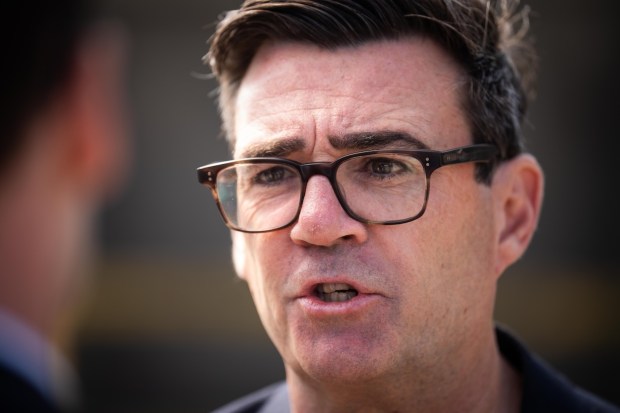
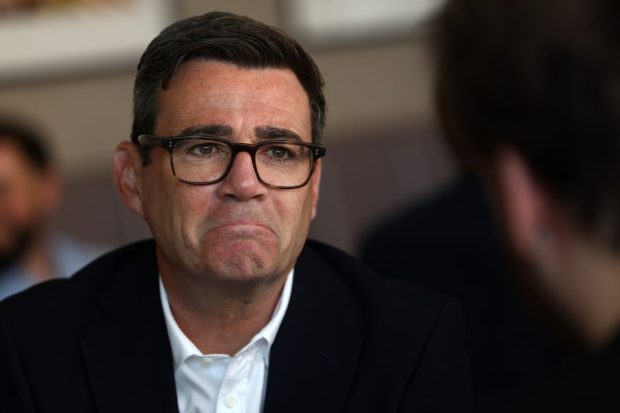
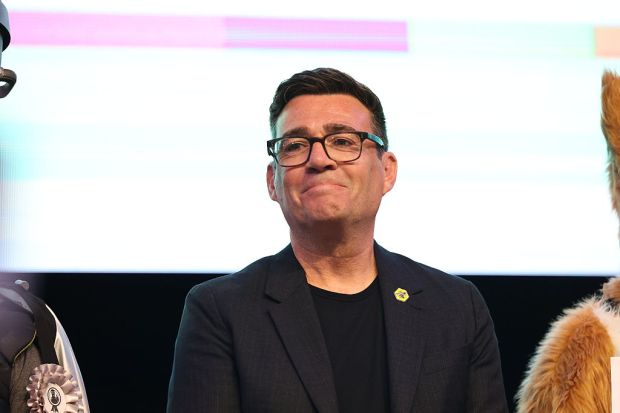
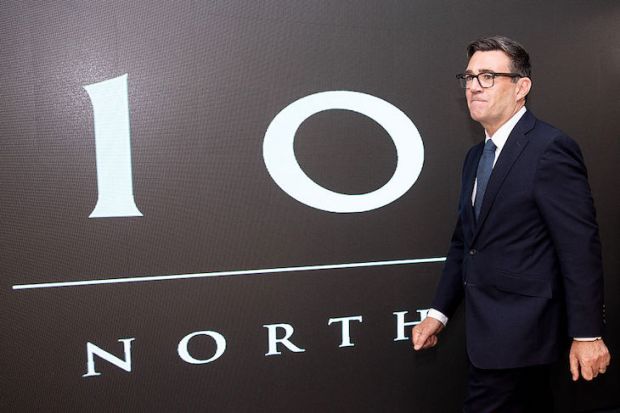
The clearest symbol of devolution came in 2017 with the election of Greater Manchester’s first metro mayor, Andy Burnham. In public life Burnham has been much more visible than Leese or Bernstein ever were and turned the mayoralty into a genuine political platform. That’s not a criticism, because cities need someone who can speak for them and gain attention, especially given that the British political and media establishment regularly forget that places north of Watford exist.
This was clearly needed during Covid when Burnham challenged the national government over Tier 3 restrictions. The row was loud and sometimes theatrical, but it showed what a metro mayor could do. Burnham gave the city-region a visible negotiator who could stand in front of the cameras and make Manchester’s case.
 (Photo: Getty)
His clearest policy achievement has been on transport. Greater Manchester became the first combined authority to bring buses back under local control. The Bee Network rolled out in stages from 2023, with full bus franchising completed in January 2025, and later moves towards contactless fares across buses and trams (Note: this is not the same thing as public ownership. Private bus companies still operate the buses, but only under contracts awarded by the authority.).
On a more mixed note, Greater Manchester Police was placed into special measures in 2020 after inspectors found that the force had failed to record around 80,000 crimes. That happened on Burnham’s watch, since the mayoralty had absorbed the police and crime commissioner role, and was a serious failure of local governance However, Burnham moved quickly against the existing leadership and appointed no-nonsense Stephen Watson as chief constable. Under Watson, arrest numbers rose from 33,500 in 2021 to 67,000 in 2024, and Burnham extended his contract in 2025.
The clean air zone was messier. Greater Manchester had planned a charging scheme for high-polluting vehicles, with cameras and signs already rolled out. The plan then hit a public backlash and was paused in 2022. By the time the scheme was dropped, £104 million had reportedly already been spent. Burnham later shifted to a non-charging clean air plan based on investment in buses, taxis and traffic measures. That may have been politically sensible, but the episode was still a reminder that mayoral government can also produce a very expensive U-turn.
Planning exposed another weakness. Greater Manchester’s joint plan was supposed to show all ten boroughs working together on housing and land use. Instead, in 2020, Stockport voted against the Greater Manchester Spatial Framework after Conservative and Liberal Democrat councillors objected to green-belt development. The episode showed that the hard-won cooperation between Greater Manchester boroughs, that Leese and Bernstein had valued so much, could be broken.
Greater Manchester’s success is real. This is not just me being a biased, one-eyed Stockport man who gets misty-eyed at the sight of a bee on a bus stop engaging in a bit of civic boosterism:
- Greater Manchester’s Gross Value Added (GVA) growth has averaged around 2.8 per cent a year over the past decade, ahead of London’s 1.1 per cent and the UK’s 1.3 per cent.
- Manchester’s total GVA reached £35.9 billion in 2023, up 11.2 per cent on the year, compared with England’s increase of 9.1 per cent.
- Manchester’s GVA per head reached £55,371 in 2022, growing 2.3pp faster than England overall.
- The largest GVA contributors have been in higher-value industries like financial, professional and scientific services, which together make up over a quarter of the city’s output.
- The city-region’s average annual productivity growth since 2015 was the highest of any UK ITL2 area, at 2.0 per cent.
- The number of employees within Manchester’s city boundary rose to 453,000 between 2022 and 2023, a 5.8 per cent increase.
- Manchester’s population has a median age of 31, nearly a decade below the UK average.
- It consistently ranks among Europe’s top Foreign Direct Investment destinations for cities of its size, comparable to Barcelona or Dublin.
- Manchester was the UK’s leading city outside London for FDI projects in 2024
None of this means Manchester has solved regional inequality. The city still has serious problems with poverty and homelessness, and the benefits of growth remain geographically uneven within Greater Manchester with the centre and the south continuing to be far more prosperous than the north. I’m from Stockport (south Manchester) so I probably have a biased ‘everything is great and so much better than before’ view, which might not be the case if I was from the north.
Still, come on! Manchester went from a hollowed-out city centre with a few hundred residents, a collapsing industrial base and a reputation for decline, to the strongest growth story outside London. It rebuilt its centre, attracted foreign capital, created a proper city-region government, grew its population, built homes at scale and made itself one of the few British places that felt genuinely dynamic.
Manchester should not be treated as a happy little accident. It’s one of the only serious growth stories Britain has produced in recent decades, and the rest of the country should be studying it much more closely.
Why did Manchester pull this off when so many other British cities struggled?
1. People matter
That sounds obvious, yet Britain often talks as though economic growth and change just sort of happen by themselves. Yes, institutions and incentives matter, but competent and determined people matter too and can change the course of an area. Sometimes Great Men shape History.
Manchester was fortunate that, at a critical moment, it ended up being run by Richard Leese and Howard Bernstein rather than by people more interested in political games or endless consultation exercises. Leese and Bernstein not ‘serious people’ in the media sense, where any Tim Nice-but-Dim who puts on a suit and speaks posh gets described as a ‘grown-up’. They were actual grown-ups who understood planning, finance, transport, property, institutions and power. In absolute terms, Leese and Bernstein were talented people. In relative terms compared to the politicians running other councils, they were (non-authoritarian) Lee Kuan Yews and Deng Xiaopings.
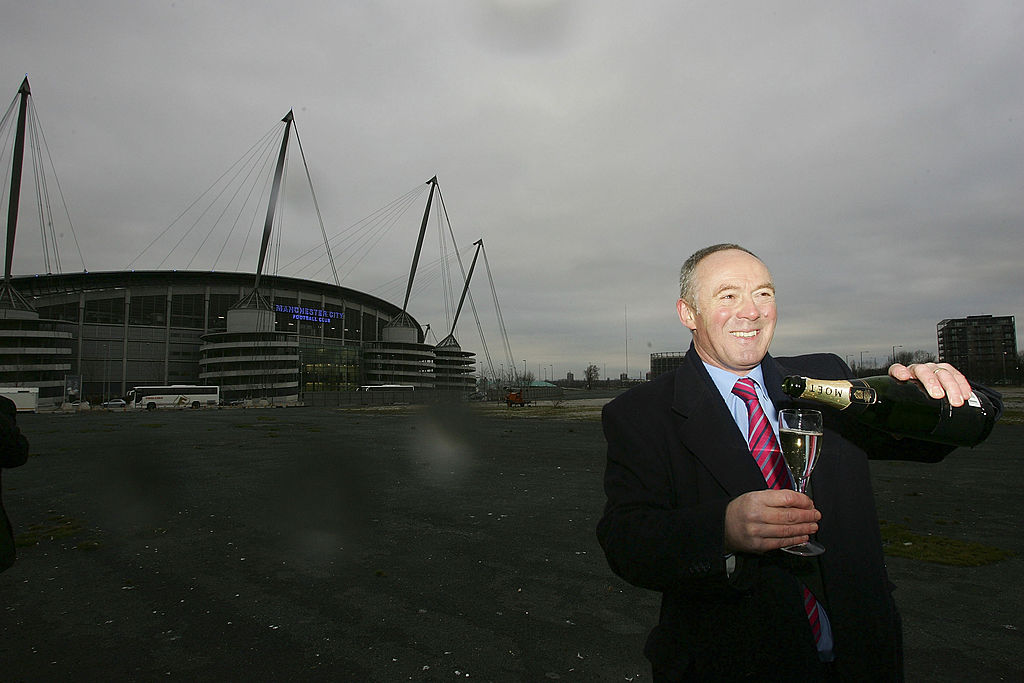 Sir Richard Leese, 2007 (photo: Getty)
Had Manchester been run by people like Derek Hatton, there is a good chance it would have stayed on the same downward path. The damage done to Liverpool by Militant didn’t just disappear when the 1980s ended. It left the city economically delayed and institutionally weaker. Liverpool is now doing better, but for years it’s had to play catch-up with Manchester because of this period.
This is also why devolution shouldn’t be treated as a magic cure for the UK’s regional inequality. I am strongly in favour of economic devolution, but it doesn’t guarantee good outcomes. You might devolve power to talented, intelligent pragmatists. But, then again, you might devolve power to an insane scouse communist.
2. They Wanted It
In Gambling on Development, Stefan Dercon argues that economic transformation in poorer countries only happens when the elites who hold power in that country (politicians, business elites, the civil service etc.) decide they genuinely want growth.
Manchester’s leaders were clear that economic growth was the route to fiscal strength, jobs, less poverty and more confidence. That mindset shaped almost everything. Manchester wanted inward investment, construction, students, graduate jobs, hotels, conferences and foreign capital, so it went out looking for it.
Midas, the China Forum, the India Partnership and the city’s wider international strategy were all part of the same machine. With housing, Manchester understood that building requires trade-offs. Too many people want more homes without the noise, cranes, disruption or politics required to make it happen. Manchester was more honest and chose the cranes.
You can disagree with parts of the model, but the city’s direction was rarely in doubt.
3. Best of left and right
Manchester Labour decided early that ideology would not restart a post-industrial city. It worked with Tory ministers when that was useful. The airport depended on cross-borough cooperation. Private developers were treated as necessary partners. The city asked what would actually move jobs and capital in their direction, then it tried to do that.
Manchester Labour sometimes describes this as ‘business-friendly socialism’. I think it’s a bit much to describe what they did as ‘socialism’, but it certainly had social democratic elements. The council remained committed to things like public control of public transport (again, this is not the same thing as public ownership) and has done a lot to help the homeless. It just combined that with a hard-headed view of markets and the private sector.
This is worth stressing because it cuts against lazy stereotypes about Labour local government. Manchester Labour was not cloth-cap nostalgia or blue-haired degrowth. It was a Labour council that talked fluently about FDI, target markets, investor aftercare, global competition and sector strategy.
That mixture fits Manchester’s own history. Being simultaneously economically left-wing and economically right-wing has been a defining feature of the city for 200 years.
In the 19th century, ‘Manchester Liberalism’ became shorthand for laissez-faire, free trade, open markets and industrial capitalism. The Anti-Corn Law League operated from the city. The Free Trade Hall itself carried the name. Manchester helped turn liberal capitalism into a political creed. There’s a reason the industrial revolution happened here.
But Manchester was also ‘Cottonopolis’, the city of dark satanic mills, working-class radicalism, and the Peterloo massacre. There’s a reason Marx and Engels’s critique of industrial capitalism was inspired by here.
Modern Manchester Labour combined those two inheritances. Where competition worked (businesses competing for customers, developers competing for sites, investors competing for opportunities, foreign firms bringing capital and jobs), it supported it. Where competition was irrelevant or actively damaging (a fragmented private bus market did not give Greater Manchester the system it needed), it took the opposite path. A Labour council knew when to let the private sector do its work and when to use government.
4. Economies of scale and flywheels
Economists talk about ‘economies of scale’, which basically means that bigger integrated systems can often do things more efficiently because costs, infrastructure and opportunities are shared across a larger base. London benefits from this, because its transport system, labour market, housing market and institutions operate at metropolitan scale.
Manchester tried to build institutions to create a functional economic whole too. The airport, the Combined Authority, the devolution deal, the metro mayor model and transport integration all followed from that. Greater Manchester became more capable because it started acting like a coherent metropolitan economy, rather than ten councils occasionally meeting to argue about when to open Cheadle train station.
The second bit of economist jargon is ‘the flywheel.’ A flywheel is a heavy wheel that takes effort to get moving, but once it starts spinning it stores momentum. Economies can work like that too. Early progress is hard, but then confidence builds and each success makes the next one easier. Manchester’s projects reinforced one another:
- The rebuilt city centre supported inward investment
- Inward investment increased demand for offices and apartments
- Residential growth improved city-centre life
- More residents supported retail, nightlife and transport upgrades
- The Commonwealth Games produced sports infrastructure
- That later helped East Manchester regeneration
- The Manchester City takeover then made that regeneration far more powerful
- Airport connectivity helped all of it
- Universities fed skilled workers into the system
One successful project creates confidence for the next one. Confidence lowers perceived risk, lower risk brings in more capital, and more capital creates more visible success. Over time, momentum builds.
Labour dominance in Manchester also meant the leadership could think in decades rather than electoral cycles. One-party rule can obviously produce complacency and stagnation. Manchester avoided that trap because its leadership remained unusually focused on growth and institutional capacity (again, people matter).
5. Reputation
The city realised that improving its image was an economic necessity. This was explicit in the Commonwealth Games strategy, which said hosting major sporting events was a fundamental part of ‘promoting and marketing the City region’, as well as generating economic and social benefits. The 2009 city-centre strategy made the point even more clearly:
Capital is global and investment decisions are based on a range of factors, not least of which is the perception of what a place is like. External views of Manchester’s quality of life as a whole are strongly determined by perceptions of the city centre. These opinions will be formed by factors such as a distinctive cityscape and public realm, business diversity, the cultural offer, a range of global hotel brands, high quality civic functions and accessibility. Achievement of our vision for the city centre will ensure positive perceptions of Manchester, for both investors and residents.
That might sound intangible, but investors, workers and students are all human. Yes, people choose places because of economic incentives, but they also do it partly through stories and vibes.
Manchester also understood, though, that reputations are not be fixed by marketing gimmicks or rhetoric alone. Perception only changes when reality changes. The 2009 city-centre strategy made this point when talking about Piccadilly:
More also needs to be done to change the perception of Piccadilly, and the security and appearance of the public realm and the area at all times is paramount. Transport hubs, particularly Parker Street, need to see the enhancement of the waiting environment for passengers to ensure that they feel secure.
If Piccadilly felt unsafe and dysfunctional, the answer was to make it safe and functional.
Perception and reality form a feedback loop. A better image brings more investment and more investment improves the reality. That is the virtuous cycle Manchester managed to create.
The same process, though, can run in reverse. A bad image reduces investment and puts talent off, and that weaker reality then confirms the bad image. This is why the UK’s growing international reputation as an anti-growth, ethnically divided, political basket case, lawless (except when policing speech) gerontocracy is much more damaging than you might think. Britain risks falling into the perception-reality doom loop.
‘Oh, it’s not true. It’s just racist Americans on X making stuff up!’
Firstly, it’s clearly not entirely made up. It has a basis in reality (even if it is politically inconvenient). Life in Britain is not currently a CBeebies Land version of the 2012 Olympic Opening Ceremony.
Manchester Council was clear-eyed that perception is always at least in part based on material conditions. ‘Gunchester’ might have exaggerated how bad crime actually was, but crime was still really bad. The economy might not have been the post-industrial wasteland of other places, but it was still really bad. There was a reason why only 500 people wanted to live in the city centre at one point.
If outsiders (and insiders) think that Britain can’t build things, control its borders, police crime, protect free speech, keep streets clean, maintain societal cohesion, ensure political stability or offer young people a decent future, that will lead to reality.
Why would developers invest in Britain if they think projects will drown in years of delays from appeals and reviews? And when they don’t invest, houses get more expensive and the country doesn’t have the infrastructure it needs to grow.
Why would highly skilled immigrants choose Britain if they think their phone will be stolen the moment they walk down the pavement? And when they don’t come, they instead start their business in another country, and Britain loses out on the jobs and tax revenues it could have had.
Why would international investors buy British debt if they think who the prime minister (and their agenda) is going to be in a year’s time is always unknowable? And when they don’t buy that debt, borrowing costs and interest rates go up for British people.
Why would parents send their intelligent child to a British university if they think the child will end up being radicalised into religious extremism? And when they don’t send them, British universities miss out on that sweet, sweet international fee and go even deeper into the red.
Also, it’s not just racist Americans on X. The ‘UK as basket case’ perception is now increasingly widespread amongst influential US centre-left journalists and the American business press (and wealthy Emiratis). The details vary, but the overall image is familiar: stagnation, institutional decay, weak growth, bad housing, high costs, fraying public order, and a state that is more interested in policing opinions than shoplifting.
Once a stereotype gets entrenched, it’s very difficult to dislodge. The only way to properly dislodge it is to change reality on the ground.
This is why Manchester’s reputation work mattered so much. The city improved the product, then sold it hard. Manchester built a positive feedback loop. Britain is doing the opposite.
When Andy Burnham became Mayor of Greater Manchester in 2017, he inherited a system that was working well. For the previous 25 years, a huge amount of difficult institutional work had already been done to create a functioning city-region economy and state.
If Burnham becomes prime minister, this is not remotely similar to the situation he would inherit in Downing Street. As such, it’s unknowable whether Burnham would actually be a good prime minister. This is true of anyone before they enter Number 10, but the question is particularly interesting in Burnham’s case because many people assume his executive experience as mayor naturally prepares him for national leadership.
To use a football analogy that Burnham might appreciate, Brentford under Keith Andrews and Brighton under Fabian Hürzeler have both had very strong seasons this year. However, it’s difficult to know exactly how much of that comes from their managerial brilliance.
Brentford and Brighton are famous for being extremely well run. Recruitment, analytics, sports science, succession planning and club culture are all highly developed. Therefore, their managers entered a system that is coherent and functional – but those environments can make people look better than they really are.
Graham Potter looked brilliant at Brighton and Thomas Frank looked brilliant at Brentford. Then, at different clubs, they suddenly they stopped looking quite so flawless.
Which parts of Burnham’s success come from Burnham himself, and which parts come from inheriting a relatively healthy institutional ecosystem?
Greater Manchester in 2017 was much closer to Brighton or Brentford than it was to Chelsea or Tottenham. The institutions were stable, the strategy and structures already existed, and the direction of travel was clear. Burnham’s job was to keep momentum going, sharpen a few areas and avoid wrecking something that already functioned.
Britain looks much more like one of those enormous, dysfunctional clubs with huge resources, endless internal politics, non-existent strategy, constant managerial churn and a fanbase permanently furious at everyone involved. The UK needs somebody capable of rebuilding institutions, imposing direction and forcing through painful reforms across multiple systems simultaneously.
As mayor of Greater Manchester, Burnham didn’t need to do any of that, so never developed those skills. His time as mayor tells us he is politically talented, media-savvy and capable of operating effectively inside a functioning system. It tells us nothing about whether he can give the kiss of life to a stagnating economy, reform a failing state, restore institutional legitimacy and navigate a permanently regicidal political culture.
In football terms, the UK needs a Bill Shankly not a Bob Paisley. Someone to actually transform an institution, build an entirely new culture, impose discipline and change things from top to bottom – not the person who keeps these things going once they’re in place.
Warren Buffett once said he liked investing in businesses ‘that an idiot could run, because one day one will.’ Burnham is not an idiot. One sign of Burnham’s intelligence is that he largely recognised Greater Manchester’s institutional strengths and worked with them, rather than trying to tear everything up for the sake of personal ego.
Manchester by 2017 was already operating like one of Buffett’s companies. The flywheel was spinning. To replace Burnham, Manchester Labour members could foist upon the city someone who thinks all private developers are the devil and wants to mandate that all school children visit the People’s History Museum at least once a month – but the Manchester system has become robust enough that the economy would probably keep growing anyway.
There is another issue too. Burnham’s communication style works because he is outside Westminster. Here is the University of Manchester’s Rob Ford on the Past Present Future podcast talking about Burnham, recently:
What sort of political story has he been telling people up here and telling the nation as well? It’s an oppositional political story. It’s a populist, in some ways, political story.
The point where he really shot up in terms of his popularity was the Covid arguments, when he attacked the Johnson government for ‘turning the north into a laboratory’ and ‘treating the north like second-class citizens’ and all this kind of thing. The clips of him frowning at mobile phones with messages from the government going viral and so on. That was quintessential us-against-them politics. ‘I’m standing up for Greater Manchester against those out of touch distant Westminster politicians.’
We’ve seen that story a number of times now. We’ve seen it with the SNP in Scotland. We’re seeing it with Plaid. Obviously, it’s at the heart of Reform’s appeal as well, and the Greens too.
So he’s riding the wave that we’re seeing everywhere. But can you really govern like that from Westminster when you are the thing that is distant and disliked and distrusted? That is a very, very different kind of challenge.
Local leaders can define themselves against Westminster and plausibly blame any dysfunction on the senior and more powerful party. Prime ministers can’t do that. They own the dysfunction.
Who exactly would Prime Minister Burnham spend his time railing against?
Water companies? Maybe, but anti-corporate grandstanding doesn’t really fit the Manchester model. Even when they were taking it back under public control, Burnham never made the case that private bus companies were bad people (they still operate the buses, after all).
Nigel Farage? Perhaps, but a prime minister trying to position themselves as the anti-establishment outsider against the leader of an opposition party not in government would quickly start looking a bit absurd.
Civil servants? The Bond Market? Donald Trump? Vladimir Putin? ‘The system’? All of these are plausible candidates, but prime ministers eventually run into the same problem: after a few years, the public stops accepting explanations about outside constraints and starts asking why you haven’t fixed the thing you were elected to fix.
Outsider politics works much better when you are still on the outside.
Manchester is not perfect, but it’s a remarkable success. The lessons are not complicated, but Britain keeps refusing to learn them. Get serious people into power. Build houses. Build transport. Welcome investment. Fix the public realm. Make institutions match real economic geographies. Stop treating growth as something which only needs a press release to come into effect.
If Prime Minister Burnham ever arrives, hopefully he can do just a bit of this. The problem, though, is time. Leese and Bernstein had roughly a quarter of a century to reshape Manchester. Burnham would have three years. He would quickly find himself trapped between the long-term logic that helped Manchester succeed and the short-term panic of Westminster politics.
Still, Manchester at least proves decline is not inevitable. Britain is not doomed. Institutions can improve. Growth can return. Places can regain confidence. The country is not condemned to the tepid bath of managed decline, unless it chooses to be.
If not, maybe Richard Leese would agree to be prime minister.