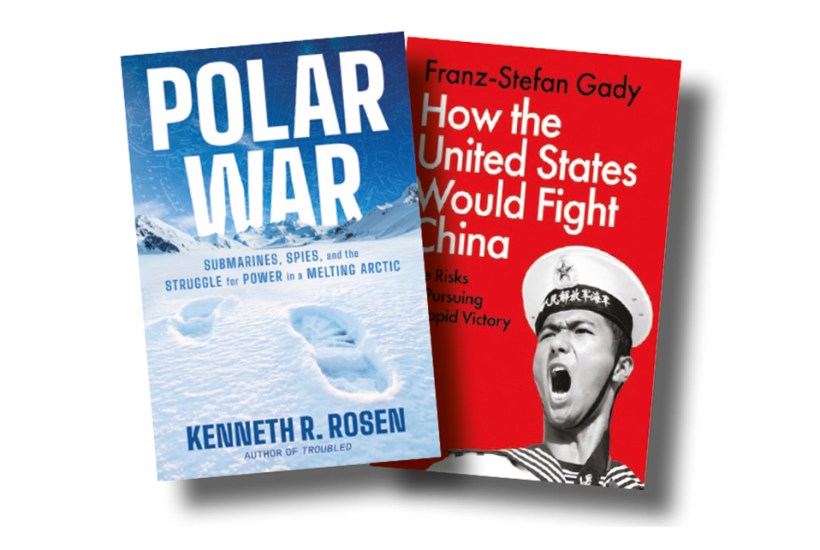
The US military might be the most powerful in the world but it has fallen dangerously behind in one of the key emerging battlefields, according to Rosen, an award-winning journalist and war correspondent. He puts a convincing case that in the Arctic the US is being outmatched by its main rivals, Russia and China.
Rosen is no armchair geostrategist. He visits most of the countries that border the region and conducts interviews with everyone from glaciologists to Inuit tribal leaders. Along the way, he tramps around freezing Alaskan towns with names like Deadhorse and Coldfoot, trying to understand the difficulties of living – let alone fighting – in Arctic conditions.
There has been a long series of Russian incursions into the waters around Canada, Greenland and Alaska, and Russian submarines are often detected in places where they should not be. The Russians have a habit of planting flags on barren islands, presumably to support eventual territorial claims. The Russian bear is persistent and patient.
The central problem for the Americans is that, unlike the Russians, they are largely unprepared for Arctic combat. Rosen accompanies a troop of Navy Seals undergoing Arctic training but their journey demonstrates, as much as anything, how far they have to go. Perhaps more disturbing, the Russians have a fleet of modern icebreaker ships. The US has two ageing vessels.
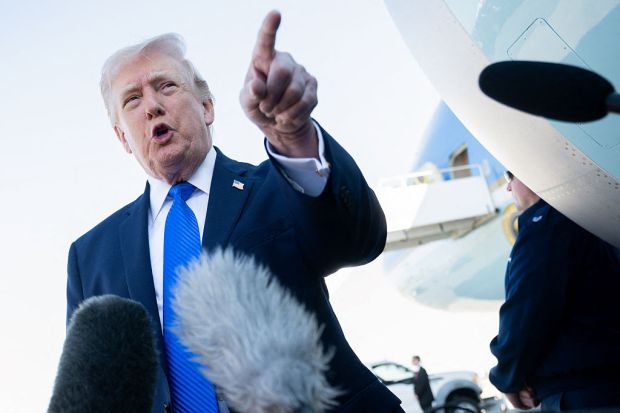
Suddenly, Donald Trump’s assertion that the region is crucial to national security and that the US needs to strengthen its presence there does not seem outlandish. It seems, instead, like a prudent reversal of a lengthy period of neglect. Rosen comments: ‘Militaries have learned over the centuries that a war in the Arctic is advantageous only to those who have mastered it.’
All this manoeuvring is underpinned, claims Rosen, by global warming. The retreat of the ice means that more land and open sea is exposed. Even the opening of a northern channel from the Pacific to the Atlantic looks plausible, which is of great interest to China.
The Americans are behind but they have started to play catch-up. Ships that can handle subzero conditions are planned or under construction. Arctic specialists are being brought into contingency planning. Mothballed bases are being re-opened and upgraded. This would allow for a relocation of military assets, including advanced fighter aircraft.
Rosen suggests the development of a framework to enhance co-operation between Nato countries with Arctic interests. More controversially, he wants the US to support Greenland’s moves to win autonomy from Denmark, both to allow for economic development and as the basis for a defence agreement. However, Rosen disdains Trump’s comments that he might try to buy Greenland or even take it by force.
Polar War adds up to a fascinating and timely read, a warning sign about trouble coming down an icy road.
Another author who is ready to offer good advice is Gady, who has been a senior consultant to various US military agencies as well as a battlefield observer. In How the United States Would Fight China he argues that much of America’s military strategy is about striking fast and hard, stunning opponents into early submission. This has sometimes proved effective but in a war against a large, well-equipped enemy it might be entirely the wrong approach.
He sees the most likely flashpoint as a Chinese invasion of Taiwan, with the US rushing to Taiwan’s aid. Gady walks through the various aspects of such a conflict, examining cyberattacks, air and maritime operations, and firefights on the ground. Neither side would want to cross the nuclear threshold but either side would do so if there was no alternative, probably starting with tactical nukes and working up from there.
A shock-and-awe strategy is not going to work against prepared and disciplined Chinese troops, says Gady. Instead of a quick finish, the conflict could drag on for months or years, and the Americans would struggle with the logistics of a long supply line.
Despite China’s advantages the US has cards to play: shorter lines of command, precision strike capability, and technology designed to counter mass. The Pentagon has also invested heavily in ‘decision dominance’, which means more focused use of the battlespace information, but Gady is not sure that the plan will survive an encounter with reality.
Gady is by no means certain that the US would win such a conflict but he suggests some ways to increase the chances. Pre-positioning critical supplies in the region would be helpful, and so would the placement of air defences in Taiwan. But perhaps the biggest improvement would come from a shift in the culture of warfighting in the military. This is already happening and there have been some studies and exercises about fighting a war of attrition. The question that Gady asks is: is change happening fast enough?
This is all interesting food for thought but there are problems with the book. Gady does not, for example, examine the significant military capacity of Taiwan, as well as the role of other allies. Neither does he look at other potential conflict zones, such as the Korean peninsula or the South China Sea, which could easily turn into a superpower face-off. These would have a very different complexion to a conflict over Taiwan and would call for very different strategic responses.
Nevertheless, Gady raises many critical, worrying issues. Let us hope that we never have to find out if he is right or wrong.
Got something to add? Join the discussion and comment below.
You might disagree with half of it, but you’ll enjoy reading all of it. Try your first month for free, then just $2 a week for the remainder of your first year.