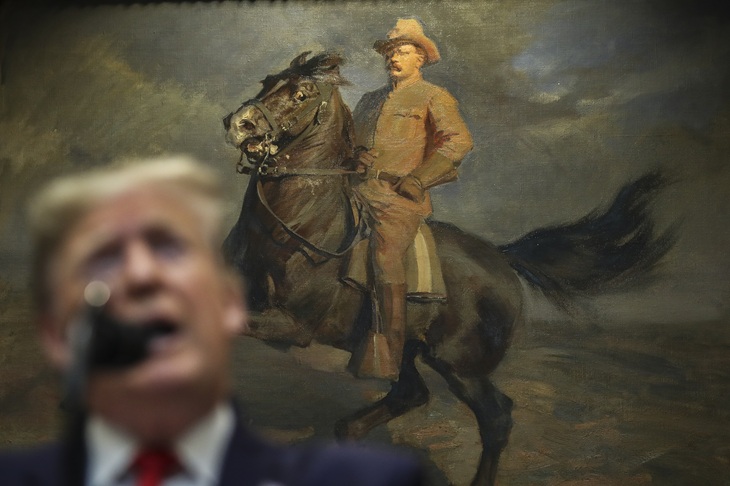
‘Christianity was saved in Europe solely because the peoples of Europe fought.’
– President Theodore Roosevelt, Fear God and Take Your Own Part (1916).
Theodor Roosevelt wrote those words in 1916 as Europe convulsed in war. He was not romanticising bloodshed. He was stating what he believed to be a hard historical truth: civilisations endure because they are willing to defend themselves. Had Europe lacked the will to resist conquest, he argued, its religious and cultural foundations would have been replaced. History, in Roosevelt’s telling, does not reward sentiment. It rewards resolve.
Roosevelt’s warning was not confined to the Ottoman sieges or the gates of Vienna. It was a broader observation about political will.
Societies that fail to recognise the nature of militant movements – that mistake ideological absolutism for negotiable politics – invite consequences they later lament but cannot easily reverse.
In 1979, the United States confronted such a moment in Iran.
By the late 1970s, the Shah’s regime was strained. Rapid modernisation had produced economic dislocation. Political repression had alienated opponents. Corruption had eroded legitimacy. None of this is controversial. The monarchy was flawed and brittle. But Iran was also a strategic ally of the United States, a bulwark against Soviet influence, and a state whose secular orientation kept radical Islamist currents at bay.
President Jimmy Carter entered office with a moral emphasis on human rights. That commitment, admirable in theory, collided with the realities of a revolutionary environment. Public and private pressure on the Shah to liberalise politically came at precisely the moment when unrest was accelerating. Washington’s confidence in its ally wavered. Signals of American ambivalence multiplied.
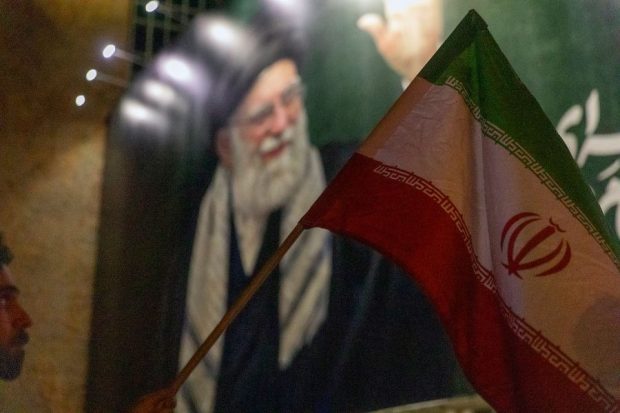
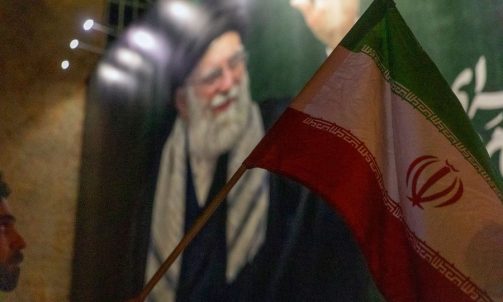
At the same time, Ayatollah Ruhollah Khomeini did not present himself as a moderate reformer seeking incremental change. He proclaimed a religious mandate. His movement was not a conventional political opposition; it was a revolutionary Islamist project grounded in the doctrine of velayat-e faqih – clerical rule. His followers were not negotiating over Cabinet posts. They were mobilising for an Islamic transformation of the state.
The Carter administration misread the depth and trajectory of that movement. Intelligence assessments underestimated Khomeini’s capacity to consolidate power once the Shah fell. General Robert Huyser was dispatched to Tehran in early 1979, in part to discourage a military coup that might have temporarily stabilised the regime. Washington signalled restraint rather than decisive backing. The Shah departed. The regime collapsed. Khomeini returned. Historians will continue to debate intent, however, the consequences were on complete display.
Within months, the American embassy was seized. Fifty-two diplomats were held hostage for 444 days. The Islamic Republic entrenched itself, fusing clerical authority with military power. The Revolutionary Guard Corps emerged not merely as a security force but as an ideological instrument. Anti-Americanism was no longer rhetorical flourish; it became state doctrine.
Roosevelt believed that when confronted by militant ideology, hesitation is interpreted as weakness. In 1979, the United States treated a religious revolution as if it were a political transition that could be managed through calibrated engagement. It assumed that the removal of an autocrat would yield moderation. Instead, it facilitated the rise of a theocracy whose hostility toward the West has shaped four and a half decades of conflict.
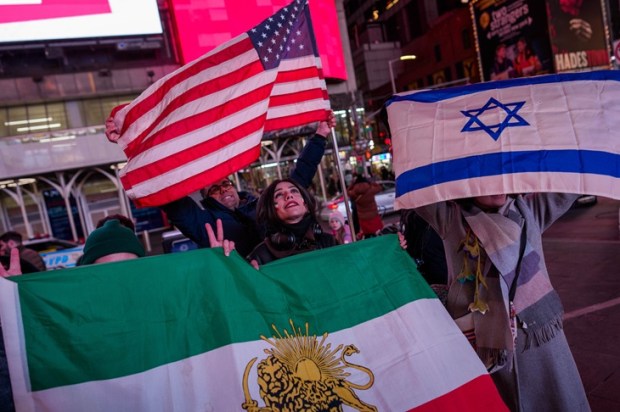
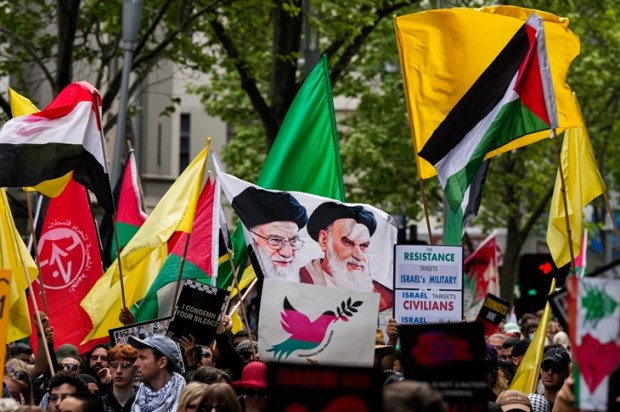
The consequences radiated outward. Hezbollah rose in Lebanon; Shiite militias expanded influence in Iraq; proxy warfare became a strategic doctrine. The slogan ‘Death to America!’ was not the outburst of a fringe faction; it was echoed from the highest offices of the new regime. Iran’s leadership did not conceal its worldview. It articulated it openly: resistance to Western influence, rejection of Israel’s legitimacy, and expansion of ideological reach through asymmetric means.
For years, American administrations oscillated between pressure and engagement. Sanctions were imposed and lifted, and agreements were negotiated and abandoned.
Yet the underlying structure of the regime endured. The Revolutionary Guard expanded its economic and military footprint. Regional proxies multiplied. The ideology that seized Tehran in 1979 proved durable.
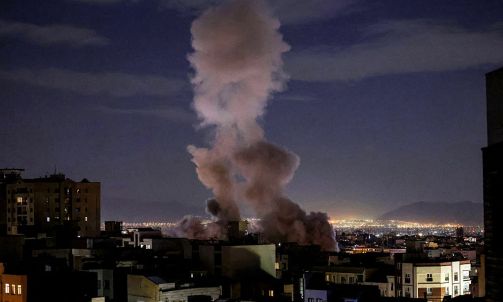
The present confrontation with Iran – whether measured in sanctions, strikes, or strategic standoffs – did not arise in isolation. It is the cumulative result of decisions made at a pivotal moment when clarity gave way to miscalculation. One need not indulge conspiracy to acknowledge that weakening an allied regime without securing a viable alternative can produce outcomes far worse than the status quo.
Roosevelt’s argument was unsentimental: civilisations survive when they possess the will to defend their foundations. That does not mean perpetual war. It means recognising when one is dealing with an ideological movement animated by religious absolutism rather than transactional politics. It means understanding that not every revolutionary force seeks accommodation.
The Iranian Revolution was not a democratic flowering that went astray. It was the deliberate establishment of a clerical state grounded in Islamic jurisprudence and animated by a belief in its own historic mission. To misread such a movement as merely another government-in-waiting was a grave error.
Those who defend Carter’s approach argue that the Shah’s fall was inevitable – that corruption and repression had hollowed the regime beyond repair. Perhaps the monarchy could not have been preserved indefinitely. But inevitability is often a convenient retrospective judgment. Policy choices matter. Signals matter. Resolve matters. When a superpower projects uncertainty at a decisive moment, others act with confidence.
Roosevelt would have recognised the pattern. He believed that history punishes illusions. Societies that assume militant movements will moderate once in power often discover the opposite: power entrenches conviction. The bill for 1979 has been paid in hostages, in regional wars, in proxy conflicts stretching from Beirut to Baghdad. It is still being paid.
President Theodore Roosevelt wrote that ‘there can be no greater issue than that of national self-respect. A nation that cannot defend itself holds its existence by a precarious tenure.’ Its deeper lesson, however, transcends the theology of his era. It is about will – about the clarity to recognise adversaries as they define themselves, not as one hopes they might become.
In 1979, when hesitation met revolution, the revolution did not hesitate and the consequential lessons endured.
Aaron J. Shuster is a writer, essayist, and cinematist whose work explores politics, philosophy, and culture through the lens of Western civilisation and historical consequence.