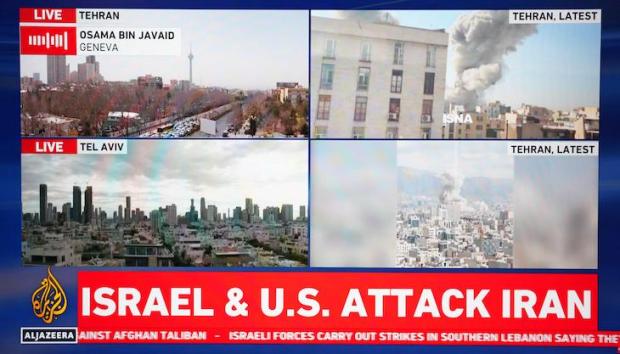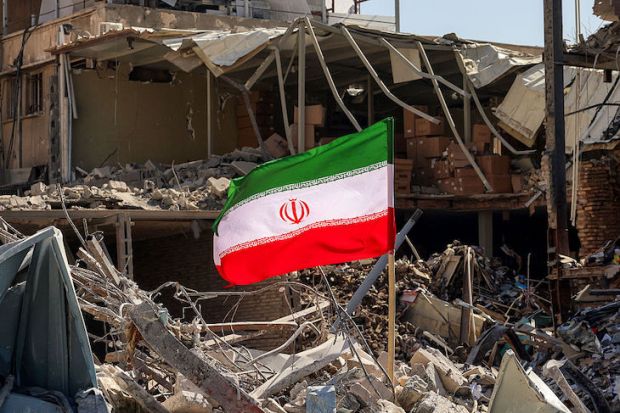
The war with Iran entered its second week on Saturday with intense fighting across multiple fronts, as Israeli forces struck deep inside Iran while Tehran retaliated with missiles and drones across the region. Political rhetoric in Washington and Jerusalem meanwhile suggested the conflict could widen further still.
The day began with reports of renewed Israeli air operations across Iran. The Israeli military said more than 80 aircraft had taken part in a wave of strikes targeting infrastructure linked to Iran’s missile and military programmes. Israeli officials said the attacks hit a series of facilities including missile storage sites, weapons factories and command compounds used by the Islamic Revolutionary Guard Corps (IRGC). According to the Israeli military, jets also struck F-14 fighter aircraft at Isfahan airport and destroyed air-defence and detection systems that posed a threat to Israeli aircraft, in what Israel described as an effort to expand its aerial superiority over Iran. The strikes followed an earlier attack two days earlier that Israeli officials said destroyed 16 aircraft belonging to the IRGC’s Quds Force at Tehran’s Mehrabad airport.
Energy infrastructure was also hit. Large fuel storage depots in Tehran, including a major facility at Shahr-e Rey, south of the capital, were reported ablaze after Israeli strikes, sending plumes of fire and smoke into the night sky. Iranian media gave conflicting accounts over whether the nearby refinery itself had been struck or only the fuel tanks.
Israeli forces also targeted Iranian assets beyond Iran’s borders. The Israeli military said it carried out a precision strike in Beirut against senior commanders from the IRGC’s Quds Force ‘Lebanon Corps’, a unit Israel says coordinates operations between Iran and Hezbollah. According to Israel, the unit serves as a critical link between the Iranian regime and Hezbollah’s leadership and plays a role in building the Lebanese group’s military capabilities.
Iran retaliated throughout the day with missiles and drones launched toward Israel. Air-raid sirens sounded across central Israel, including in Tel Aviv and the surrounding towns, while additional alerts were reported in the north near Haifa following rocket fire from Lebanon. Israeli authorities said many of the projectiles were intercepted and reported no major casualties. Hezbollah claimed responsibility for 32 attacks on Saturday, compared to 20 the day before.
Saudi Arabia said it had intercepted eight drones entering its airspace, while Kuwait reported shooting down a drone over its territory. Iran’s president said Tehran would halt attacks on Gulf states, but drone interceptions in Saudi Arabia and Kuwait later suggested the strikes continued regardless. Iranian attacks were also reported near American facilities in Iraq. Meanwhile Oslo police in Norway said an explosion had been heard near the United States embassy in the Norwegian capital, prompting a large emergency response and deployment of heavily armed officers. No injuries were reported and the cause of the blast remained unclear.
Inside Iran, the IRGC said it had launched missile strikes against what it described as ‘separatist groups’ in north-western Iran, referring to Kurdish armed organisations operating in the region. The strikes appeared to underline Tehran’s concerns that internal fronts could open as the war intensifies. Separately, President Trump explicitly stated: ‘I don’t want the Kurds to go in.’
Prime Minister Benjamin Netanyahu addressed Israelis in a televised statement marking one week since the launch of Operation Roaring Lion. ‘We are in a fateful campaign for our very existence,’ he said, praising Israeli pilots and urging the public to remain steadfast. Netanyahu claimed that Israeli and American operations had already inflicted severe damage on Iran’s military infrastructure and vowed the campaign would continue ‘with full force’. ‘Operation Roaring Lion will continue with uncompromising momentum,’ he said. Netanyahu also framed the conflict as part of a broader effort to prevent Iran from acquiring nuclear weapons and destabilise the regime in Tehran.
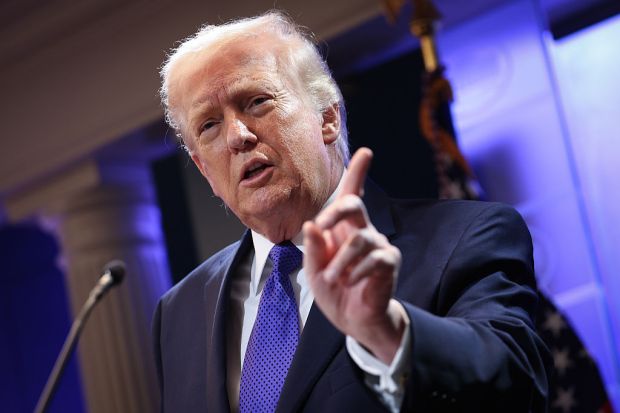
Washington’s rhetoric continued to be equally uncompromising. Speaking about the unsuccessful negotiations with Iran before the American military action, US envoy Steve Witkoff said Iranian officials had insisted on their ‘inalienable right to enrich’ uranium and boasted of possessing 60 per cent enriched fuel. ‘They told me and Jared [Kushner], “We’re not going to give you diplomatically what you couldn’t take militarily,”’ Witkoff said, adding that Iran needed ‘a change of attitude’. He also said he had warned Russia that it should not provide targeting information or other support to Iran. President Trump suggested there was no indication Russia is assisting Iran militarily, downplaying reports that Moscow might be sharing intelligence with Tehran.
A coalition of regional countries may soon respond militarily to Iran
According to Axios, the United States and Israel have also discussed the possibility of sending special forces into Iran at a later stage of the war to secure the country’s stockpile of highly enriched uranium, citing several sources familiar with the discussions.
Meanwhile Israel’s ambassador to Washington, Michael Leiter, said a coalition of regional countries may soon respond militarily to Iran. In an interview with Voice of America he said regional states were ‘probably’ preparing a counter-attack after what he described as Iranian missile and drone strikes on roughly a dozen countries over the past week.
President Trump meanwhile continued his diplomatic strikes on the UK with a social media post which he suggested Britain’s consideration of sending two aircraft carriers to the Middle East was unnecessary. ‘The United Kingdom, our once Great Ally, maybe the Greatest of them all, is finally giving serious thought to sending two aircraft carriers to the Middle East,’ he wrote, concluding ‘That’s OK, Prime Minister Starmer, we don’t need them any longer – But we will remember. We don’t need people that join Wars after we’ve already won!’