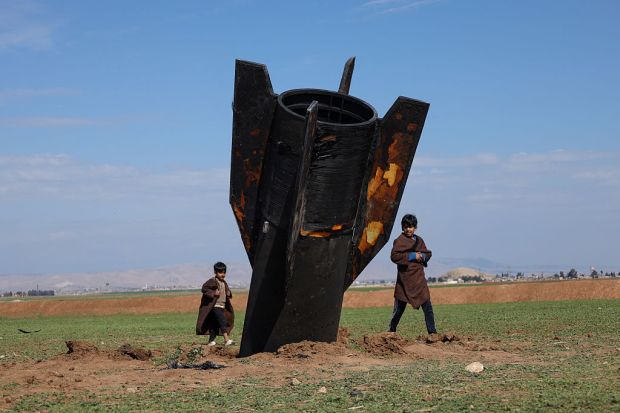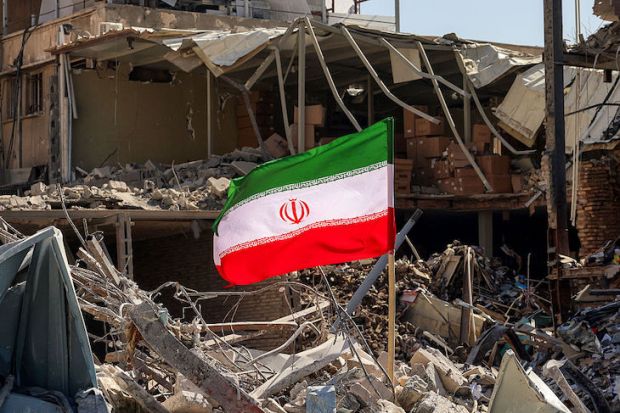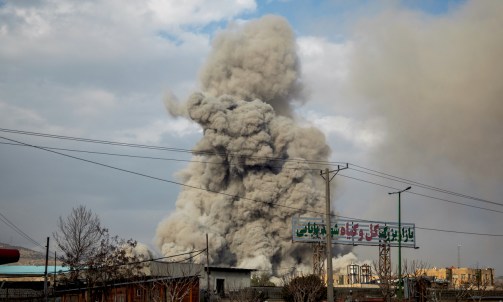
As the smoke clears over the decimated bunkers of Semnan and the industrial ruins of Isfahan, a chilling silence has settled over the Persian plateau.
After seven days of Operation Epic Fury, the US and Israel have achieved a tactical miracle: 75 per cent of Iran’s ballistic launchers are scrap metal, and the ‘drone drizzle’ that remains is a far cry from the apocalyptic swarms feared on February 28.
But as the ‘VLS math’ – the Vertical Launch System mathematics that pits $2 million interceptor missiles against $20,000 ‘flying lawnmower’ drones – begins to haunt the Pentagon’s ledgers, a more terrifying realisation is dawning.
Victory in the air is meaningless if there is no one left on the ground to hold the country together.
The United States is standing at a historical crossroads, and it is in danger of taking the wrong turn – again.
For decades, the Western foreign policy establishment has been blinded by a ‘republican fetish’, a dogmatic belief that every fallen autocracy must be replaced by a Western-style parliamentary democracy. This ‘one-size-fits-all’ approach has left a trail of ‘failed-state’ wreckage from Kabul to Tripoli.
As the administration surveys ruins of the Islamic Republic, it must ask a heretical question:
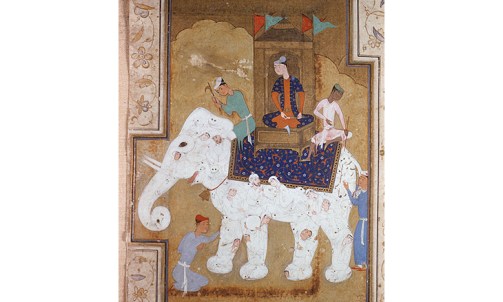
Has it forgotten that for the Muslim world, the most successful, stable, and pluralistic form of governance has almost always been the Monarchy?
The Failure of the Far-Left Islamist Alternative
To understand the necessity of a ‘monarchical linchpin’, one must look at the alternatives to monarchy currently clawing for power.
Chief among them is the NCRI (MEK) (National Council of Resistance of Iran and its primary constituent, the Mujahedin-e-Khalq).
Despite their slick lobbying in Washington, and the obvious copying of Reza Pahlavi’s careful planning, it remains an organisation with deep Marxist-Islamist roots – a cult-like entity that many analysts argue is as ideologically rigid as the Mullahs they seek to replace. To hand the keys of Tehran to a group with such a history would be to replace clerical tyranny with a revolutionary one, inviting yet another cycle of purge and collapse.
The historical record is unforgiving. In every instance where the US has intervened to ‘democratise’ a regional power, the result has been the rise of hopeless far-left or Islamist states. Afghanistan, Iraq, and Libya were arguably more stable, more secular, and more functional under their respective monarchies than as republics. Even Egypt’s brief flirtation with the Muslim Brotherhood after the fall of Mubarak serves as a cautionary tale; people often forget that under its monarchy, Egypt was a cosmopolitan, sophisticated jewel of the Mediterranean.
The Morocco Model: A Case for Legitimacy
Contrast these failures with Morocco. Under a strong, traditional monarchy, Morocco stands as a beacon of stability. Crucially, she remains one of the few Muslim states that, upon the declaration of independence of Israel, did not eject its ancient Jewish communities or state-sanctioned the theft of their property. A monarch acts as a neutral arbiter – a ‘father of the nation’ who sits above the ethnic and tribal squabbles that inevitably tear republics apart.
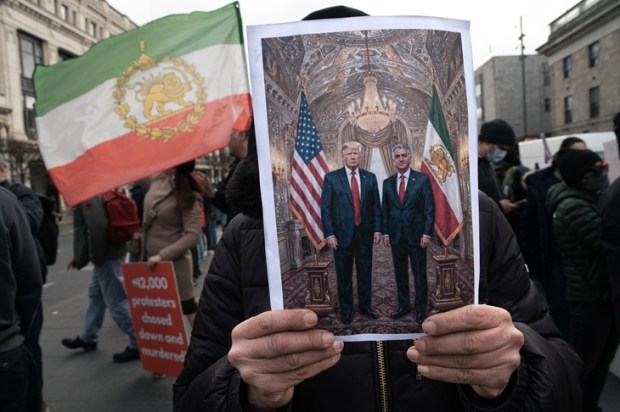
Another proposed alternative is a federal republic including a Kurdistan state. However, many fear this could become a ‘Yugoslavia on the Gulf’. In contrast, a monarch – specifically, a figure like Reza Pahlavi – can offer the symbolic continuity required to keep the provinces from splintering. Pahlavi’s ‘Prosperity Project’ is often criticised as ‘centralist’, but in a region where Turkey, Iraq, and Azerbaijan view Kurdish autonomy as an existential threat, centralism is not a bug; it is a feature of survival.
Choking the Axis: The Strategic Loss to Beijing
Furthermore, removing Iran and Venezuela from the Beijing-Moscow-Pyongyang ‘Axis of Evil’ provides a strategic windfall that goes beyond regional peace.
For years, the PRC has fuelled her industrial machine by obtaining bargain-price, black-market oil from these pariah states. The economic blow to the PRC is catastrophic. Having already lost her discounted Venezuelan lifeline in January, Beijing now faces the evaporation of her primary energy loophole.
Prior to the current conflict, Beijing imported approximately 1.4 million barrels per day from Iran – accounting for roughly 13 per cent to 15 per cent of her total crude import mix. When combined with the loss of Venezuelan heavy crude, Beijing is suddenly stripped of nearly 20 per cent of her total oil import needs previously acquired at steep ‘sanction discounts’ of $10 to $12 per barrel. By severing this axis and restoring a legitimate government in Tehran, Washington effectively removes the multi-billion-dollar annual Iranian subsidy Beijing has enjoyed for defying international norms, forcing her to compete on a level playing field and severely straining its 4.5 per cent GDP growth target.
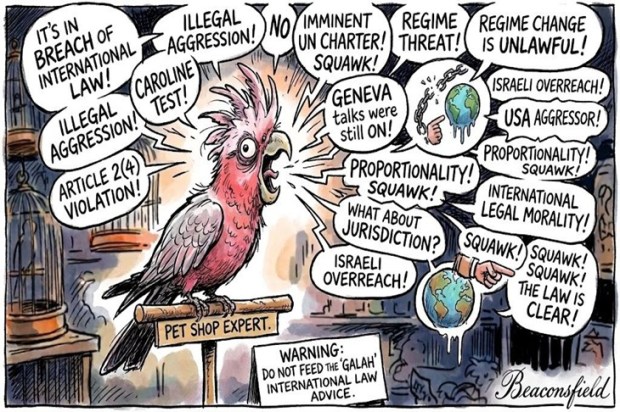
The ‘Pet Shop Galahs’ of International Law
There are those in London, Madrid, and Paris who currently wring their hands over ‘international law’. Prime Minister Sánchez has closed Rota, while the Starmer government in the UK has shown a distinct schizophrenic tendency – refusing access to Diego Garcia while simultaneously permitting the use of Cyprus as a primary launchpad from the outset. The reality is that the ‘law’ they cite has become a hollow refrain. There is probably not a pet shop in the West where the resident galah is not now enunciating opinions on international law and Iran. In a world where Iran’s proxies strike at global energy choke-points, the only ‘law’ that matters is the restoration of order.
Conclusion: The Stakes of the Vacuum
If Washington continues to hedge its bets, waiting for a perfect ‘democratic’ hero to emerge from the rubble, it could instead find the ‘Yugoslavia Scenario’. The US must stop apologising for its power and stop being held hostage by legal technicalities. It must embrace the historical reality that in the Middle East, stability flows from the Crown, not the Ballot Box. The ‘Persian Vacuum’ is growing; it is time for Washington to stop fearing the victory it invented and install the linchpin that can actually hold the peace.