For decades, the ‘smartest people in the room’ at the State Department and in the legacy media looked down on Donald Trump’s foreign policy as the bluster of a real estate developer. They chuckled at his 1988 interview – recently resurfaced by the London Telegraph – where he suggested that the solution to Iranian aggression was simple: ‘Go in and take Kharg Island.’
Just now, President Trump announced that the US had ‘totally obliterated every military target in Iran’s crown jewel, Kharg Island’ but for ‘reasons of decency’ he had chosen ‘not to wipe out the oil infrastructure on the island’.
There was a warning. This was that ‘should Iran, or anyone else, do anything to interfere with the free and safe passage of ships through the Strait of Hormuz, I will immediately reconsider this decision’.
Yet even now, 13 days into Operation Epic Fury, the usual suspects in the media are sounding the alarm of failure. They claim the Mullahs are ‘winning’ through a war of attrition and that the President has ‘no plan’. They mistake his deliberate restraint for incoherence, ignoring that some of these very same voices have spent years pleading for a ‘decisive stance’ only to recoil when he actually takes one.
The Logic of the ‘Real Estate’ Warrior
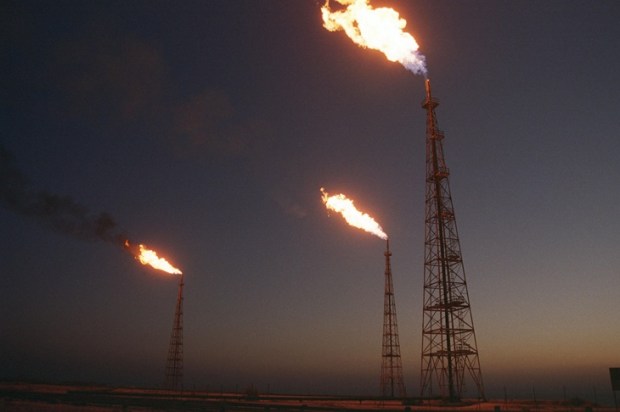
President Trump’s 1988 plan wasn’t about mindless destruction; it was about leverage. Kharg Island is a five-mile strip of land that handles 90 per cent of Iran’s crude exports. To Trump, this wasn’t just a military target; it was the regime’s ‘payroll’.
The elites called this ‘simplistic’. They preferred the ‘sophistication’ of Obama’s and Biden’s naïve nuclear deals supported by the principal Western powers – a strategy that, in reality, funded both the IRGC’s expansion to control the population by brute force and its evil international ambition. Meanwhile, while the elites played 2D chess with diplomatic cables, Trump was looking at the map. He identified the regime’s Achilles’ heel nearly half a century ago.
The handling of this through diplomacy and not by strength meant that in due course Iran would become the major purveyor by far of world terrorism and well on its way to achieve its ultimate ambition, the destruction of both the Little Satan and the Great Satan, Israel and the US. That this would necessarily involve the eventual acquisition of both the latest missiles and nuclear weapons was openly acknowledged.
The Current Crisis: Kharg as the Decisive Pressure Point
As of today, the Mullahs are fighting like cornered animals, attacking global shipping and attempting to choke off the world’s oil supply to force a ceasefire. This is exactly where Kharg Island becomes the most relevant piece of land on Earth:
- The Financial Decapitation: While keeping the infrastructure intact for a future, post-clerical government, the military targets at Kharg are obliterated, presumably with the tap turned off for the regime.
- The ‘Winning’ Narrative: While the Guardian and CNN focus on the regime’s defiance, they ignore the reality: 51 Iranian naval vessels have been sunk, and their drone and missile capabilities are being dismantled daily.
- Trump’s Response: The President’s response has been characteristically direct. He has warned that any further disruption to the Strait of Hormuz will result in the US hitting Iran ‘twenty times harder,’ targeting ‘easily destroyable’ sites that would make it impossible for the regime to survive. The oil installations at Kharg Island are being held as a hostage against further disruption.
The Price of Condescension
The tragedy of the last four decades is that the ‘well-informed’ critics spent more time mocking Trump’s tone than analysing his targets. They viewed his focus on Kharg as a ‘simplistic throwaway remark’ yet today it is no doubt the centre of key tactical briefings in the Pentagon.
The ‘low attitude’ the elites held toward Trump wasn’t based on his lack of information – it was based on their own refusal to accept that a complex problem could have a straightforward, physical solution.
As the new Supreme Leader, Mojtaba Khamenei, tries to project strength, he is finding that the man from 1988 wasn’t just talking; he was reading the scoreboard. The ‘Kharg Option’ isn’t a whim; it is the 40-year fulfilment of a strategy that recognises power is found in assets, not just words.
Today: The Turning Tide
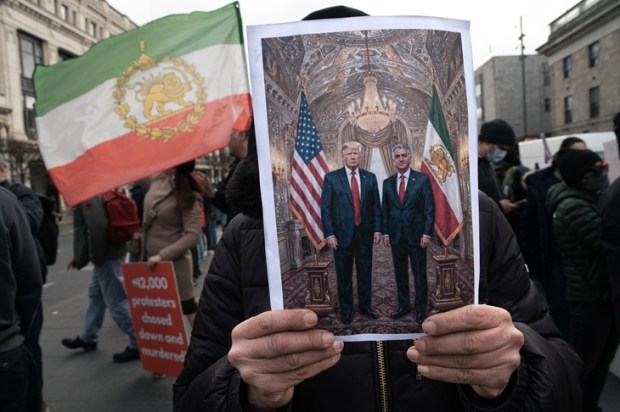
The narrative that ‘Trump is Winning’ in the Middle East has entered a decisive phase following the onset of Operation Epic Fury. This massive, air-dominant campaign has systematically dismantled the Iranian regime’s military hardware – obliterating its navy, neutralising 90 per cent of its ballistic missile capacity, and decapitating the IRGC’s command and control centres. According to some reports, the much-discussed ‘Pahlavi Bridge’ – the strategy to utilise Crown Prince Reza Pahlavi as a stabilising transitional figure – is moving from theory to operational reality. He is widely expected to return via a secured landing strip near Tehran, which has been carved out as a ‘Stability Zone’ by defecting elite military units.
This push for restoration comes as significant splits emerge among the senior clerics in Qom, many of whom are reportedly balking at the ‘hereditary’ elevation of Mojtaba Khamenei following the death of his father. With the regime’s broader command structure in disarray, analysts suggest that organised hardline cells are now primarily active only in isolated pockets of Tehran and Qom, clinging to the final vestiges of theocratic control.
Meanwhile, President Trump has signalled a characteristically transactional ‘MIGA’ (Make Iran Great Again) strategy, eyeing a rapid restoration of the oil corridors at Kharg and Abadan to flood global markets and stabilise the post-revolutionary economy. By reportedly choosing the symbolic ‘Cyrus One’ flight over a US military transport, Pahlavi would demonstrate he is landing not as a foreign proxy but as a national catalyst, which he will prove by signing a Referendum Protocol that would return the ultimate choice of government to the Iranian people.
‘Help Is on Its Way’
The strategic alignment has been bolstered by a clear message from Washington. Senator Lindsey Graham, a key bridge between the Oval Office and the Iranian opposition, recently made it clear that the era of ‘managed moderation’ is over. Speaking on Capitol Hill, Graham echoed the President’s January Truth Social declaration, telling reporters, ‘There’s no way you can say you won this war with an ayatollah in charge. Help is on its way.’
This ‘help’ isn’t just a military promise; it suggests a tactical endorsement of the Crown Prince’s Referendum Protocol. By backing Pahlavi’s transitional roadmap, the administration would confirm it is moving toward a permanent structural change that returns sovereignty to the Iranian people, including the power to determine on the form of the entity as a secular democracy. The ‘experts’ who claimed Trump had ‘no plan’ for the ‘day after’ are now watching the most sophisticated multi-domain operation in history – one that doesn’t just take the island, but the entire board.