Like millions of others throughout the world, I have been quietly stocking up on essential day-to-day items for years, perfecting a system that could theoretically enable me to last a year or more during the inevitable hyper-inflationary or shortage-ridden phase I have long expected. I remember drafting the broad outlines of a strategic stockpile system for the Malaysian government in 2010, back when such planning still felt abstract, even paranoid. Naturally, I was once an avid fan of prepping channels.
This stockpiling practice accelerated during the corona psychosis period, as I am wont to call the pandemic panic. I also began cooking my own food, particularly for health reasons, having been diagnosed with high blood pressure just before Covid arrived. (My condition has since improved.)
By trial and error, I learned what could be stored for years, how to make them last, and when to say ‘no more’. Even if some items ended up getting wasted, and they did, my net savings amounted to significantly more for each meal prepared at home. I also gained a great deal of survival knowledge in the process.
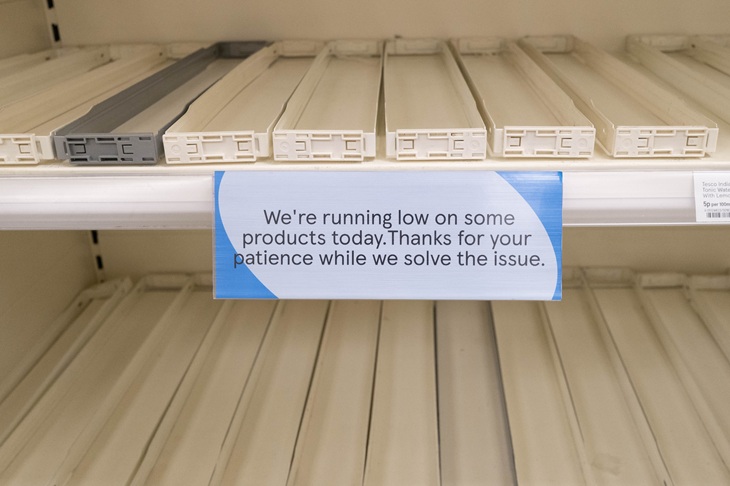
When the ongoing conflict in the Middle East neared its second week, I found myself at a grocery store, standing in the cooking oil aisle, wondering if I should purchase that extra bottle. I was paralysed by a simple question: Should I buy now, or wait?
It was an unremarkable moment, the kind of mundane consumer hesitation that plays out millions of times daily. But behind it lurked something darker. It was a thought chain that spiralled from groceries to geopolitics, and from neurotoxins to sensor arrays. It finally settled on an uncomfortable truth about modern life: no matter how prepared you think you are, there will always be a vital necessity you never saw coming.
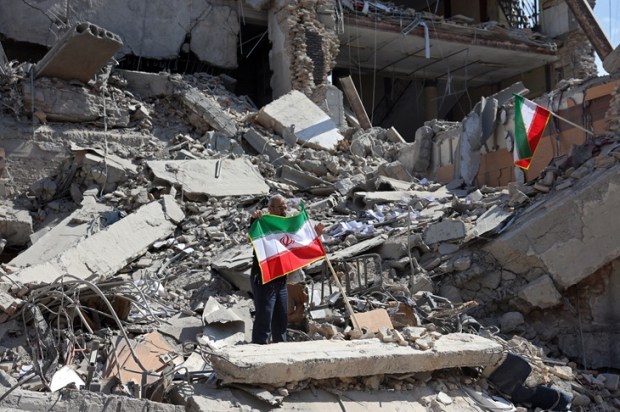
This is the essence of Murphy’s Law in a globally interconnected world. And as the Persian Gulf conflict threatens to escalate, that law is about to introduce itself to millions of people who have never heard of hexane, or process sensors, or the fragile threads connecting a war zone to their kitchen cabinets. I am using only one of millions of tributary components to the pantry to drive home my point.
The Petroleum in Your Pantry
My moment of indecision was not really about cooking oil. It was about hexane – specifically, the question of whether hexane would become scarce, and what that would mean for something as mundane as stir-fry.
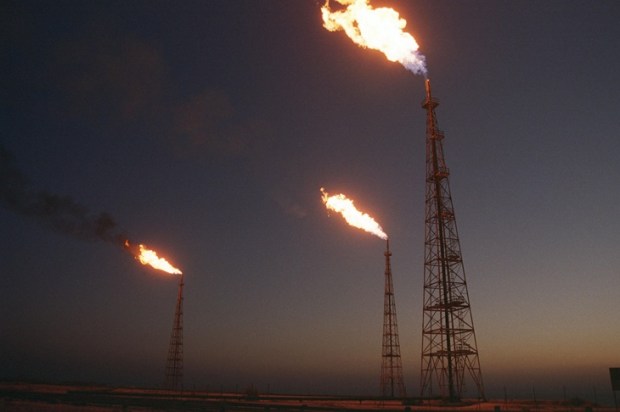
Here is the connection most shoppers never make: that clear bottle of cooking oil likely began its journey not only on a farm, but in a petroleum refinery as well. Hexane, the workhorse solvent of the cooking oil industry, is overwhelmingly derived from crude oil. It is produced as a byproduct of naphtha steam cracking during ethylene manufacturing, extracted from C6 raffinate, and purified through distillation columns that would look more at home in a petrochemical complex than a food facility. It sounds complicated because it is.
Let’s just say that when you buy cooking oil, you are buying a product whose production chain concurrently began at an oil well.
The solvent extraction process is elegant in its brutality. Crushed seeds are mixed with hexane, which dissolves the oil. The solution is separated and heated. The hexane evaporates away, leaving behind crude cooking oil. The evaporated solvent is condensed and reused. It is a closed-loop system, efficient and economical. That is, as long as nothing interrupts the flow of hexane, or the equipment that handles it.
And here is where it gets interesting, toxicity-wise. Hexane is highly neurotoxic. The EPA notes that short-term exposure to high levels can cause dizziness, headaches, and nausea, while long-term exposure risks permanent nerve damage. The industry’s response has been rigorous containment. The EPA’s emissions standards for cooking oil production targets hexane as a hazardous air pollutant of greatest concern, requiring facilities to limit plant-wide emissions through careful monitoring and control.
The EU’s Best Available Techniques document for vegetable oil refining specifies acceptable hexane loss rates of 0.3-0.55 kilograms per tonne of soybeans processed, and 0.2-0.7 for rapeseed and sunflower. These numbers represent years of optimisation, careful engineering, and regulatory negotiation. The standards were established for a functioning world.
The system works. Usually. But what happens during a shortage of standardised hexane, or the sensors that monitor its presence?
The Sensor Question
My grocery aisle paralysis did not stop at hexane’s petroleum origins. It veered into more unsettling territory. What if there is a shortage of sensors that monitor chemical composition during production? More questions filled my mind. Does Malaysia, a global leader in palm oil production, have an n-hexane production facility? To the best of my knowledge, it does not, even though it has a robust oil and gas petrochemical sector. So what is the point of having a world-class palm oil industry when a crucial component in the production process may face critical shortage?
This is the kind of question that sounds paranoid until you have spent time researching complex systems. Modern cooking oil refining is not a matter of eyeballing the oil and declaring it done. It is a world of continuous monitoring: gas chromatographs analysing solvent concentrations, temperature sensors ensuring proper evaporation, pressure transmitters maintaining optimal conditions in distillation columns. These instruments are the nervous system of production, and they are anything but simple.
These plants require calibration, replacement parts, and specialised technicians. They come from global supply chains that have already proven brittle during recent years. And they depend on semiconductor components that are themselves subject to shortages.
Imagine a refinery in Rotterdam or Illinois that normally produces food-grade cooking oil. A critical sensor fails in the hexane recovery unit – the part of the system that ensures solvent does not end up in the final product. Without that sensor, you cannot verify that your oil meets safety standards. Only two options remain: manual approximation, or the cessation of production altogether.
The risks are weighed. The product is shipped anyway. There are way too many critical shortages that must be addressed, and the line must keep moving. Whether riots in the streets or plain corporate greed decides the outcome hardly matters. The contaminated oil reaches the shelves.
Meanwhile, plant managers wait vainly for a replacement part from a nation now affected by sanctions. Shipping lanes are disrupted. The conflict has spooked insurers into refusing coverage for cargo heading to your region.
In the meantime, there is a slow buildup of hexane inside the bodies of consumers.
This is not alarmism. It is the logic of complex systems, where a single point of failure can cascade in unpredictable directions.
Murphy Was an Optimist
The MIT Sloan Management Review once published an article titled Beating Murphy’s Law, examining why technology implementations so often go wrong. Their case studies are instructive. A furniture manufacturer installed computer-controlled cutting equipment, planned meticulously, and still watched everything unravel. The spanners thrown into the machinery included software delays; scheduling changes that required more labour than expected; cutting tables that did not fit; suppliers sending non-standard materials; and downstream workers finding quality problems.
Every problem was foreseeable in isolation. None was foreseen in combination.
This is the real Murphy’s Law. It is not a joke about falling toast, but a recognition that systems have emergent properties. When you connect enough moving parts, the failure modes multiply beyond any individual’s ability to anticipate them.
The cooking oil supply chain is such a system. Consider just a few of its dependencies:
- Hexane production depends on petroleum refining, which depends on stable oil supplies from a region now on fire.
- Petroleum refining depends on complex control systems that require specialised sensors and components.
- Those components depend on global semiconductor supply chains that have already proven fragile.
- The shipping that moves everything depends on insurance markets that can evaporate when conflict escalates.
- And all of it depends on human operators who get sick, go on strike, or flee war zones.
The Persian Gulf conflict only has to introduce enough uncertainty, enough delay, enough friction to the global system that normal operations become impossible.
The Necessity You Never Considered
Here is the part that should haunt every prepper: when shortages come, they will often be the ones we are unprepared for.
We stockpile bottled water and canned goods. We worry about bread, milk, and hygiene products. All of them involve countless processing agents or invisible enablers, similar to hexane in cooking oil, before they reach us as finished goods. It only takes the lapse or unavailability of one crucial component before they are gone or rendered inoperable.
Consider the Berghof Automation case study. A food processing company had a hundred tons of fresh red cabbage ready for canning, only to be halted by the failure of two display controllers. Without them, the cabbage would spoil, leaving the entire operation dependent on components unknown to the outside world.
This is the vulnerability of complexity.
The Bottom Line
So here I am, in the grocery aisle, holding a bottle of sunflower oil – the kind I use to make toum for my wraps and sandwiches. The rational part of my brain knows that stockpiling has its limits. But the part that remembers empty shelves and pandemic panics whispers, ‘Take it. Just in case. Why should I settle for a hexane-tainted batch on New Year’s Day?’
Murphy’s Law says anything that can go wrong will. In a globalised economy, that means anything, anywhere, can go wrong everywhere. The Persian Gulf conflict will not just affect oil prices. It will affect hexane supplies, among millions of other vital components that facilitate modern life. And I have only touched on one component of the cooking oil production process. Pick any sector, any system, any industrial plant, and there will be a million things that can go wrong during an extreme resource crunch.
The bottom line is not that preparation is futile. It is that preparation is never complete. And humanity, for all its technological marvels, has never been quite so fragile as it is right now.