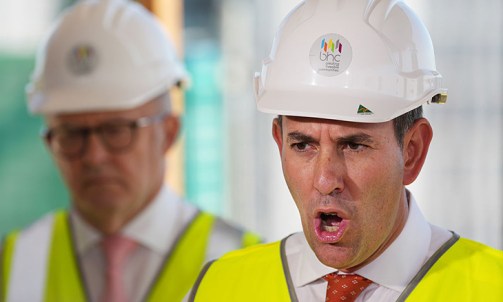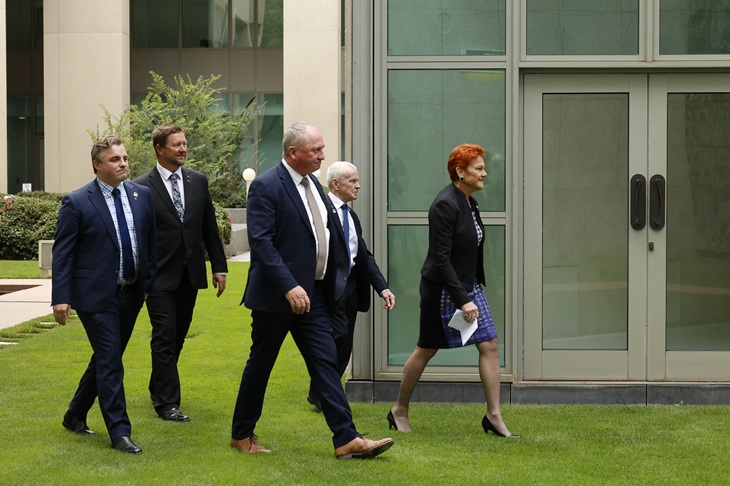
According to media reports, newly installed Liberal Leader Angus Taylor intends to turn his guns on One Nation in the upcoming Farrer May 9 by-election, arguing that the party’s so-called ‘zero immigration’ policy will be a disaster for the building sector.
In his early speeches as Opposition Leader, Taylor has talked tough about stopping ‘bad immigration’ and protecting Australian values, while simultaneously warning tradespeople that closing the door on migration would starve construction of desperately needed labour.
The facts tell a vastly different story.
Very few immigrants end up working in the construction sector. While the construction industry makes up roughly 9 per cent of Australia’s total workforce, only 6.4 per cent of migrants who arrived over the last decade work in this field, and recent arrivals account for an even smaller fraction. In fact, out of 19 major industry sectors, construction ranks an abysmal 16th for its share of migrant workers.
To suggest that the building industry relies on our current, hyper-inflated migration intake is a statistical fallacy.
Furthermore, One Nation’s policy is continually misdescribed by the major parties. It is not ‘zero immigration’ – it is net zero immigration. Note the word ‘net’. By taking into account the number of people permanently departing Australia each year, this policy creates a ‘one-in, one-out’ balance. Far from a total border shutdown, a net zero policy would still allow for an annual intake of approximately 130,000 people. That is more than enough room to prioritise the specific trades and medical professionals the country actually needs, provided the visa system is managed competently.
One Nation is also routinely dismissed by the political establishment as a party of complaint, rather than a party of policy. A look at the legislative record proves otherwise. Their policies regarding the fuel and cost-of-living crisis we are currently experiencing are far in advance of the major parties. Rather than managing the decline of Australian industry, One Nation has consistently proposed genuine blueprints for national sovereignty. Under their proposals, we would have a domestic gas reserve to lower local prices, we would be actively searching for more oil, and we would be investing in the conversion of sugar cane and gas into petrol and diesel.
(For more detail, see One Nation’s ten-year crusade to secure Australia)
When the Liberal leader warns that One Nation is a threat to the building sector, he is not just fighting a policy – he is fighting a set of facts that the major parties find increasingly difficult to ignore.
Table 1: Key Bills Introduced by One Nation (2016-26)
This table outlines the primary legislation introduced by One Nation Senators to force debate on their core policy platform.
| Bill Title | Primary Objective |
| Australian Education Legislation Amendment (Prohibiting the Indoctrination of Children) Bill | Restricts the teaching of gender identity and ‘critical race theory’ in schools. |
| Constitution Alteration (Freedom of Expression and Freedom of Religion) Bill | Proposes a referendum to explicitly enshrine these rights in the Australian Constitution. |
| A New Tax System (Family Assistance) Amendment (No Jab No Pay Repeal) Bill | Removes the legislative link between childhood vaccination and eligibility for tax benefits. |
| Covid Vaccination Status (Prevention of Discrimination) Bill | Prohibits discrimination based on vaccination status in employment and service provision. |
| Offshore Petroleum and Greenhouse Gas Storage Amendment (Domestic Reserve) Bill | Mandates a percentage of Australian gas be reserved specifically for the domestic market. |
| Customs Amendment (Preventing Child Labour) Bill | Bans the importation of international goods produced using child labour. |
| Acts Interpretation Amendment (Aboriginality) Bill | Proposes a specific legislative definition of ‘Aboriginality’ for accessing government programs. |
| Criminal Code Amendment (Banning Islamic Full-Face Coverings in Public Places) Bill | Seeks to ban the wearing of the burqa and niqab in public spaces. |
| Australian Broadcasting Corporation Amendment (Rural and Regional Advocacy) Bill | Forces the ABC to prioritise regional board members and rural news coverage. |
| Social Services Legislation Amendment (Payments for Real Jobs) Bill | Proposes welfare reforms designed to encourage and incentivise agricultural labour. |
Table 2: Key Legislation One Nation Sought to Amend
This table highlights significant instances where One Nation utilised their balance-of-power position to negotiate changes to Government bills.
| Original Government Bill | One Nation’s Proposed Amendment / Action | Outcome |
| Treasury Laws Amendment (Enterprise Tax Plan) Bill | Demanded that corporate tax cuts be strictly limited to businesses with a turnover under $50 million. | Successful (Coalition agreed to terms) |
| Foreign Investment Reform (Protecting Australia’s National Security) Bill | Proposed drastically lower financial thresholds for the review of agricultural land sales to foreign buyers. | Successful (Threshold lowered to $15m) |
| Family Law Amendment Bill | Demanded a comprehensive Joint Select Committee inquiry into the Family Law system as a condition of support. | Successful (Inquiry was held) |
| Social Services Legislation Amendment (Welfare Reform) Bill | Pushed for the implementation of stricter drug testing trials for welfare recipients. | Successful (Included in legislation) |
| Electoral Legislation Amendment (Electoral Funding and Disclosure Reform) Bill | Sought to restrict foreign donations and increase transparency and reporting for ‘third party’ campaigners. | Successful (Negotiated terms) |
| Treasury Laws Amendment (GST Low Value Goods) Bill | Advocated for a 70-cent ‘floor’ regarding Western Australia’s share of GST revenue. | Successful (Influenced 2018 GST deal) |
| Fair Work Amendment (Supporting Australia’s Jobs and Economic Recovery) Bill | Sought to remove controversial ‘greenfields’ agreement extensions from the industrial relations omnibus. | Successful (Government dropped clauses) |
| Racial Discrimination Act (Section 18C) | Made repeated attempts to remove the words ‘insult’ and ‘offend’ from the existing Act. | Unsuccessful (Voted down by Senate) |