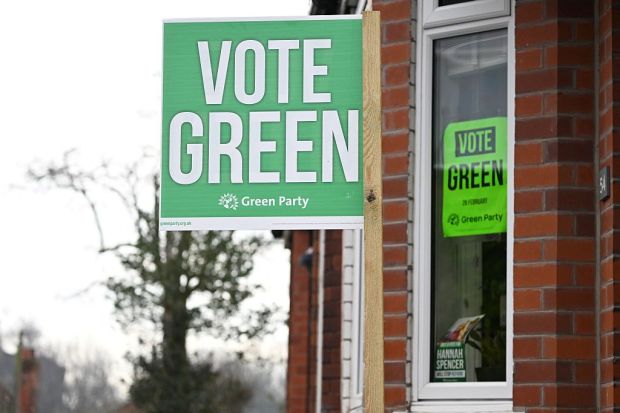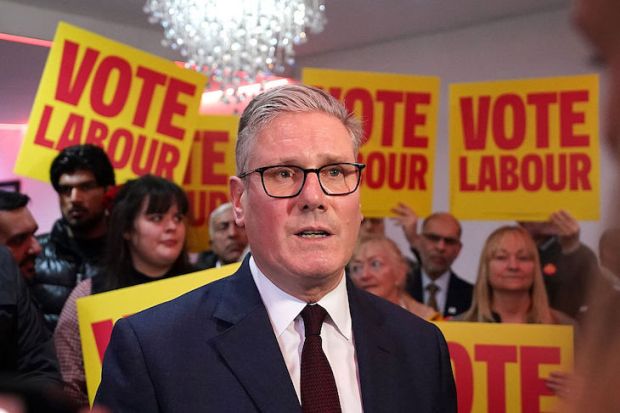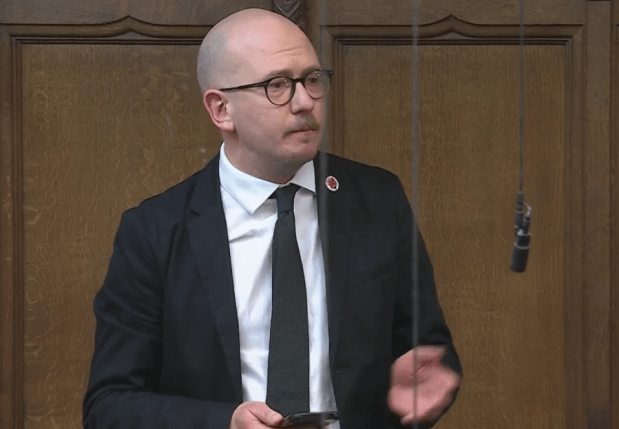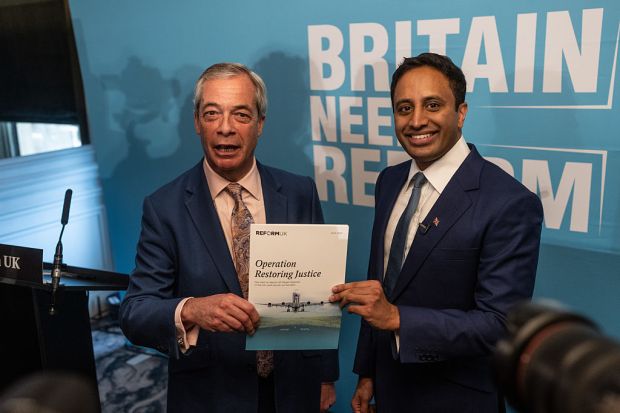
After Labour came third in Gorton and Denton, the government had a choice. Chase the lost Green vote by moving closer to its positions on open borders, an amnesty for all illegal migrants and an end to deportations, or follow Reform who have pledged to make deportations non-justiciable and deport ‘up to 280,000’ illegal migrants a year. Some in Labour have blamed Gorton on Shabana Mahmood’s planned changes to Indefinite Leave to Remain and asylum, with Lucy Powell, the party’s deputy leader, saying that these policies were ‘a real concern to our ethnic minority communities’, and noting that the government’s tough talk on migration ‘came up a lot’ on the doorstep during the by-election campaign.
Diane Abbott is right – policies which would have been anathema in the Tory party a few years ago are now broadly accepted across the political spectrum
It seems for the government, the Green position is not particularly appealing. According to a government source ‘the Green party’s position of open borders is not supported by the country. In fact it’s not even supported by their own voters’, something the source contrasted with the government’s asylum policies which they believe ‘have support from the country as a whole, Labour voters and Green voters’.
There were also scathing words for those on the left of the party blaming migration policy for the defeat in Gorton and Denton, with a government source saying that:
‘Briefings from certain quarters of the Labour party this weekend are poorly founded. The idea that we are losing Muslim voters over immigration is plain wrong. They fail to recognise the sheer scale and anger toward migration in recent years – both in working class and Muslim communities. One in 30 people currenting living in Britain arrived over the last five years alone placing huge strain on communities. Abuse of visas was widespread during that period. 616,000 entered via a health and social care visa, which was opened to fill between only 6,000 and 40,000 jobs. If we do not change our settlement policy, these migrants will face full access to the British state, social housing and welfare – which will cost billions of pounds to the taxpayer. That is less housing and support for the vulnerable and working class communities across the country.’
The government is right to identify the looming disaster of the Boriswave. Their proposed legislationwill delay, but not prevent the millions who arrived in the first half of this decade from gaining the right to claim benefits and vote in general elections (those who are Commonwealth citizens are already able to vote). This is expected to take effect in the autumn, assuming the current Prime Minister and cabinet survive long enough to pass the law.
The government are also right to identify the dangerous pull factors created by our overly lax asylum system. This is why for those who claim asylum from today, refugee status will become temporary and subject to review every 30 months. Those whose countries are deemed to be safe will be sent home. This will not apply to either those who have already been granted asylum status, nor to those who are waiting for a decision as they will still be processed under the old scheme. Further, refugees will be allowed to apply for new work and study visas which provide them a route to permanent settlement here. There are also plans to open ‘new, safe and legal routes, with community sponsorship becoming the new norm’, an approach which I fear is likely to be abused by NGOs and existing ethnic enclaves.
Despite all this some figures on the Labour left are outraged at this, with Diane Abbott tweeting:
‘After Labour’s drubbing in Gorton, this is the response??? My party implementing policies that used to get you thrown out of the Tory party.’
Later this week Shabana Mahmood will press this message, arguing that migration reform is entirely consistent with ‘Labour values’, and emphasising that ‘fairness’ requires getting the borders under control. The government is briefing that Mahmood’s policy is ‘fair…firm, compassionate but controlled’, and she is expected to say that there is a social democratic case for cutting both legal and illegal migration.
What’s fascinating about all of this is quite how far the migration debate has moved. Diane Abbott is right – policies which would have been anathema in the Tory party a few years ago are now broadly accepted across the political spectrum. Much of this is due to the Boriswave, which has pushed the negative reality of mass migration into cities, towns and villages across the country. Similarly, the dawning realisation that much of our migration is fiscally negative has killed the economic case for endless imported labour. And of course, the wave of horrific crimes committed by asylum seekers have caused outrage across the country. So, Britain’s migration debate has transformed in the past two years. But with Reform promising to make deportations non-justiciable, and nearly half of Britons in favour of remigration, and mass deportations, it is not clear whether Labour’s plans will be enough. The nightmare scenario for them is that they continue to bleed left wing votes to the Greens, while not being radical enough for those voters tempted by Reform. If that happens there may be many more constituencies where Labour drop to third place.