In 2038, Australia will mark the 250th anniversary of the founding of Australia. It is now time to start preparing for this. That includes framing the narrative.
1788 means different things to different people, but its historical significance is undeniable – it is the year the shared story of modern Australia began. Before 1788, the people of the Eora nation occupied the lands around Sydney Cove. But the British colony founded on that spot in 1788 became the nation of Australia.
The 250th anniversary of that historic event should not only be commemorated – it should be celebrated. That is why Australia needs a dedicated body – call it Celebrate 2038 – modelled on the Australian Bicentennial Authority that oversaw the 1988 celebrations.
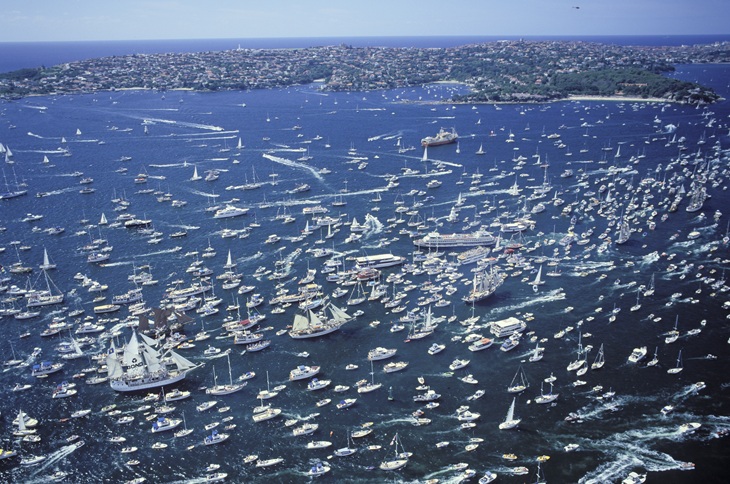
The goal of Celebrate 2038 should be to make sure the 2038 celebrations are just as memorable, unifying, and joyous as the 1988 Bicentennial celebrations were. It is an opportunity to strengthen national pride and gratitude for the people who built Australia.
That should not be a controversial objective. But it probably is.
The Politics of 2038
We cannot talk about 2038 without talking about the politics of 2038.
The meaning of 1788 is contested and how we observe 2038 will be contested too. It would be great if Australians from all across the political spectrum want to join the party, but that is unlikely. Once we start talking about 2038, the arguments rolled out in the annual debate about Australia Day will be ramped up and deployed to frame the narrative of how we should observe the 250th anniversary.
You may not be interested in the culture war. But the culture war is interested in you.
Not many Australians are thinking about 2038 yet. But whoever frames the narrative first will have a big advantage in establishing that framing. Those of us who want the occasion to be an opportunity for pride and celebration need to act now before 2038 is hijacked by those who want the focus to be sorrow and shame about the very existence of our nation.
This should be on the national agenda ahead of the next federal election due in 2028. Our politicians need to be clear about how they think Australia should mark this occasion. That will allow voters to give our next government a mandate to make Celebrate 2038 an important priority.
Perhaps the Labor Party, reacting to the rise of One Nation, could have a ‘Nixon goes to China’ moment ahead of the next election and decisively reject the progressive framing of 1788. That would be a good result, though we should not hold our breath.
But no matter what the left does, centre-right parties – including the Liberal Party and One Nation – should commit to start planning for 2038 if they win power at the next election. A clear and positive message about our 250th anniversary could be an important part of a winning agenda in 2028.
What Needs to Happen
There is no point having a party for something people don’t want to celebrate. So, before 2038 comes around, we need to reinforce why the founding of Australia is worthy of celebration.
Polls suggest that a clear majority of Australians support keeping Australia Day on January 26th. But there is also survey evidence that shows only a third of respondents take great pride in the Australian way of life and culture. Younger Australians in particular report a drop in national pride.
Fixing that is not easy, but a clear priority must be the high school curriculum. Conservatives have been calling for curriculum reform for a very long time, but the lead-up to 2038 could be the opportunity for real progress to be made. A key task for Celebrate 2038 should be to commission a panel of experts to develop and implement a curriculum module that is specifically and unapologetically aimed at building national pride.
For far too long, Australian children have been taught little about Australian history other than the heroism of the Anzacs and the injustices of indigenous dispossession. Those topics are important but there is so much more about their history that young Australians deserve to know. The story of how ordinary men and women turned a jail in the wilderness into a successful and truly admirable nation is genuinely inspirational. It should be taught with much more detail and respect.
Noel Pearson has famously spoken of how Australia reflects the contributions of Indigenous people, settlers, and migrants. But the contribution of those settlers and the importance of Australia’s British heritage have been downplayed in our curriculum and civic ethos. We should fix that ahead of 2038.
Australian children born this year will be starting high school in 2038. They should have a curriculum that will be honest and balanced in how it teaches them the history of our nation. But honesty and balance would teach them that they have good reason to celebrate in 2038.
Building The Moment
Beyond the curriculum, the years leading up to and including 2038 should involve a comprehensive program of cultural activity, community engagement and visionary projects that showcase our history and culture. The aim would be to build a greater sense of national pride and gratitude so that as many Australians as possible are looking forward to 2038. Let’s build some cool statues, too.
The 2032 Brisbane Olympics should also play a big role in getting ready for 2038. This will be a global platform for telling Australia’s story to the world, an opportunity for us to express pride in our past and confidence in our future. We should also lobby to host other major events in the years leading up to 2038, including the cricket one-day world cup that is due to take place around 2035.
Celebrate 2038 would provide the institutional structure for all of this – coordinating efforts, arranging funding, and, most importantly, maintaining a clear sense of purpose. Its mission would be to ensure that Australians are ready to celebrate when 2038 comes around.
Save The Date
2038 is still a way off, but now is the time to save the date. We should not only put our 250th anniversary in the national calendar, but also save it from those who would frame it as a vehicle for national self-reproach.
Celebrate 2038 is an invitation to all Australians. Not everyone will accept it, but the party should still go ahead. We should plan that party with confidence, optimism, and the conviction that most Australians – of all backgrounds – are ready to celebrate what this country has achieved and what it can still become.
The alternative is to cede the anniversary by default to those who would use it as an occasion for grievance rather than gratitude, and condolences instead of congratulations. That outcome is not inevitable. But we need a vision and an institutional structure, starting now.
Celebrate 2038 starts now.