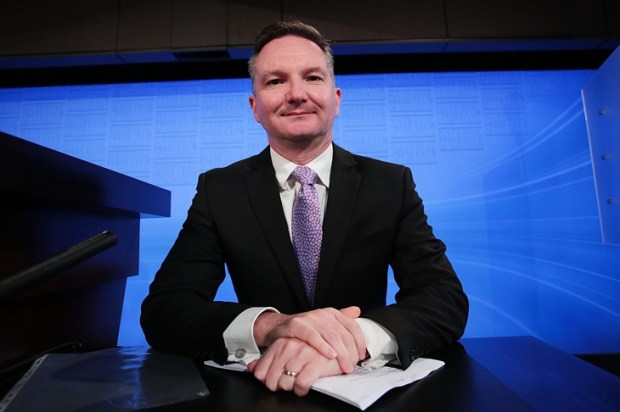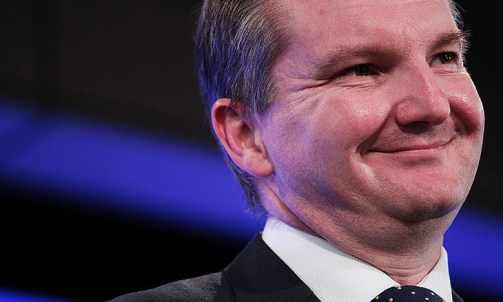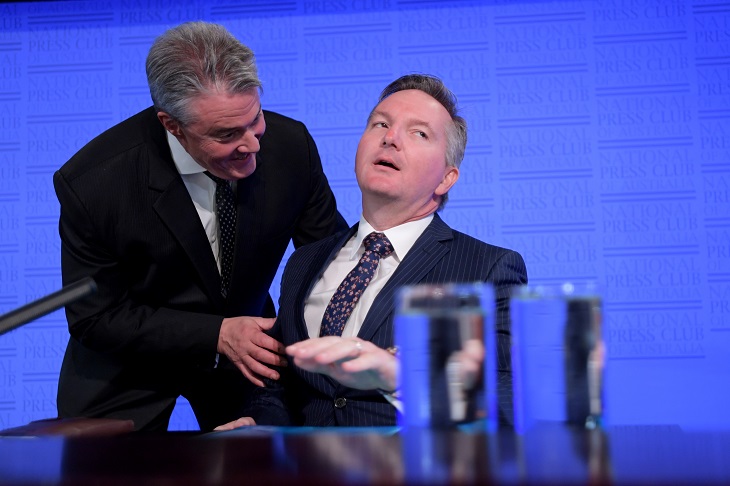
Last week the Australian government made an abrupt policy reversal. Energy Minister Chris Bowen, who championed Australia’s ultra-low sulphur petrol standard in late 2025, approved a temporary relaxation from 10 parts per million to around 50 ppm for 60 days. The trigger was localised fuel shortages in regional Australia, driven by Middle East disruptions and domestic distribution strain.
The response has been pragmatic and contained. The government authorised a partial release of minimum stockholdings, redirected higher-sulphur petrol into domestic supply, strengthened penalties for market misconduct, and tasked the ACCC with closer price monitoring. Officials have struck a reassuring tone. Stocks remain adequate, shipments are arriving, and there is no need for panic buying. The environmental cost is framed as modest and temporary, with a small increase in sulphur dioxide emissions and limited, reversible air quality effects.
This adjustment is a clear concession that even strongly held environmental standards can bend when energy security is at stake. A government that celebrated the 10 ppm benchmark as a public health gain has now accepted a fivefold increase to keep fuel flowing to farmers, freight operators, and remote communities. A trade-off the government has accepted as necessary.
That realism makes the government’s continued resistance to nuclear power more conspicuous. Australia maintains a legislative prohibition on nuclear energy, including small modular and micro-reactors that promise reliable, zero-emissions generation with long fuel security horizons. Opposition to nuclear rests on familiar grounds. These include long development timelines, high capital costs, waste management challenges, and regulatory and political resistance. Yet the sulphur waiver demonstrates that environmental and safety concerns, however sincerely held, are not absolute when weighed against immediate national needs.
The comparison is not exact, but it is instructive. The sulphur relaxation addresses a short-term supply disruption in liquid fuels, while nuclear energy concerns long-term electricity generation. However, both sit within the same strategic question. How much risk is Australia willing to tolerate in pursuit of security and stability? In one case, the government has shown flexibility. In the other, it has maintained a categorical prohibition.
Australia’s fuel vulnerability adds weight to this contrast. The country remains heavily dependent on imported refined fuels, with reserves typically measured in weeks rather than months. Supply chains stretch across contested regions and narrow shipping routes. When disruptions occur, whether geopolitical or logistical, the margin for error is thin. The current waiver is a reminder that energy security is not a concrete concept but is malleable for rapid policy recalibration.
If a temporary increase in acid-rain precursors is tolerable to avoid fuel shortages, it becomes harder to argue that nuclear risks, managed over decades in comparable economies, are uniquely beyond consideration. The point is not that nuclear offers a quick fix. Large-scale plants take time to build, and even smaller modular designs are still developing commercially. The point is that a strategy concerned with long-term resilience should be open to evaluating all credible options rather than excluding one category in advance.
The inconsistency reveals priorities more than it exposes hypocrisy. The government has acted swiftly to stabilise fuel supply and protect consumers. That response is rational and necessary. What it does not do is address the underlying structural dependence that made the intervention necessary in the first place. Nor does it explain why flexibility applied to fossil fuel standards cannot extend to low-emissions alternatives.
No reasonable observer would equate this temporary sulphur relaxation with the environmental crises of previous decades. Nor does it compel an immediate shift to nuclear power. But it does establish a precedent. When the costs of inaction become tangible, policy settings can and do change.
That raises a broader question of coherence. A government willing to recalibrate environmental standards in response to short-term disruptions invites scrutiny of its refusal to reconsider longer-term energy options that could reduce exposure to those disruptions. The issue is not sulphur content or reactor design. It is whether Australia is prepared to align its energy policy with its stated goals of resilience, independence, and emissions reduction.
Until that alignment occurs, episodes like this will continue to expose an energy framework that manages risk in the moment while leaving its deeper vulnerabilities unresolved.
Licia Driscoll is an energy and environment journalist. She writes the Energy and Environment Briefing for The Polity on Substack.